
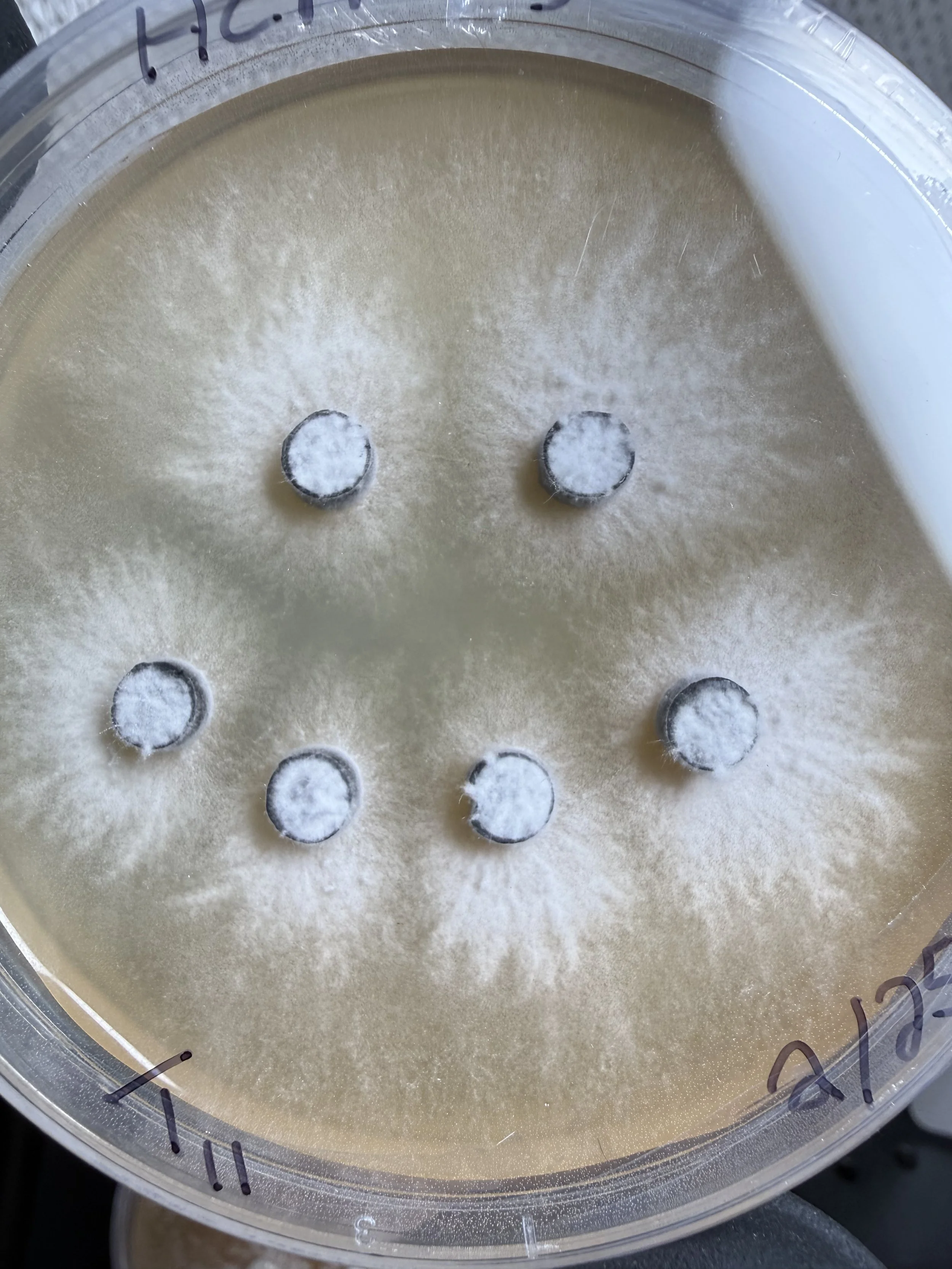
Culture Rundown
A list of cultures we have grown, experienced and worked with in The Swamp.
Many of these cultures come from other great cultivators, breeders, or other origins. They will be stated as such and any info I have will be added. This list will grow as More and more worthy species are cultivated in The Swamp.
Learn the Cultures
*Ask about special orders if not in store*
Hericium species
(Lions Mane Family)
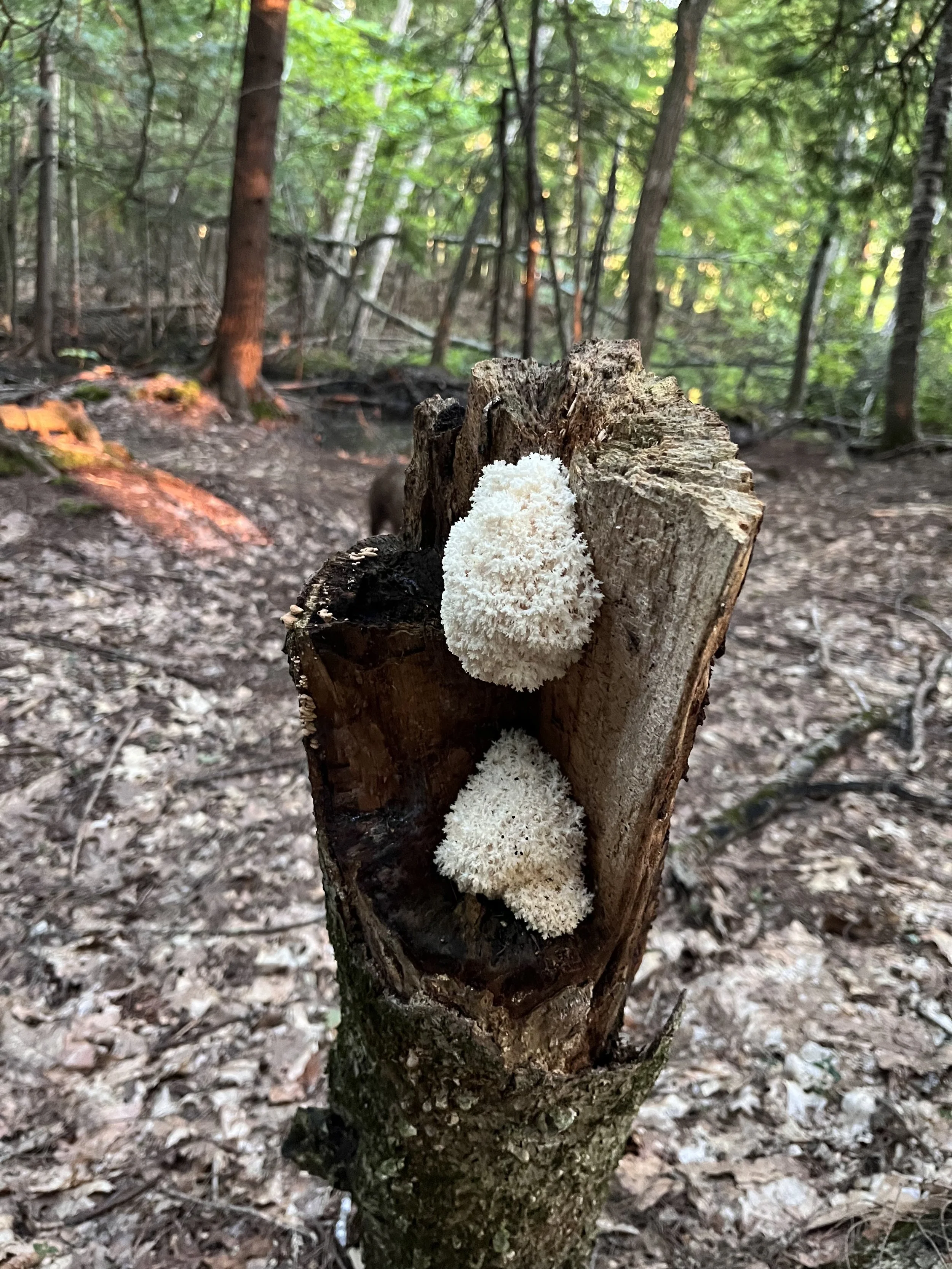
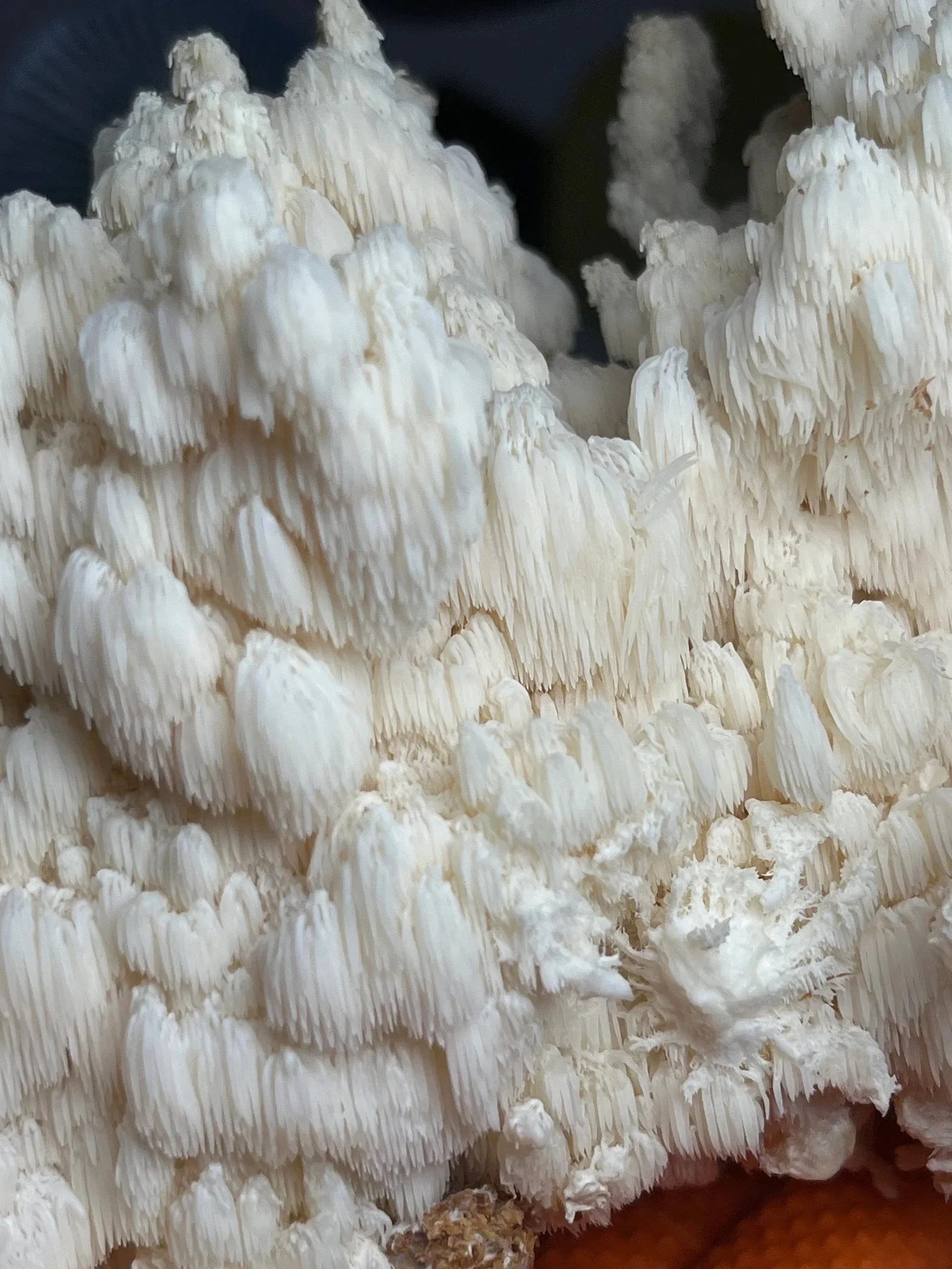
“HA-OG1” - Maine Bears Head (Hericium americanum)
Origin: Wild cloned — Western Foothills of Maine, Old Growth Forest, Mid August 2023
Substrate: Hardwood — Masters Mix, supplemented (wheat bran or soy hulls) hardwood blocks
Fruiting Temp: 60–72°F fruiting / 60–75°F colonization
Humidity: 85–95% RH
Difficulty: Intermediate
One of the crown jewels of the SFF culture library. HA-OG1 was pulled from a beautiful old growth forest in Maine in 2023 — wild genetics, collected, cloned, and kept going ever since.
What makes this one interesting is its morphological flexibility. Give it high humidity and strong fresh air exchange and it throws long cascading teeth that look more Lion's Beard than Bear's Head. Push the CO2 up a little and it shifts into a branchy, coral-like structure. Same organism, different moods — and both are stunning.
The flavor is lighter and more floral than typical Hericium erinaceus — a crispier texture with a clean, almost sweet finish. It's a showstopper at the farmers market and in the kitchen. If you're after wild old-growth genetics with bioactive potential and culinary quality, this is a top pick.
Note: H. americanum leads among our cultivated Hericium species in ergothioneine content — roughly 376mg/100g dry weight. Ergothioneine is heat-stable and water-soluble, making it well-suited to both cooking and hot water extraction.
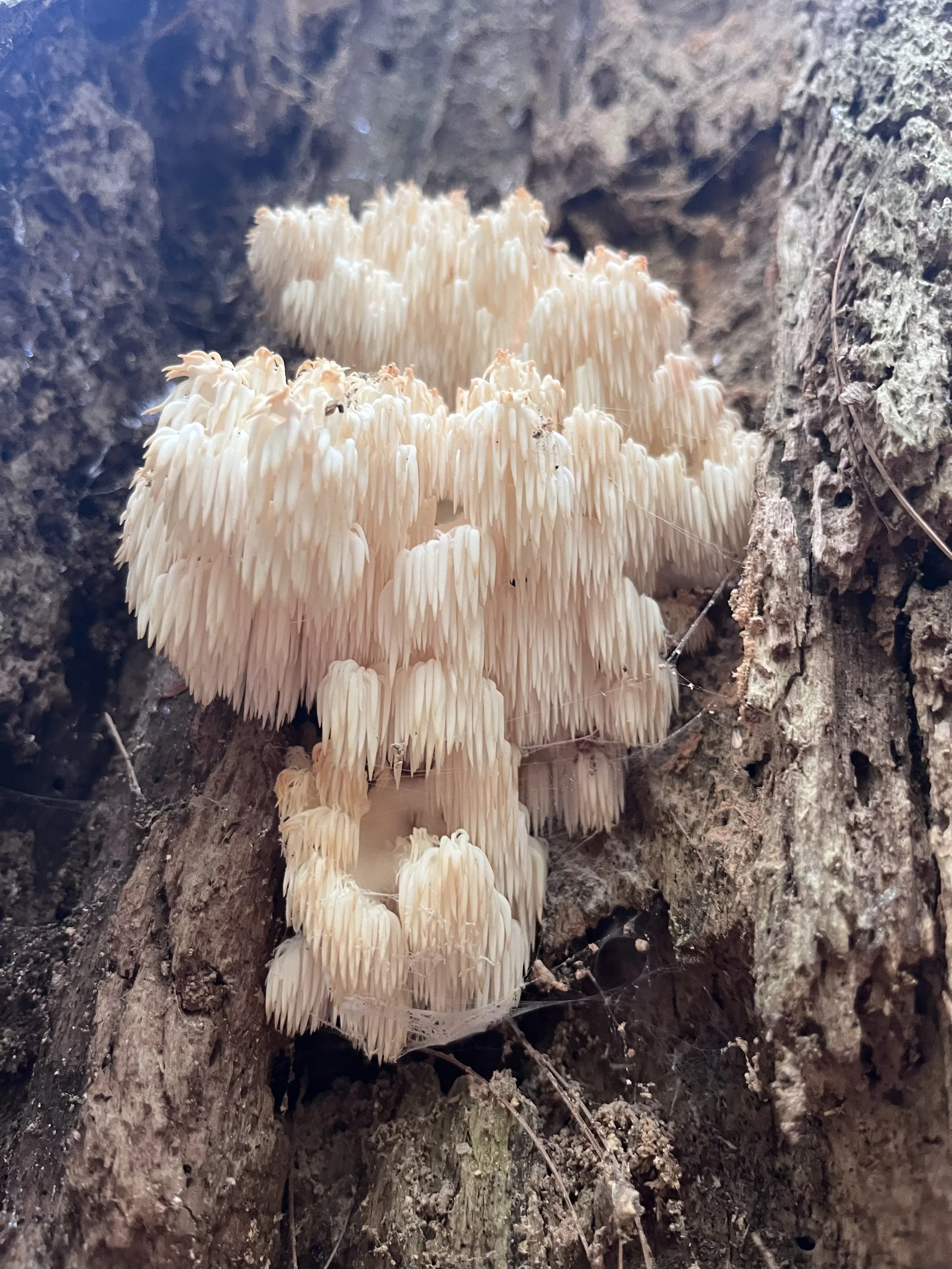
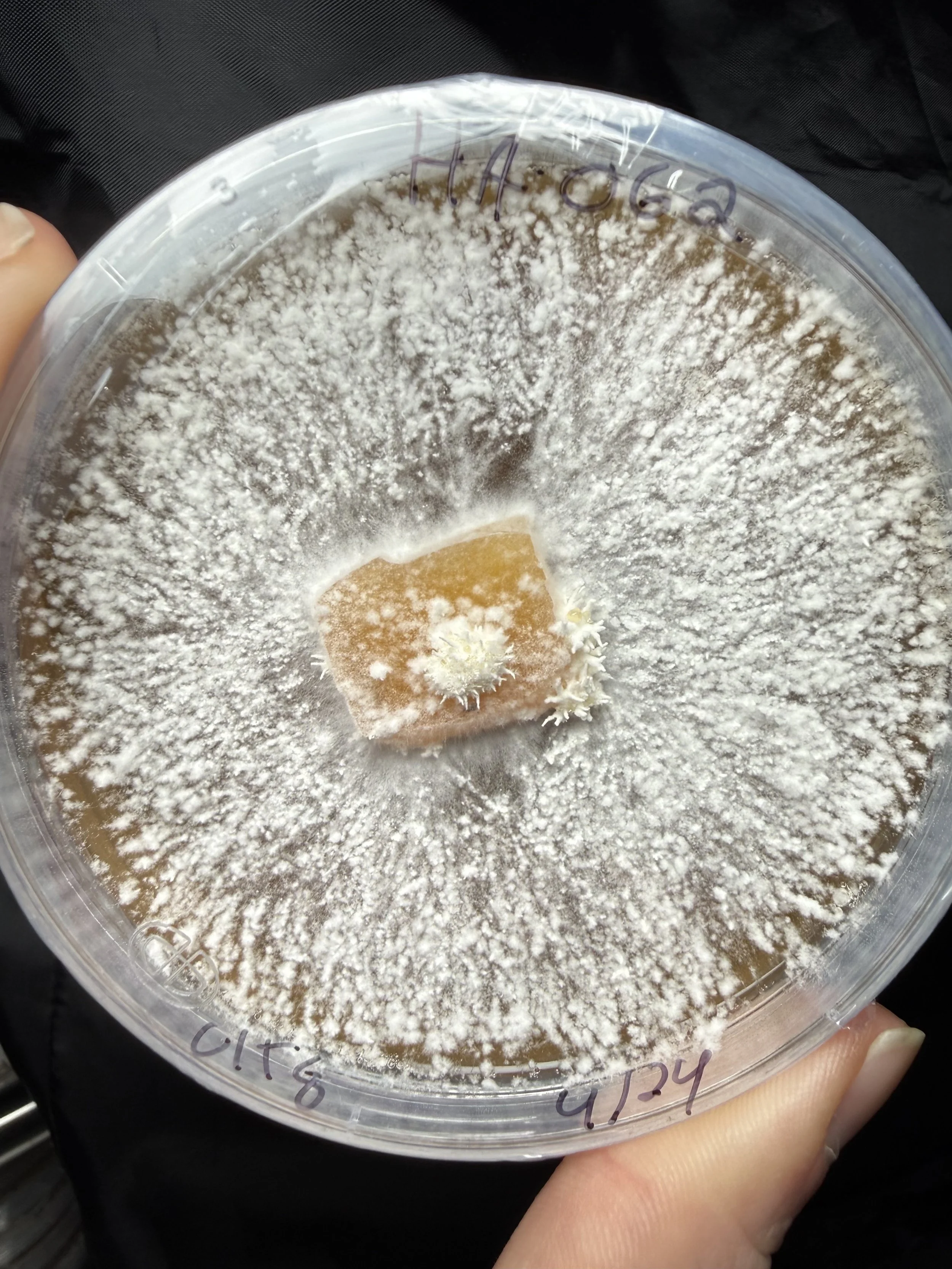
“HA-OG2” - Maine Bears Head (Hericium americanum)
Origin: Wild cloned — Western Foothills of Maine, Old Growth Forest, Early Sept. 2024
Substrate: Hardwood — Masters Mix, supplemented hardwood blocks
Fruiting Temp: 60–75°F fruiting / 60–75°F colonization
Humidity: 85–95% RH
Difficulty: Intermediate
The sibling culture to HA-OG1, pulled from the same old growth forest just 1 year later, in 2024 and about 100-150feet down trail. These two come from the same ecosystem but have diverged noticeably in growth behavior.
HA-OG2 doesn't fruit as consistently as OG1 — it's pickier about conditions and takes more coaxing to pin reliably. That said, it's a metabolite powerhouse. It puts out substantial mycelial mass and secondary metabolites in substrate, which makes it genuinely interesting for researchers, extractors, and folks exploring bioactive compound production.
Flavor and aroma profile is similar to HA-OG1 — that light, floral, crispy character that sets H. americanum apart from its erinaceus cousins. If you're cultivating for extract work or want wild genetics with heavy metabolite output, OG2 is worth the patience.
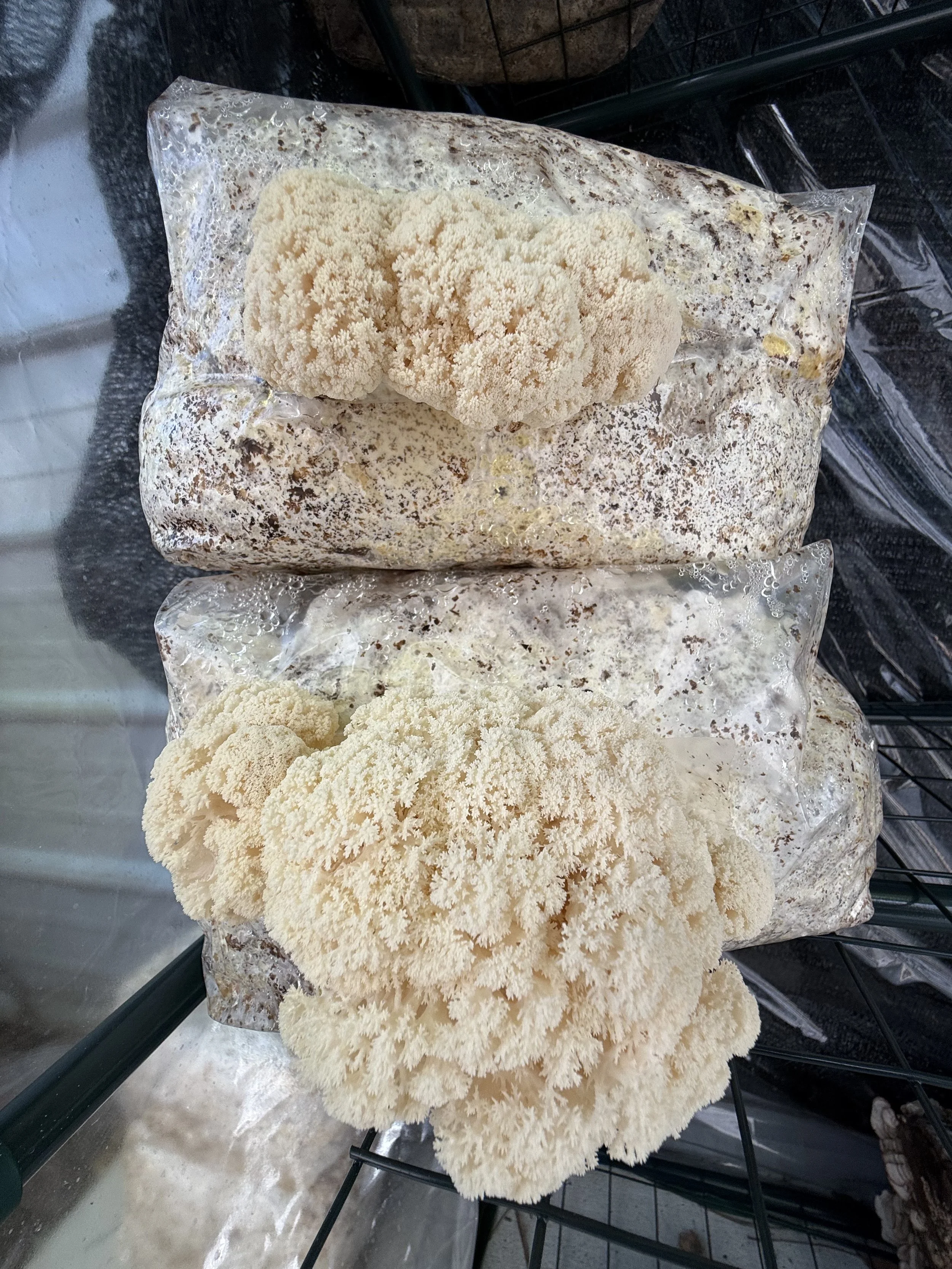
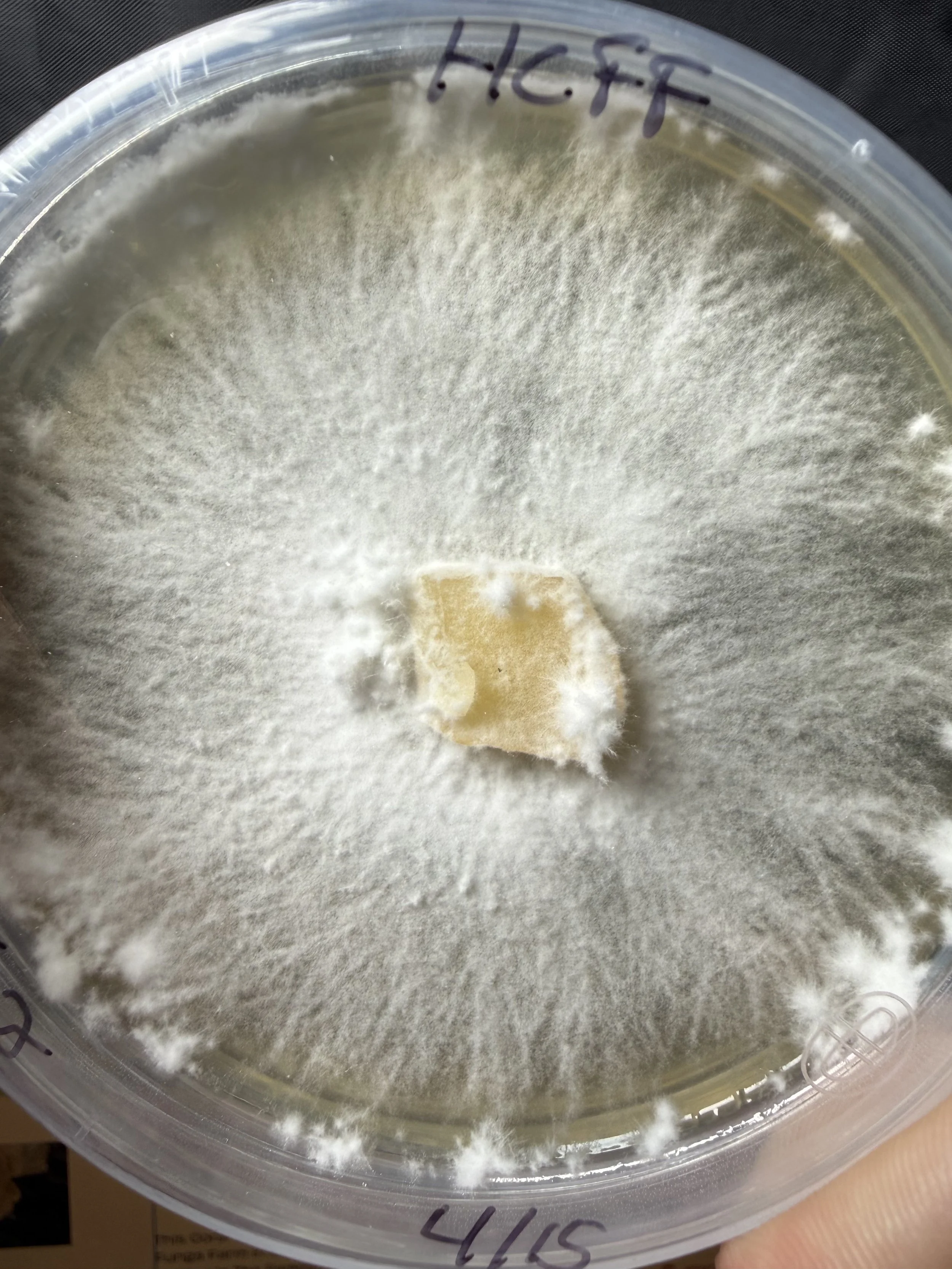
“HC-FF” - Corals Tooth (Hericium coralloides)
Origin: Funga Farm, Denmark → Maine Cap n' Stem → The Swamp
Substrate: Hardwood — supplemented hardwood blocks or Masters Mix
Fruiting Temp: 60–72°F fruiting / 70–75°F colonization
Humidity: 85–95% RH
Difficulty: Intermediate
This Coral Tooth culture traveled a long way to get here — starting at Funga Farm in Denmark, passing through Maine Cap n' Stem, and landing in The Swamp. That's a solid lineage.
H. coralloides is the most branching, overtly coral-like of the Hericium species. Where Lion's Mane throws one dense cascading structure, coralloides fans out in multiple directions with teeth sprouting off every branch. The result is a full, open flush — not as dense as some erinaceus varieties, but visually one of the most impressive mushrooms you can grow.
On agar it looks remarkably similar to both HA-OG1 and OG2, which makes species ID at the petri stage tricky — morphology at fruiting is where they really diverge. Bioactively, coralloides shares the beta-glucan and antioxidant profile common to the Hericium genus, though it's less studied than erinaceus for NGF pathway compounds specifically.
A great culture for growers who want something genuinely unusual on the table or at the market.
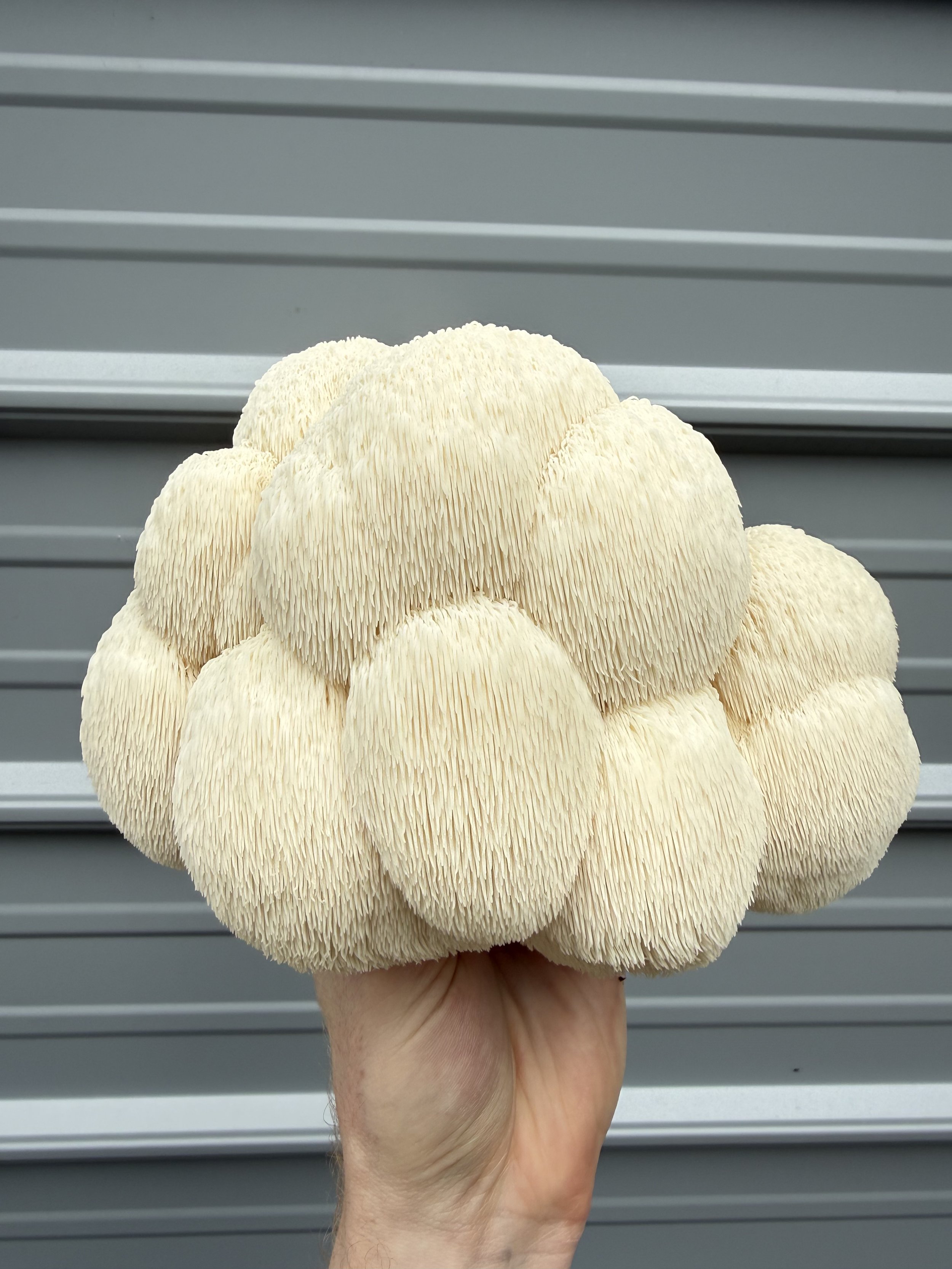
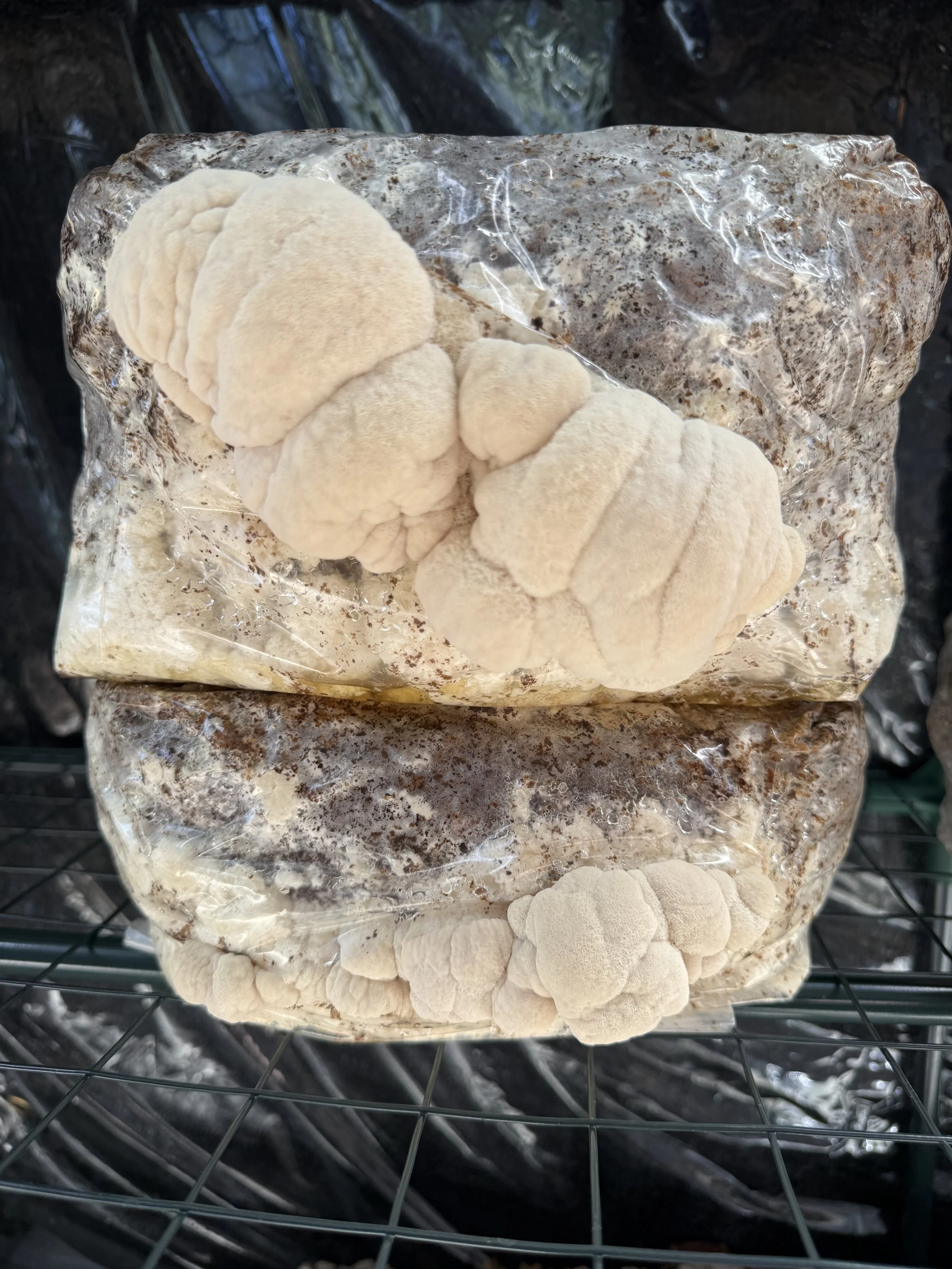
“HE-UFJ” - Lions Mane (Hericium erinaceus)
Origin: Wild cloned by Unkle Fungus — Pennsylvania, June (90°F day)
Substrate: Hardwood — Masters Mix, supplemented hardwood blocks
Fruiting Temp: 65–85°F fruiting / 72–78°F colonization
Humidity: 40–95% RH
Difficulty: Beginner–Intermediate
This culture came from Unkle Fungus, who found and cloned it on a scorching 90°F June day in Pennsylvania. That origin story is the whole deal; this thing was pulled from the wild on a brutally hot day, and it has shown it can hang.
In warmer, drier conditions that would stress out or stall most Lion's Mane cultures, HE-UFJ keeps producing. Big, dense flushes. Long spines. Reliable pins. It's currently the top performer in The Swamp's grow rooms and my go-to for warm-weather production runs.
Hericium erinaceus is the most bioactively studied species in the genus. The hericenones (fruiting body, aromatic meroterpenoids) and erinacines (mycelium, cyathane diterpenoids) are the only naturally occurring compounds known to stimulate Nerve Growth Factor synthesis. Combined with high beta-glucan content and ergothioneine, this species earns every bit of the health claim attention it gets.
If you're in Florida, the Southeast, or any warm climate and you've struggled with Lion's Mane — this is the culture to try first.
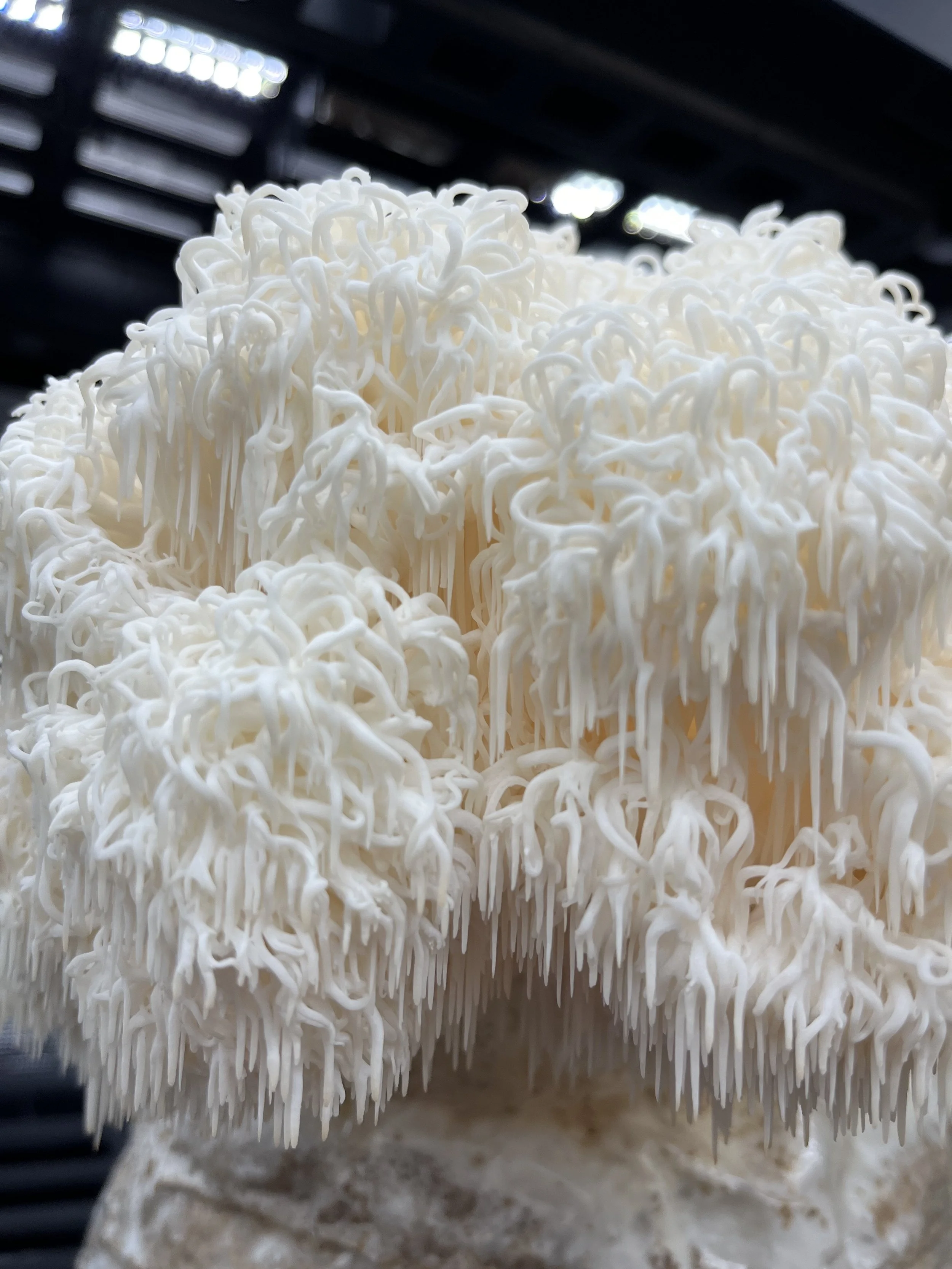
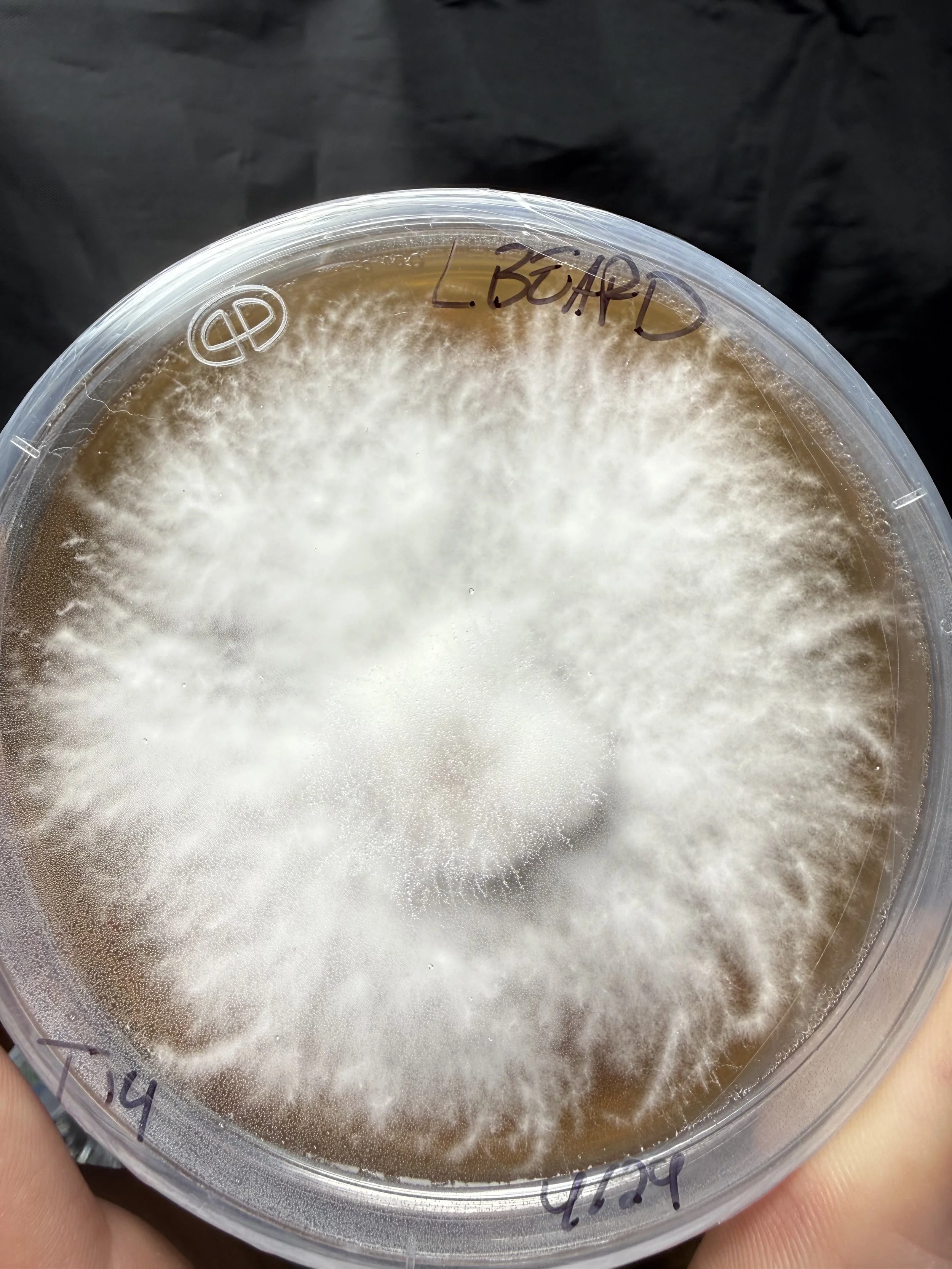
“HE-LBeard” - Lions Mane (Hericium erinaceus)
Origin: NextMycology in 2023
Substrate: Hardwood — Masters Mix, supplemented hardwood blocks
Fruiting Temp: 65–75°F fruiting / 60–78°F colonization
Humidity: 75–95% RH
Difficulty: Intermediate
Long, luscious, fully cascading spines; the kind of Lion's Mane that stops people mid-step at the farmers market. LBeard is kept around for that dramatic visual trait.
It's not quite as dense as HE-UFJ and needs conditions dialed in a bit more. Consistent higher humidity and good fresh air exchange to really develop those long teeth. But when conditions are right, the flushes are gorgeous. Not as warm-weather tolerant as UFJ, so keep that in mind if you're running a hot grow space.
Same species, same bioactive compound profile as all erinaceus cultures — hericenones, erinacines, beta-glucans — but LBeard is really the aesthetic pick. Great for photography, markets, and chefs who eat with their eyes first.
Pleurotus species
(Oyster Family)
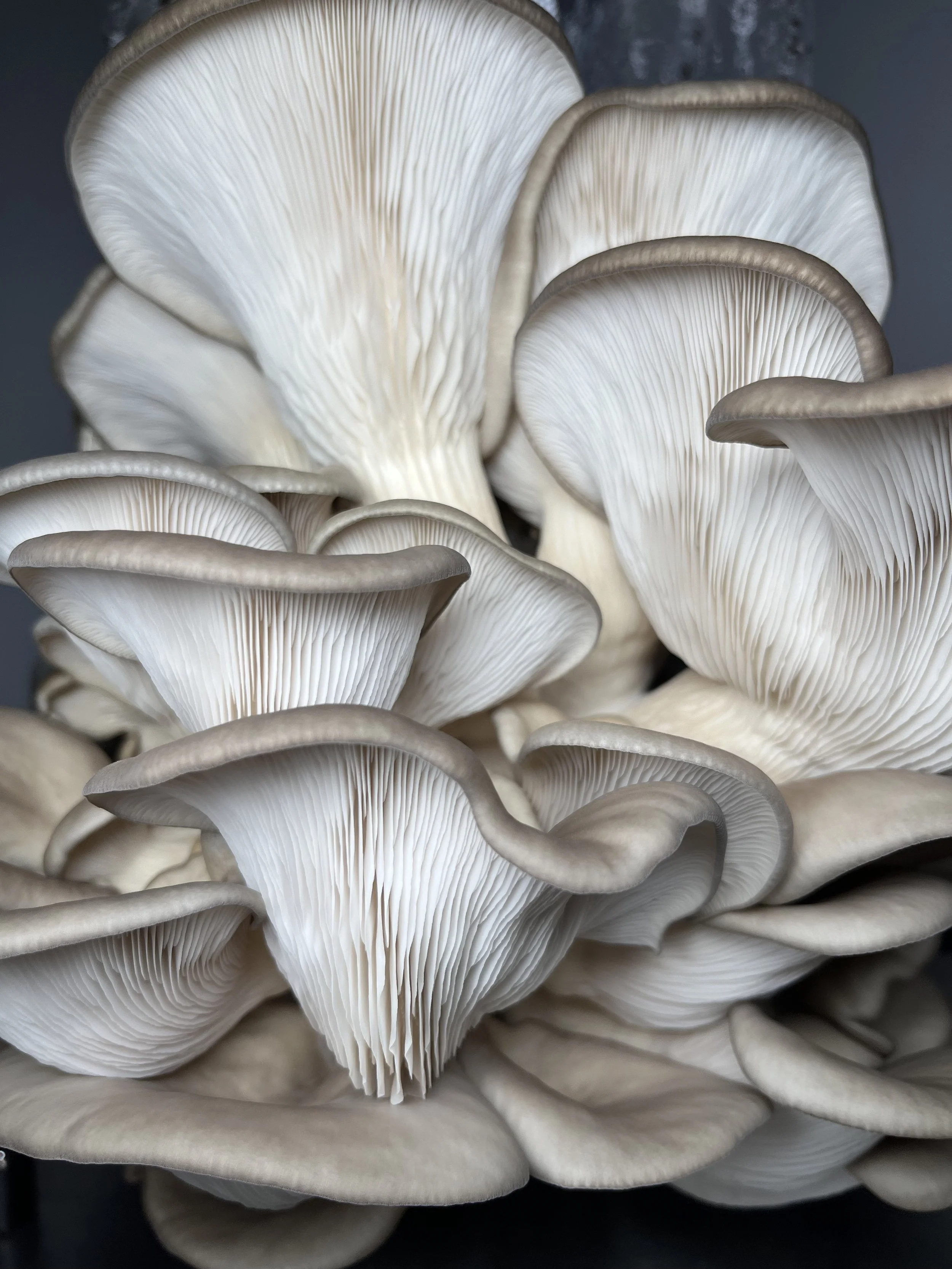
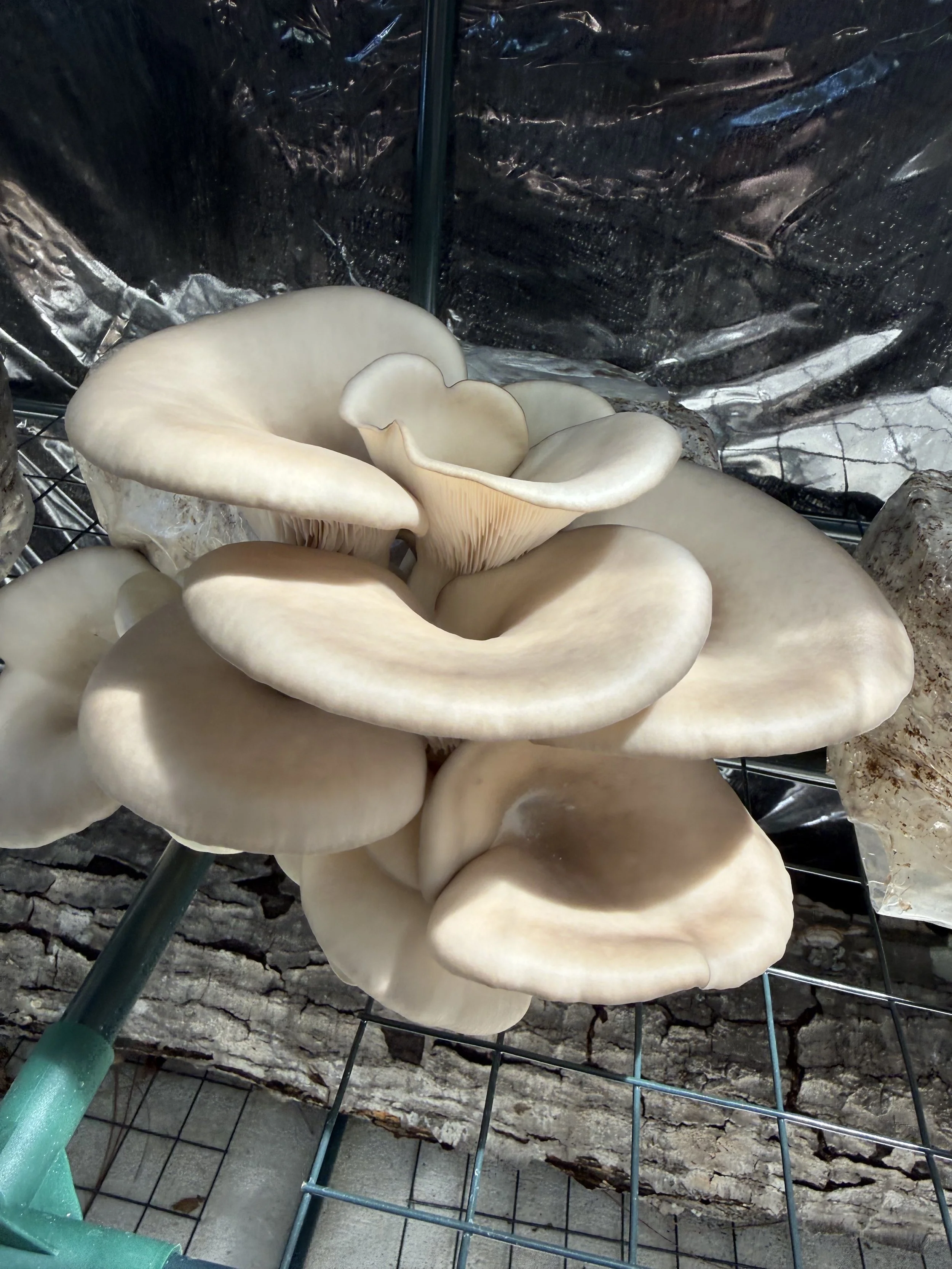
“PO-CNS” - Blue Oyster (Pleurotus ostreatus)
Origin: Maine Cap n' Stem
Substrate: Hardwood — Masters Mix, supplemented hardwood blocks
Fruiting Temp: 55–85°F fruiting / 72–78°F colonization
Humidity: 40–95% RH
Difficulty: Beginner
The workhorse. If you need a culture that shows up, produces big, and does it reliably — PO-CNS is exactly that. Maine Cap n' Stem sourced this one and it has not let me down.
Strong, fast flushes. Big, meaty Blue Oyster clusters with that classic fan cap shape. I've seen it hold up and produce nice dense pinsets in conditions up to 85°F, which for an ostreatus is solid. Great for beginners learning the rhythm of Oyster cultivation and for commercial producers who need consistent output.
Blue Oysters are the nutritional standard-bearer of the Pleurotus genus — high protein (25–30% dry weight), significant beta-glucan content, lovastatin, and a solid iron and B-vitamin profile. They're fast, they're forgiving, and they're delicious sautéed in butter with garlic.
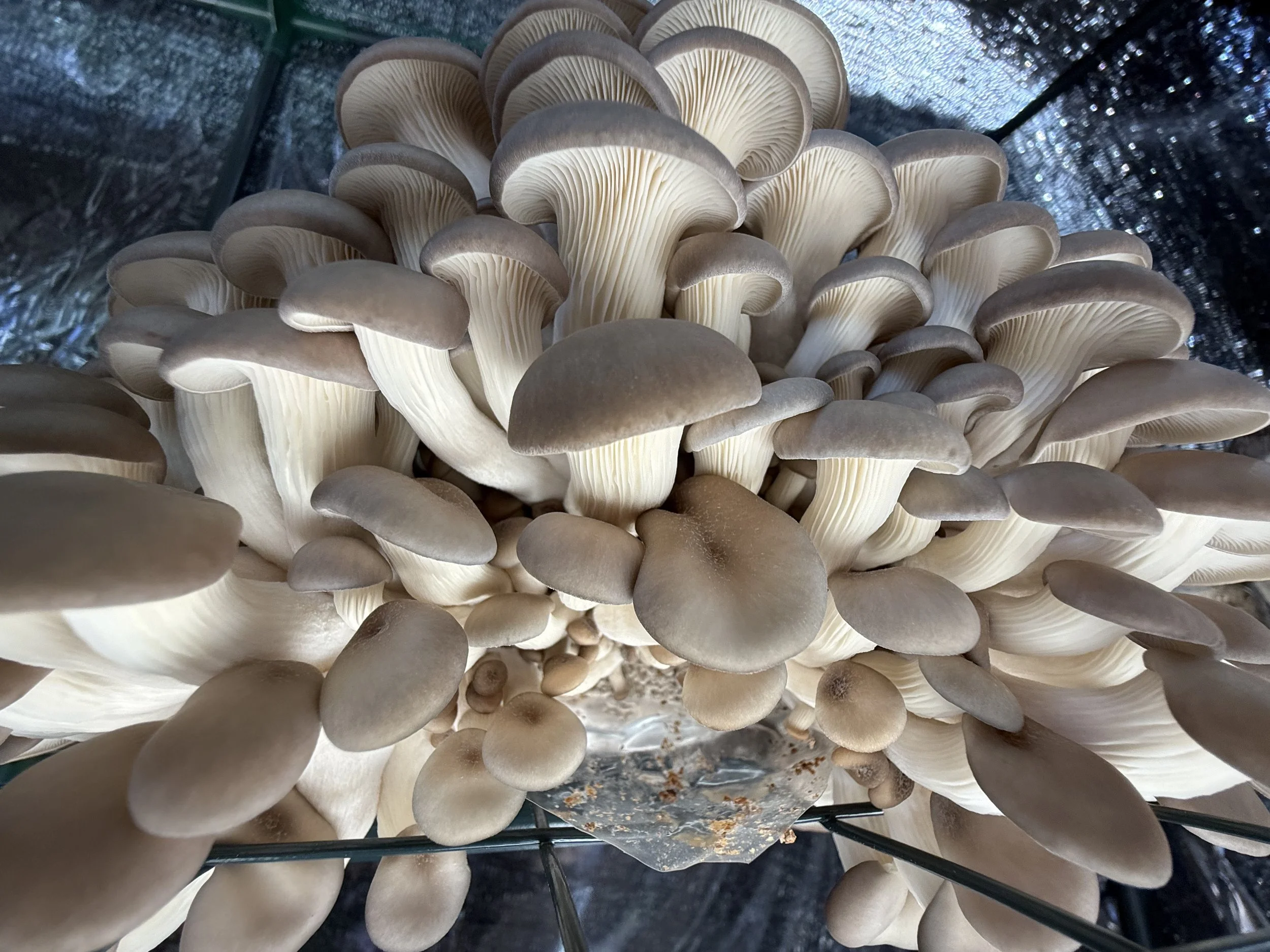
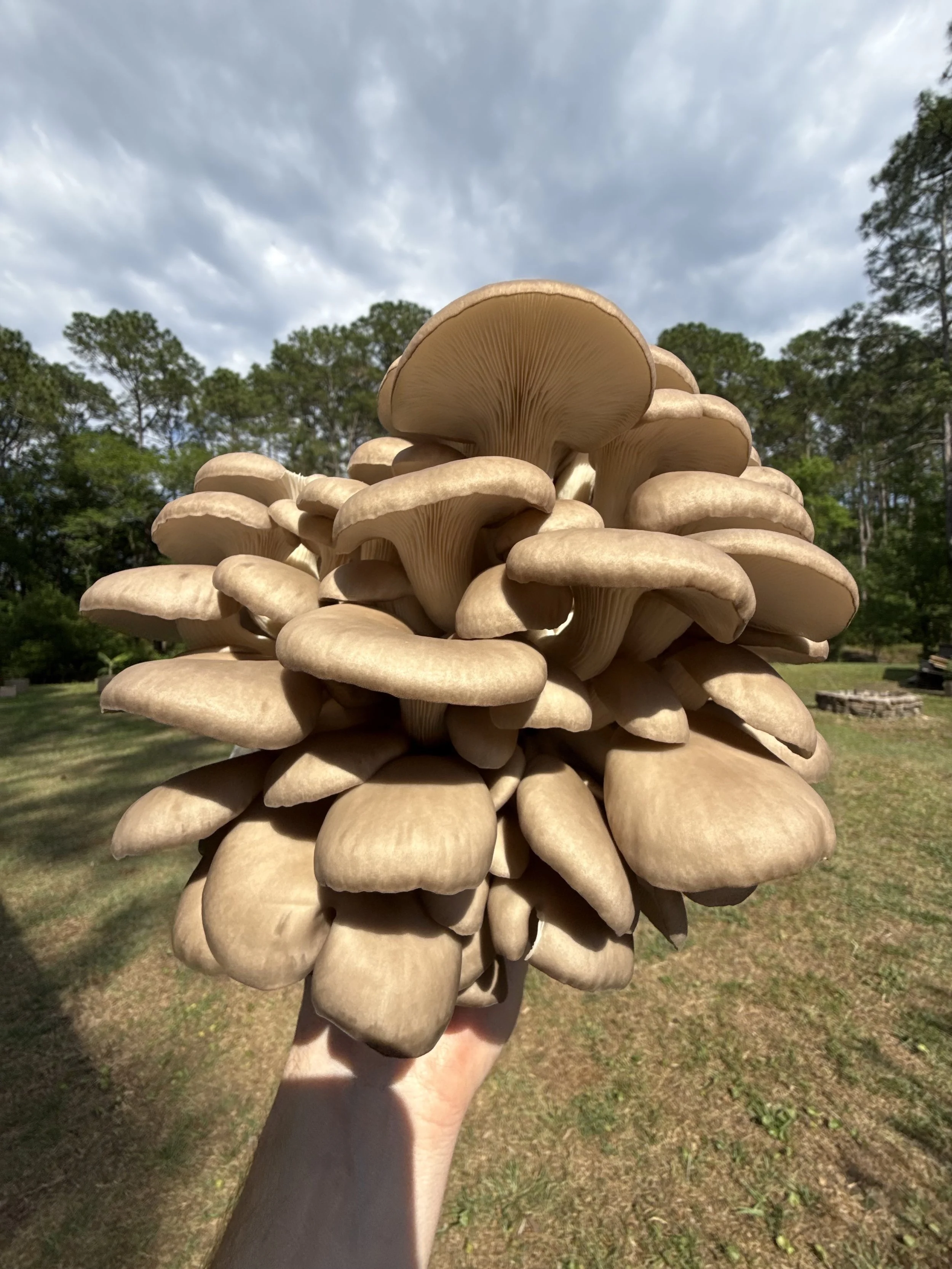
“PO-CHO” - Chocolate(blue) Oyster (Pleurotus ostreatus)
Origin: Maine Cap n' Stem
Substrate: Hardwood — Masters Mix, supplemented hardwood blocks
Fruiting Temp: 65–88°F fruiting / 72–78°F colonization
Humidity: 40–90% RH
Difficulty: Beginner
Technically still a Blue Oyster — same species, different expression. The Chocolate Oyster runs slightly warmer and produces a noticeably more brown-toned cap. Less storm-gray, more earth-toned. Great for markets where you want some color variety on the table.
What really stands out with this culture is the texture and speed. The pinsets are thick and heavy, and once it starts fruiting it goes FAST. Blink and you're harvesting. The caps are smaller than PO-CNS but the density and texture hold up beautifully in a hot pan — firm, meaty, nice bite.
If you're in a warmer climate and want a Blue Oyster that performs well at 75–80ish°F rather than needing a full cool-down, this is a strong option.
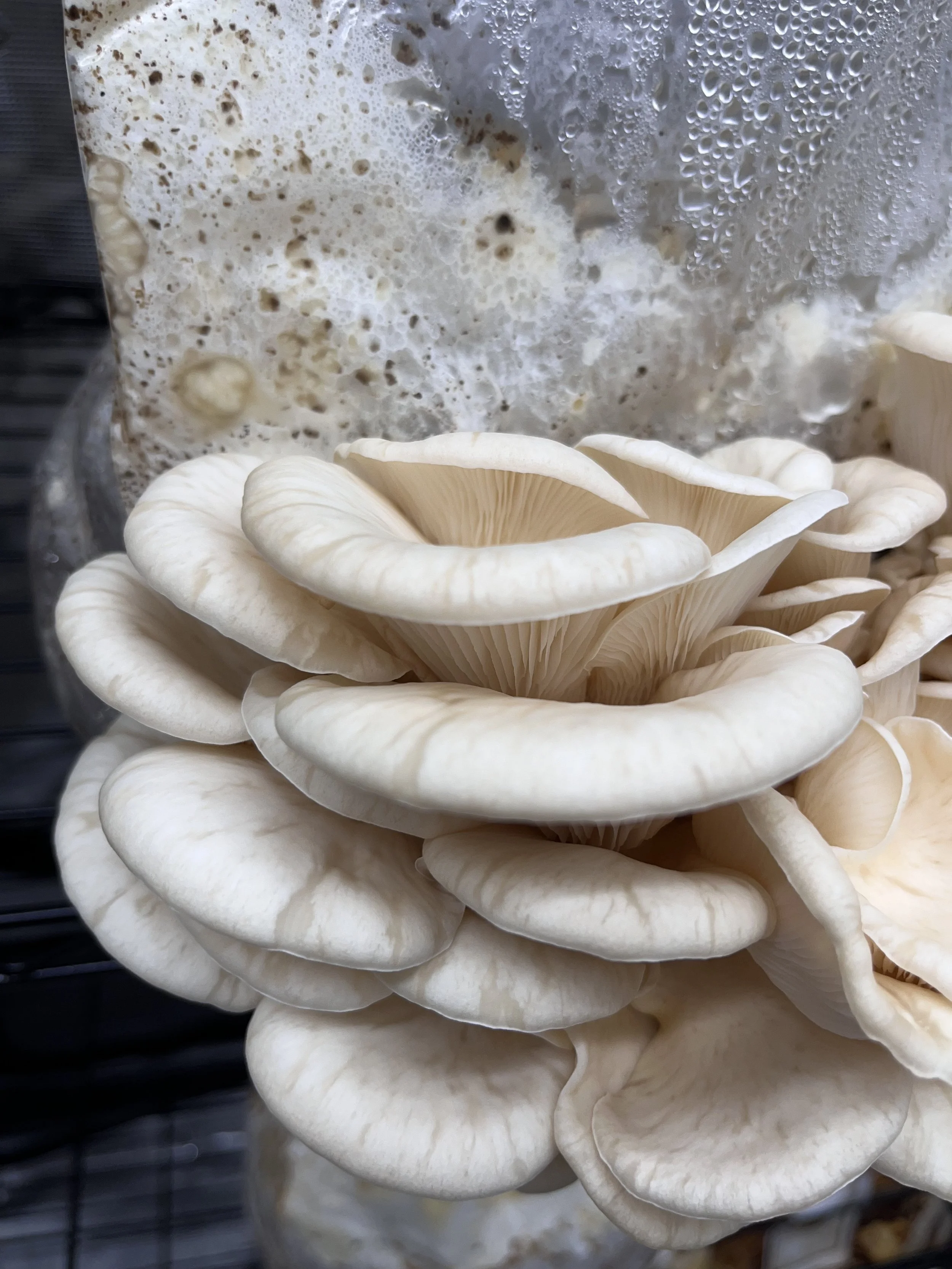
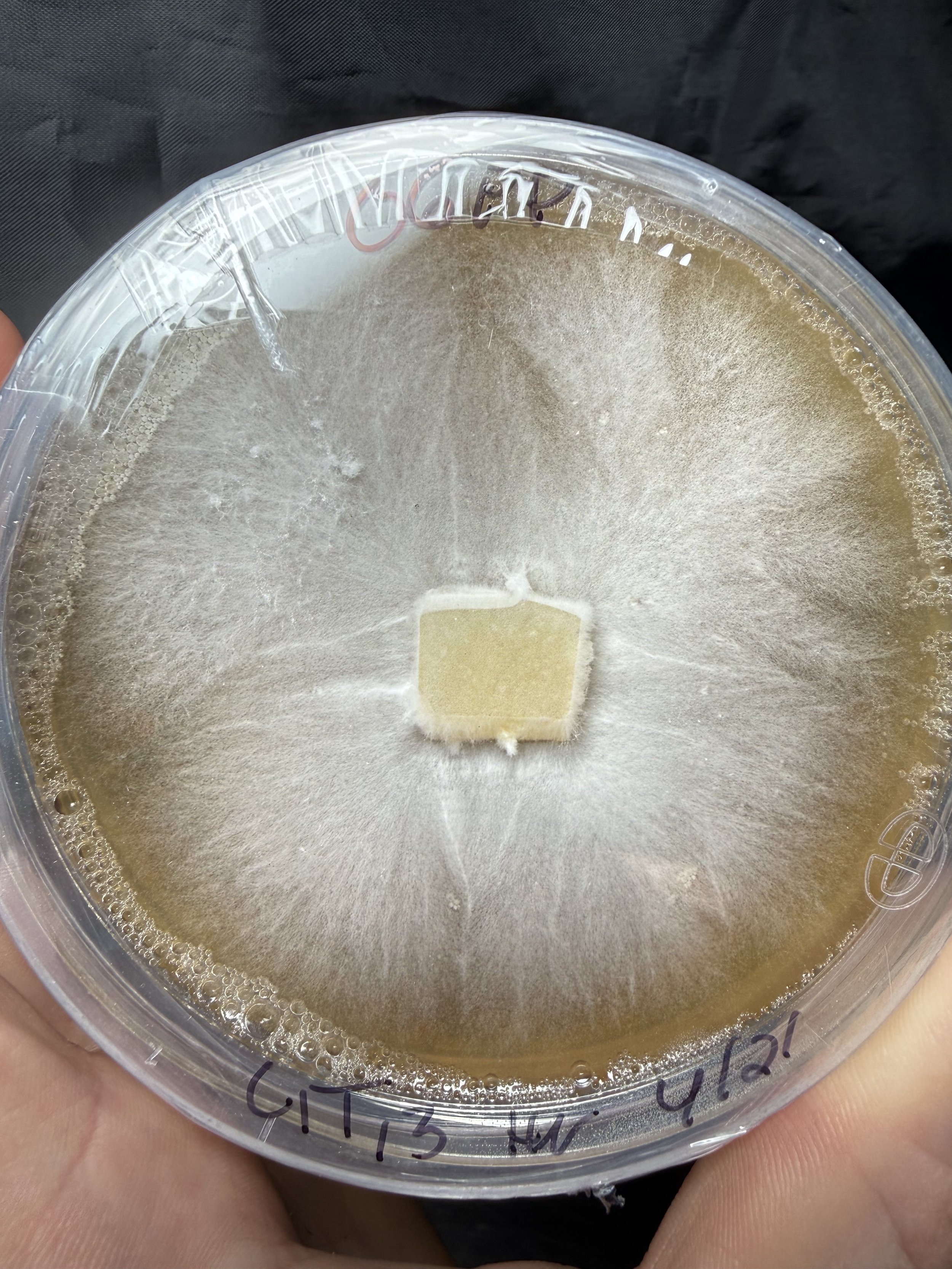
“PP-OG1” - Aspen Oyster (Pleurotus populinus)
Origin: Wild cloned — Western Foothills of Maine, Old Growth Forest, Early June 2023
Substrate: Hardwood — supplemented hardwood blocks. Oak or Mixed BBQ pellets for wood, doesn’t need aspen or poplar.
Fruiting Temp: 50–70°F fruiting / 60–74°F colonization
Humidity: 70–90% RH
Difficulty: Intermediate
This one is personal. PP-OG1 came out of the same Maine old growth forest as the HA-OG Bear's Head cultures — and it was my first successful wild clone. That's a milestone moment in any cultivator's path.
P. populinus is a cooler-weather Oyster that really wants temps in the 50s–60s to fruit well, but I’ve done it in the 70s It's slower than the Blues but the payoff is worth it: large, meaty caps with a gorgeous marbled ivory color that looks completely unlike any commercial Oyster you've seen. The flesh is firm and the flavor is clean and mild with a slightly sweet meaty finish.
If you're running a climate-controlled space that dips cool in fall and winter, this is a spectacular culture to have going. Wild old growth Maine genetics — these haven't been through the selection pressure of commercial production.
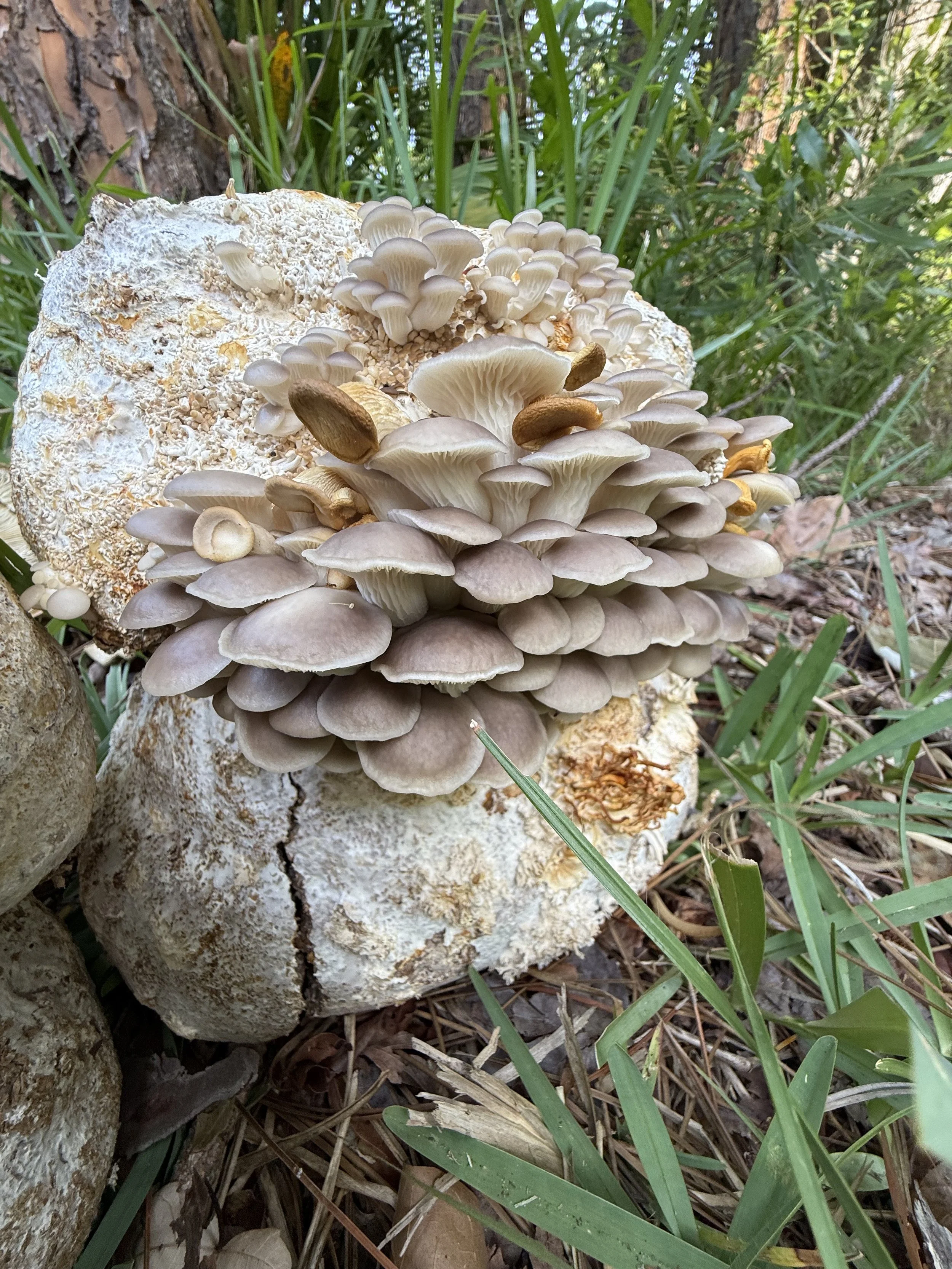
“PO-FL” - Florida Oyster (Pleurotus ostreatus)
Origin: Selected Culture
Substrate: Hardwood pellets + wheat bran, straw, pasteurized substrate
Fruiting Temp: 70–90°F fruiting / 74–80°F colonization
Humidity: 50–90% RH
Difficulty: Beginner–Intermediate
This is the heat-adapted Oyster we've been waiting for down here. A Florida-origin ostreatus that can handle temps pushing into the upper 80s — conditions that would have most Oyster cultures producing aborts or nothing at all.
It's fast. Pins quickly, fruits quickly, and produces full clusters of smaller, more manageable Oysters. Not the biggest caps you've ever seen, but when every other culture in your grow room is struggling through a Florida summer, PO-FL keeps going.
Caveat worth noting: high temps alone won't save you if other conditions are off. High humidity and good airflow still matter. But for warm-weather runs — especially relevant here in Jacksonville — this culture is a real asset.
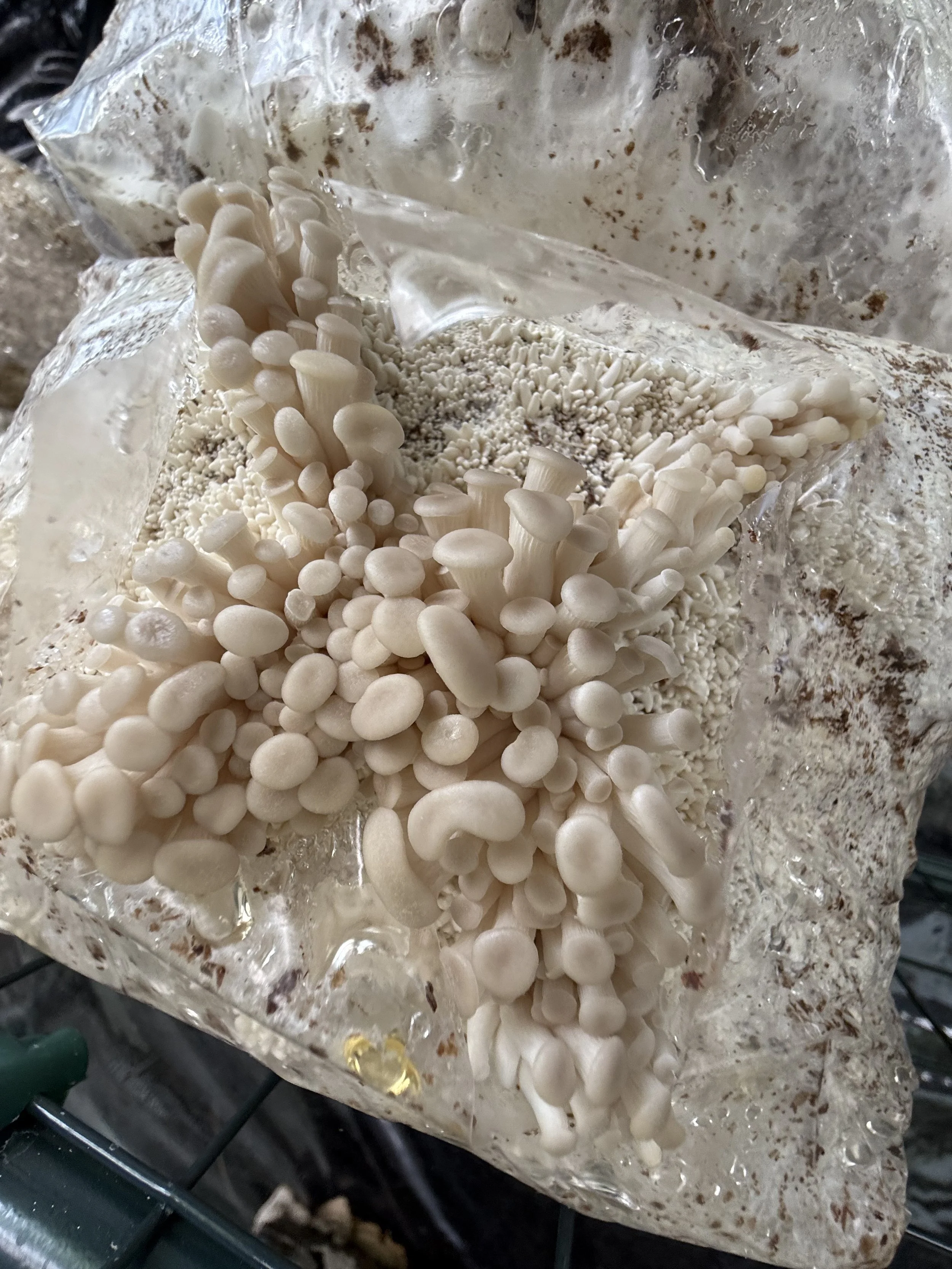
“PP-PO” - Phoenix Oyster (Pleurotus pulmonarius)
Origin: Selected culture
Substrate: Hardwood, straw, pasteurized substrate
Fruiting Temp: 65–90°F fruiting / 72–80°F colonization
Humidity: 50–90% RH
Difficulty: Beginner
The Phoenix Oyster is the other warm-weather workhorse in the Pleurotus lineup. P. pulmonarius runs browner and slightly thinner-capped than ostreatus, but it compensates with speed and heat tolerance.
Once this thing colonizes substrate and you initiate fruiting, be ready. It pins and fruits fast — sometimes aggressively so. It can push into the high 80s°F like PO-FL, though same caveat applies: get your humidity and FAE dialed in or it'll abort.
Great beginner culture if you're in a warm climate and can't keep temps cool. Flavorwise it's mild and tender — excellent sautéed, holds up well dried too. A solid addition if you want warm-weather diversity better than just Blue Oyster varieties.
Ganoderma species
(Reishi Family)
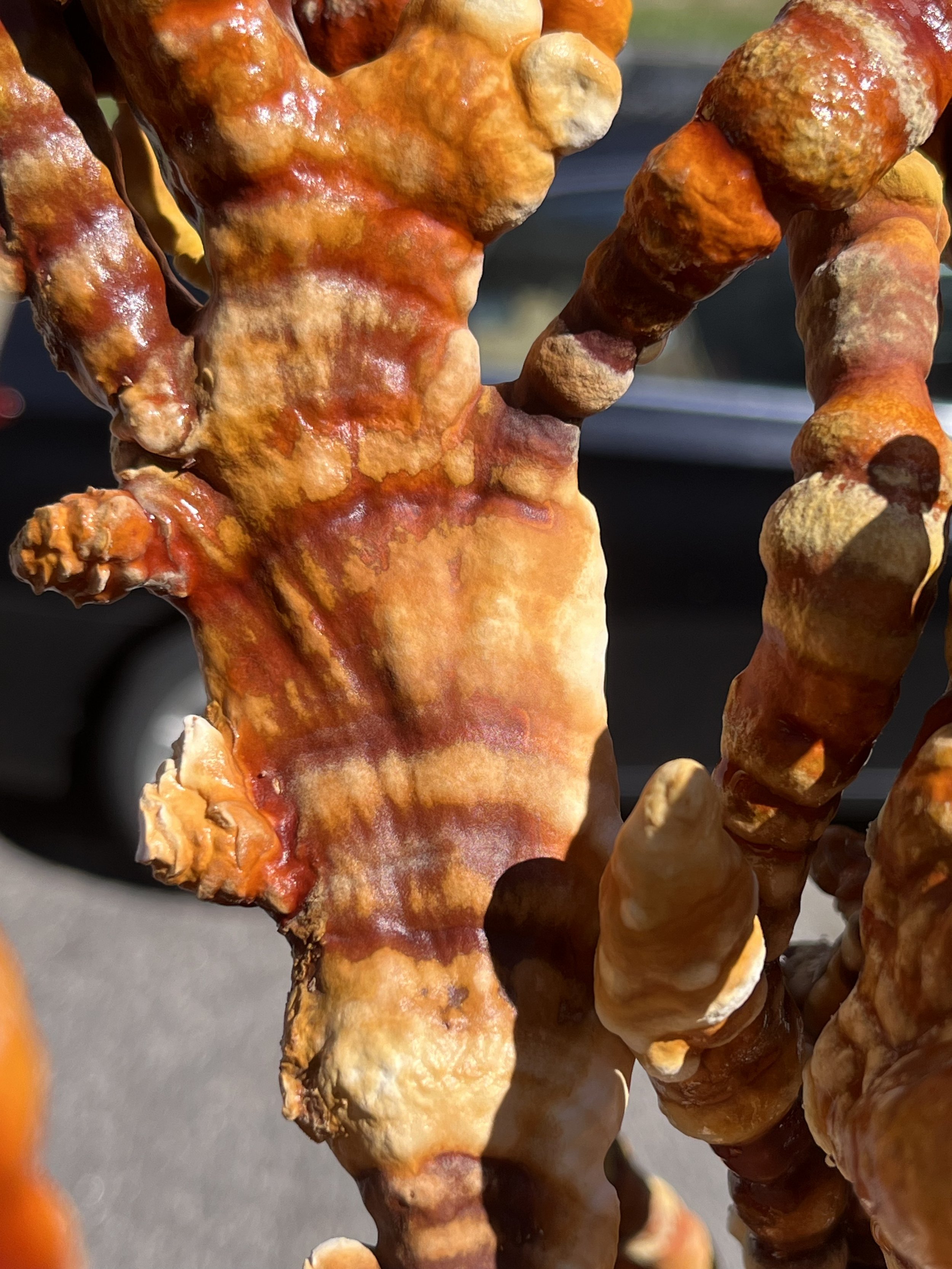
Origin: Terrestrial Fungi — their 'Tiger' selection
Substrate: Supplemented hardwood blocks or logs — sterilized
Fruiting Temp: 70–82°F | Colonization: 75–82°F | Elevated CO2 drives antler form
Humidity: 80–92% RH
Difficulty: Intermediate
Terrestrial Fungi's Tiger Reishi — a newer addition to their catalog that they hadn't worked with extensively when they listed it. Their initial notes describe abnormally shaped antlers with gold and maroon striping. That's exactly what the name refers to — the banded coloration that develops on the antler forms, not a standard G. lingzhi morphology.
Still early in my own runs with this one. The color expression on the antlers is genuinely distinct — that gold and maroon banding is unlike anything else in the Ganoderma section of the library. More documentation to come as I put more runs through it.
Bioactive profile is in line with G. lingzhi generally. The stripe patterning and antler morphology are the strain-specific traits.
“GLZ-TGR” Reishi (Ganoderma lingzhi)
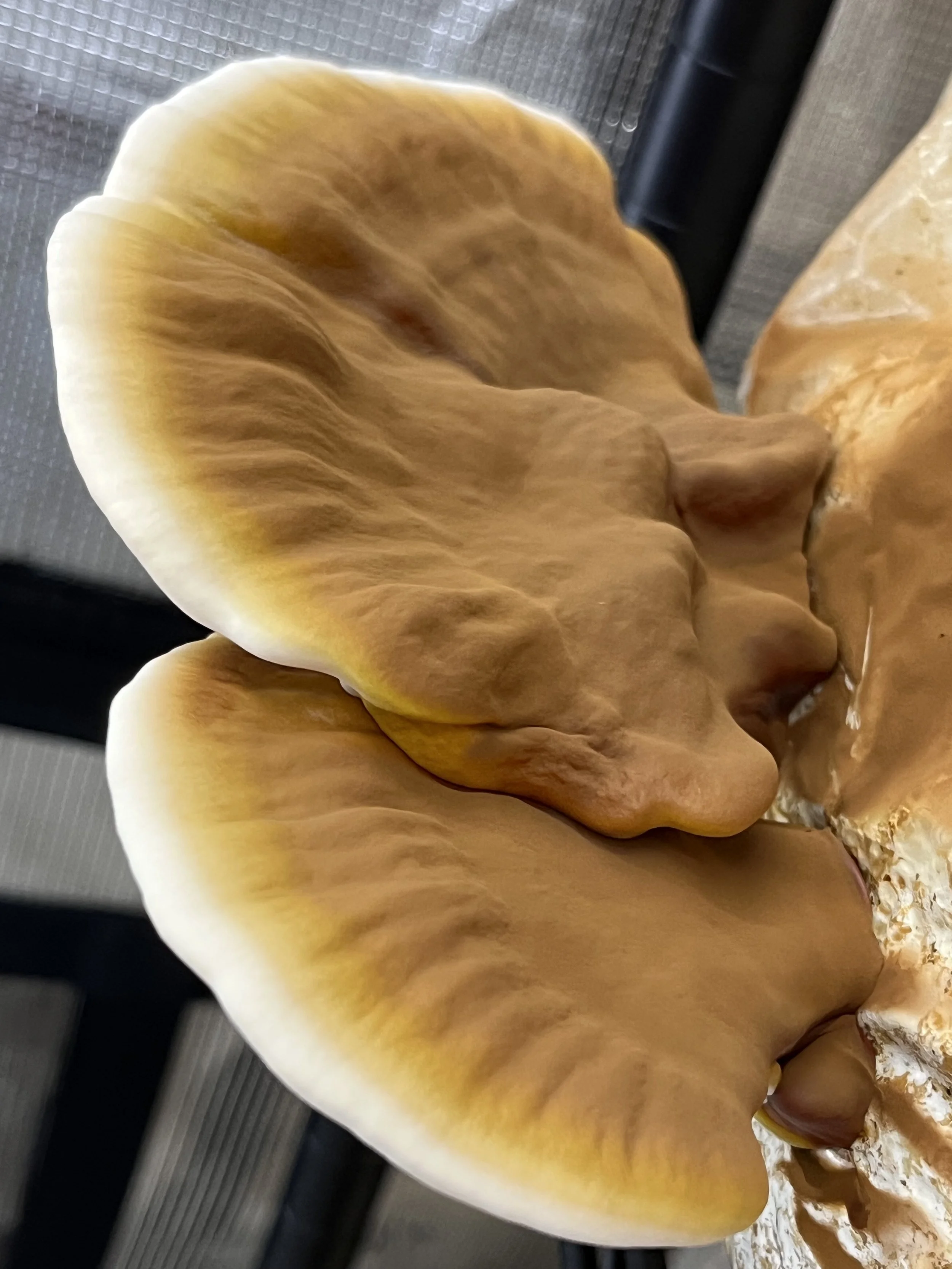
Origin: Mycrodex (sourced externally)
Substrate: Supplemented hardwood blocks — sterilized
Fruiting Temp: 70–82°F | Colonization: 75–82°F
Humidity: 80–90% RH
Difficulty: Intermediate
G. polychromum. Conks readily, produces beautiful dense layered fruiting bodies with the glossy lacquer surface characteristic of the genus. Interesting specimen to have in the collection. Does NOT want to antler.
Primary area of interest for me with this species is MycoMaterials — same as TF05, polychromum produces dense leathery mycelial composite material. The compound profile shares the Ganoderma genus hallmarks (polysaccharides, triterpenoids) but is less studied than G. lingzhi in the clinical literature. More of a research and materials culture in my work than an extract production target.
“GPOLY” (Ganoderma polychromum)
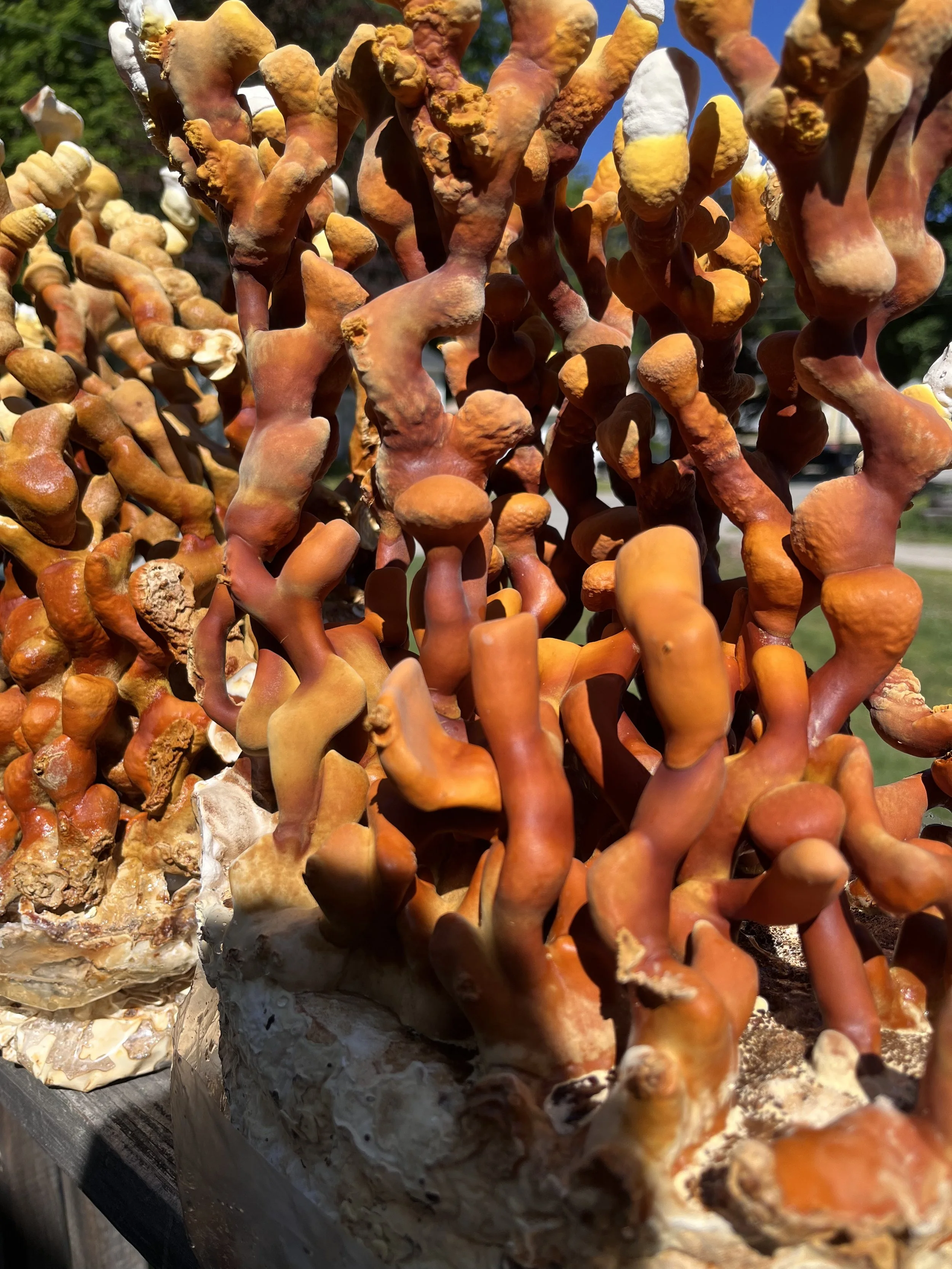
“TF05” Antler Reishi (Ganoderma multipileum)
Origin: Terrestrial Fungi
Substrate: Supplemented hardwood blocks — sterilized
Fruiting Temp: 70–82°F | Colonization: 75–82°F
Humidity: 80–92% RH
Difficulty: Intermediate
From Terrestrial Fungi. Their listing describes TF05 as the best antler/bonsai-forming strain in their collection — highly light-sensitive, capable of being coaxed to cascade toward a light source. That's the reputation this culture carries.
Loves to Antler, doesn’t like to conk.
G. multipileum also produces dense, leather-like mycelial composite material that I'm following with interest for MycoMaterials work — packaging, composites, structural applications. The species sits at an interesting intersection of medicinal and materials biology.
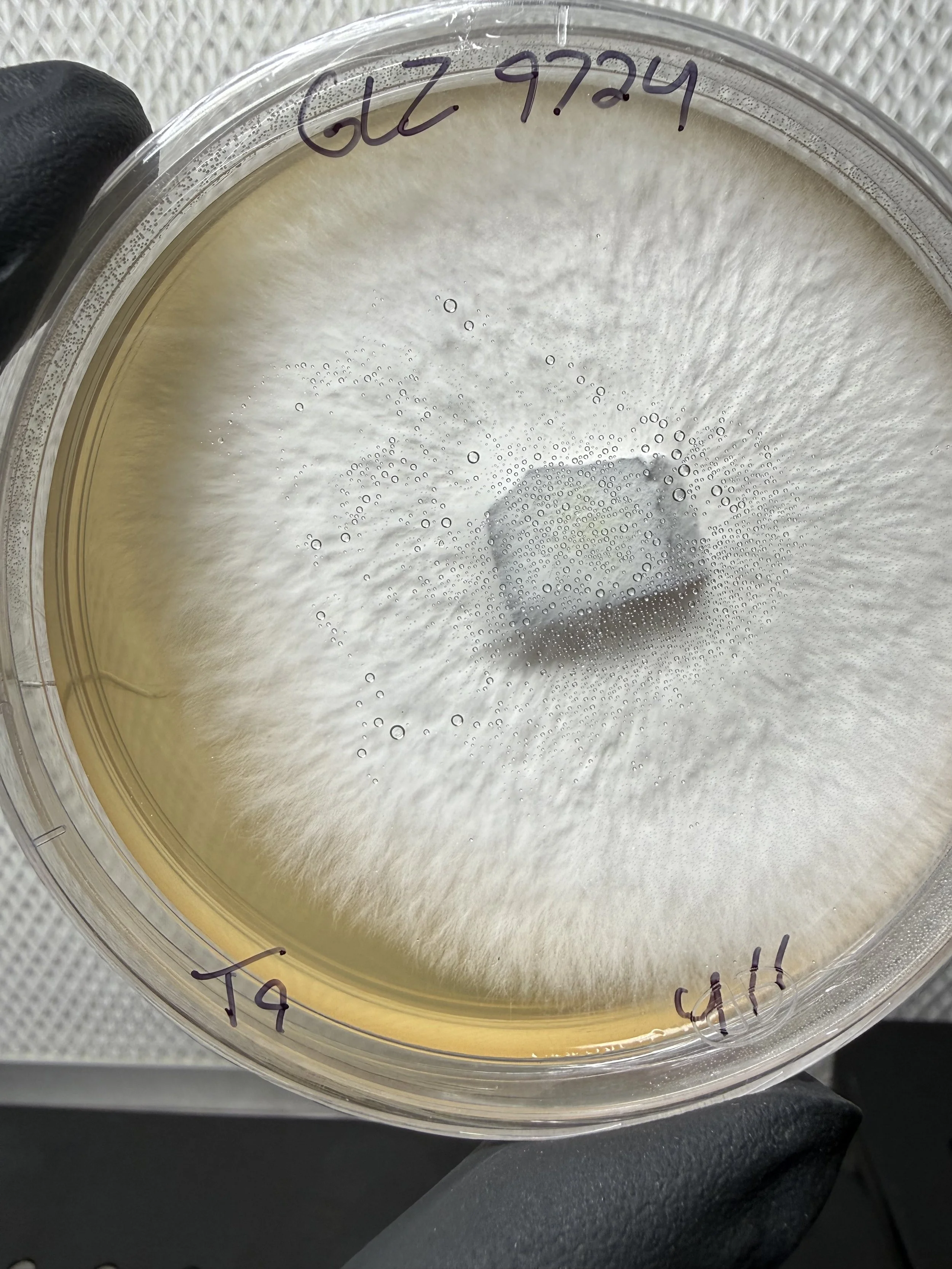
“GLZ-9724” Reishi (Ganoderma lingzhi)
Origin: Mycelia (Belgium) via Maine Cap n' Stem — strain ‘GM9724’
Substrate: Supplemented hardwood blocks or logs — sterilized
Fruiting Temp: 70–82°F | Colonization: 75–82°F
Humidity: 80–92% RH
Difficulty: Intermediate
From the Mycelia supply chain in Belgium, through Maine Cap n' Stem. GM9724 has published data documenting elevated triglycerides and ganoderic acid content relative to other G. lingzhi strains — that's the reason I carry this one specifically. Strain-level compound data is rare and useful, especially for extraction work.
Strong culture, performs reliably across substrates and media. Less visually dramatic than TGR but consistent and substantive. Good base culture for anyone focused on Reishi extract production.
For background on why strain-level compound variation matters: ganoderic acids are triterpenoids with documented interactions across multiple biological pathways. The polysaccharide fraction (primarily beta-glucans) underpins the immunomodulatory reputation backed by the clinical literature. G. lingzhi has more published research behind it than most other mushroom species.
Misc. species
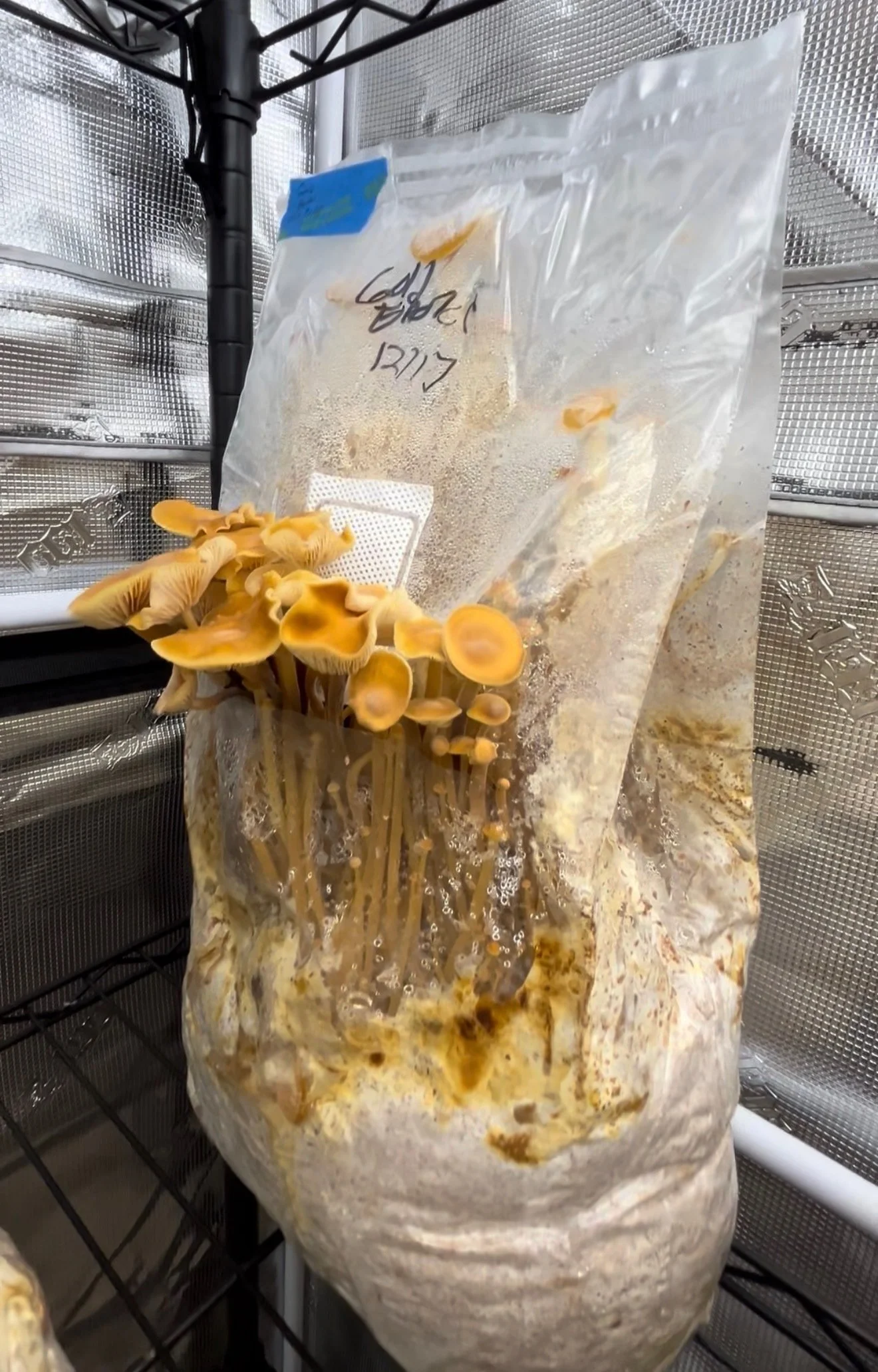
“FV-4600” Gold Enoki (Flammulina velutipes)
Origin: Maine Cap n' Stem
Substrate: Supplemented hardwood, grain-based substrate, sterilized
Fruiting Temp: 40–60°F fruiting / 65–72°F colonization
Humidity: 85–95% RH (high CO2 for long stems)
Difficulty: Intermediate — needs cold
Maine Cap n' Stem's Gold Enoki culture, and one of the more productive Flammulina varieties I've run. Full bags. Numerous flushes. Long, noodley clusters of golden mushrooms — exactly what you want from an Enoki.
FV-4600 tends to be a bit more prolific than FV-PR1 overall, making it the stronger pick for production volume. Both cultures share the same fundamental cultivation approach: cold fruiting temps, high CO2 for long stems, consistent high humidity.
Same antifreeze proteins, same bioactive profile, same culinary versatility as FV-PR1. If you're trying to decide between the two — FV-4600 for yield, FV-PR1 for wild genetics and provenance.
“FV-PR1” Gold Enoki (Flammulina velutipes)
Origin: Mycosapiens — Potomac River area
Substrate: Supplemented hardwood, grain-based substrate, sterilized
Fruiting Temp: 40–60°F fruiting / 65–72°F colonization
Humidity: 85–95% RH (high CO2 for long stems)
Difficulty: Intermediate — needs cold
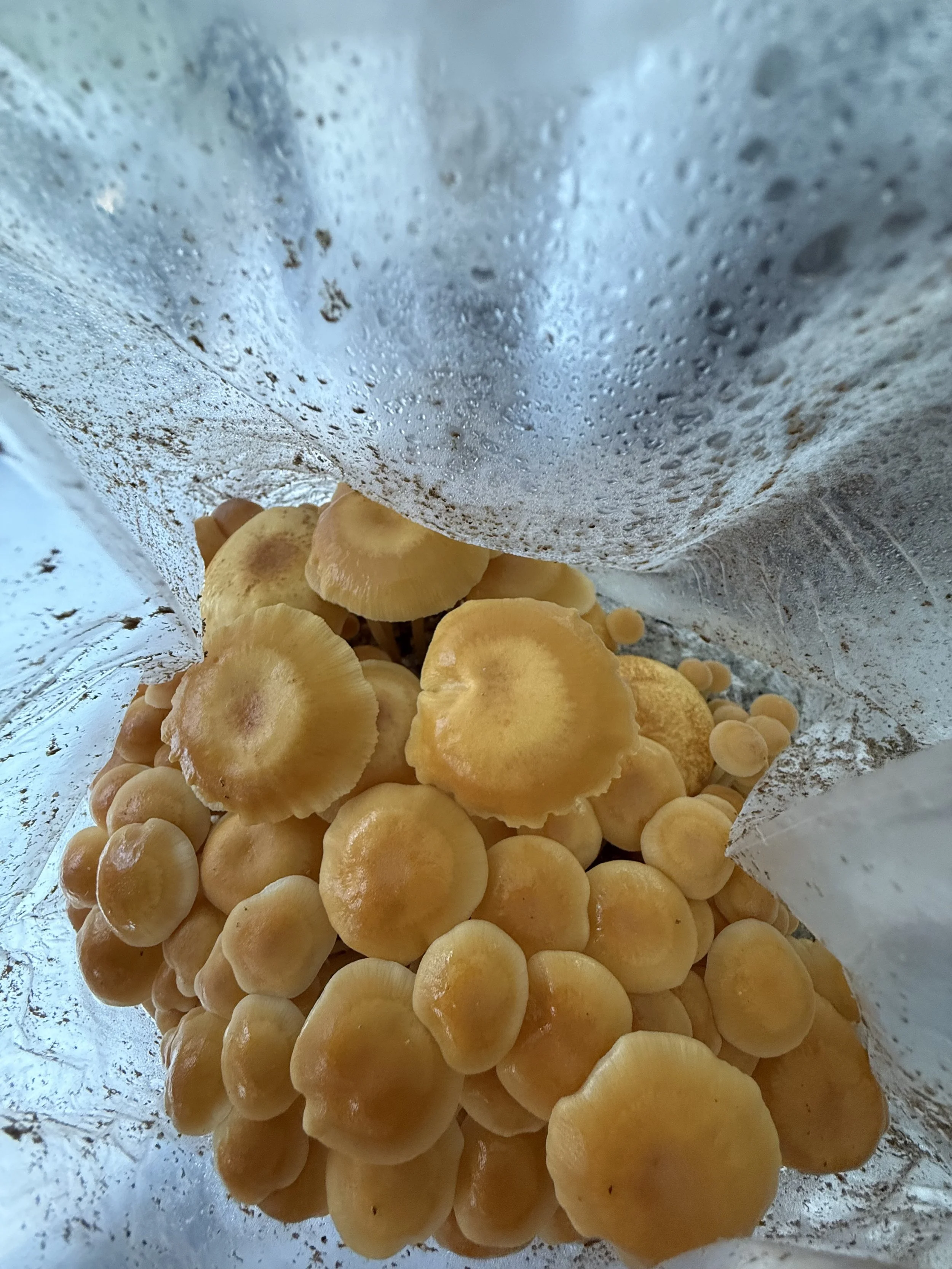
From Mycosapiens, collected from the Potomac River area — FV-PR1 is a wild-origin Gold Enoki that produces those long, luscious golden noodles when grown right.
The key with Enoki is CO2. Choke the fresh air exchange, keep CO2 elevated, and the stems elongate while caps stay small — that's the commercial Enoki look. Drop CO2 too low and you get wider caps and shorter stems. Both are edible and good, but the noodly long-stem form is the aesthetic you're probably after.
Flavor profile is mild, slightly fruity-sweet, with a satisfying snap. Great in soups, hot pot, stir fries, or raw in salads. One of the more interesting bioactive profiles in the Flammulina genus too — proflamin proteins and ergothioneine have both been studied for anti-tumor and antioxidant properties.
One more thing worth knowing: Flammulina velutipes has natural antifreeze glycoproteins. This mushroom evolved to fruit in near-freezing temperatures and has the biochemistry to match. It literally resists ice crystal formation in its tissues.
Origin: Widely available selected strain
Substrate: Supplemented hardwood blocks (sterilized) — or hardwood logs outdoor
Fruiting Temp: 55–75°F fruiting / 70–75°F colonization
Humidity: 80–90% RH
Difficulty: Intermediate — slow colonizer, worth it
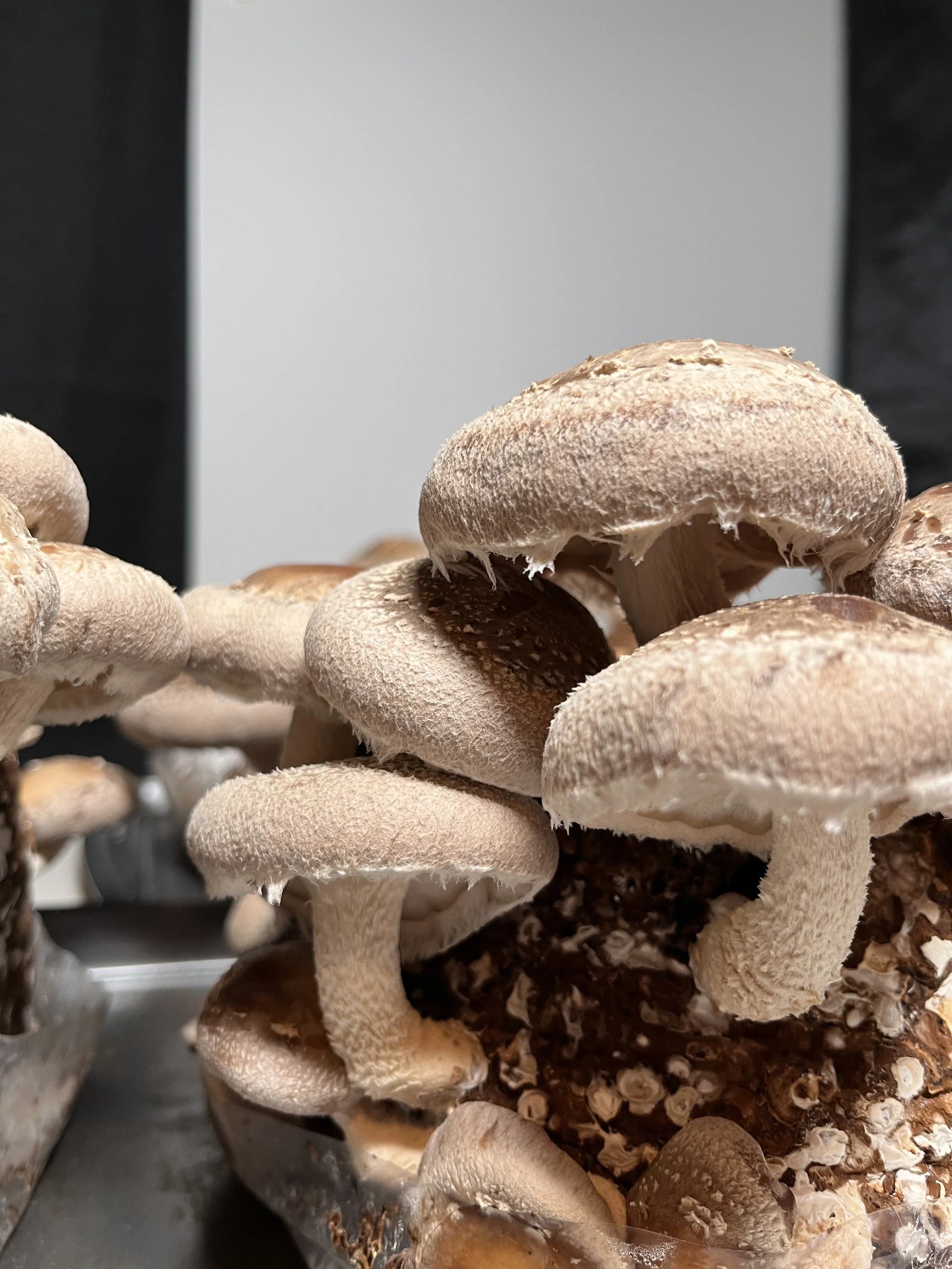
3790 is a popular Shiitake strain that leans toward larger, denser mushrooms compared to its close cousin 3782. If you want big, meaty Shiitake caps, this is the one.
Indoor cultivation takes time — 8 to 10 weeks of incubation is standard, and that's not a shortcut you can take. The colonization needs to complete fully before you'll get good pins. But the indoor fruit quality is excellent, and you get multiple flushes from a well-colonized block.
Outdoor log cultivation is where Shiitake really shines though. Inoculated hardwood logs will produce for 3–5 years, and outdoor-grown Shiitake has a depth of flavor that indoor blocks just can't quite replicate — more umami, more complexity. Something about the wild environmental cues.
Bioactively, Shiitake is one of the most studied edible fungi. Lentinan (a beta-glucan) and eritadenine (for cholesterol management) are well-documented compounds. It's a foundational species for anyone serious about functional mushroom cultivation.
“LE-3790” Shiitake (lentinula edodes)
“COW-LSFF” Chicken of The Woods (laetiporus sulphureus)
Origin: Funga Farm, Denmark → Maine Cap n' Stem → The Swamp
Substrate: Still working on indoor protocols — log/totem cultivation recommended
Fruiting Temp: 65–75°F
Humidity: 80–90% RH
Difficulty: Advanced — better suited for outdoor logs
Full transparency: I'm still figuring this one out indoors. COW is notoriously difficult to fruit on sterilized blocks compared to its behavior on logs, and indoor fruiting requires patience and experimentation.
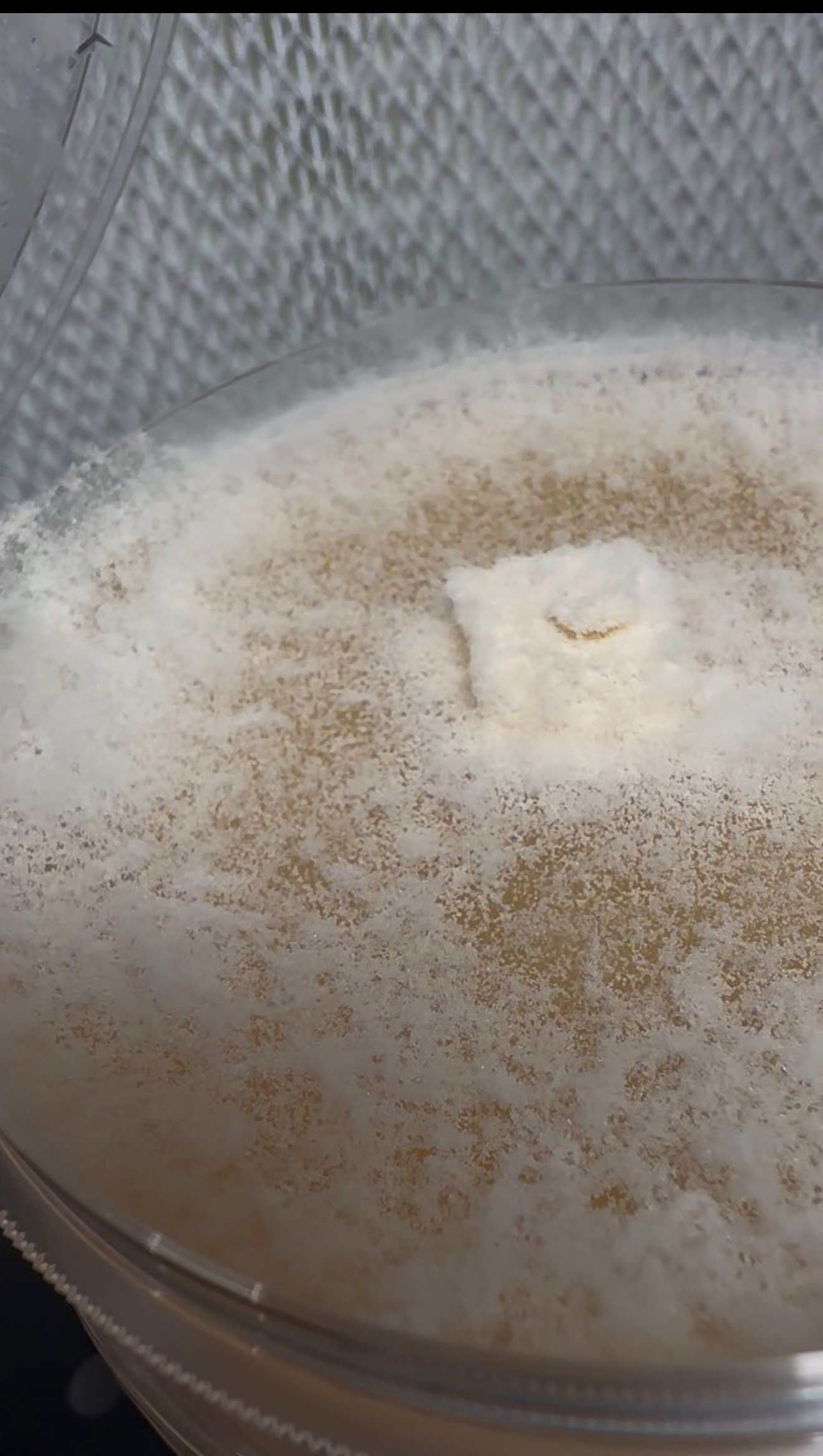
The mycelium is something else though — it throws peachy-orange hues on agar and substrate that are reminiscent of Neurospora. The texture on plates gets wispy and flaky as it matures. Just visually, it's one of the more interesting cultures to work with at the lab stage.
Best bet with this culture right now is log inoculation or outdoor totem stacks. L. sulphureus is a white rot species and absolutely loves buried or standing hardwood. In an outdoor setup it's more likely to fruit reliably and do what it does — produce those dramatic bright orange-yellow shelves.
This COW came from Funga Farm in Denmark via Maine Cap n' Stem. Great lineage. The indoor fruiting work continues.
Wine Cap (Stropharia rugosoannulata)
Origin: Selected culture
Substrate: Wood chips, straw, cardboard — pasteurized or raw outdoor beds
Fruiting Temp: 50–75°F fruiting / colonizes across wide range
Humidity: Outdoor / ambient — moisture retention in substrate key
Difficulty: Beginner — easiest outdoor mushroom
If you have outdoor space and wood chips, you need Wine Caps. Full stop. This is Stamets' favorite mushroom for a reason, and the research actually backs up the hype.
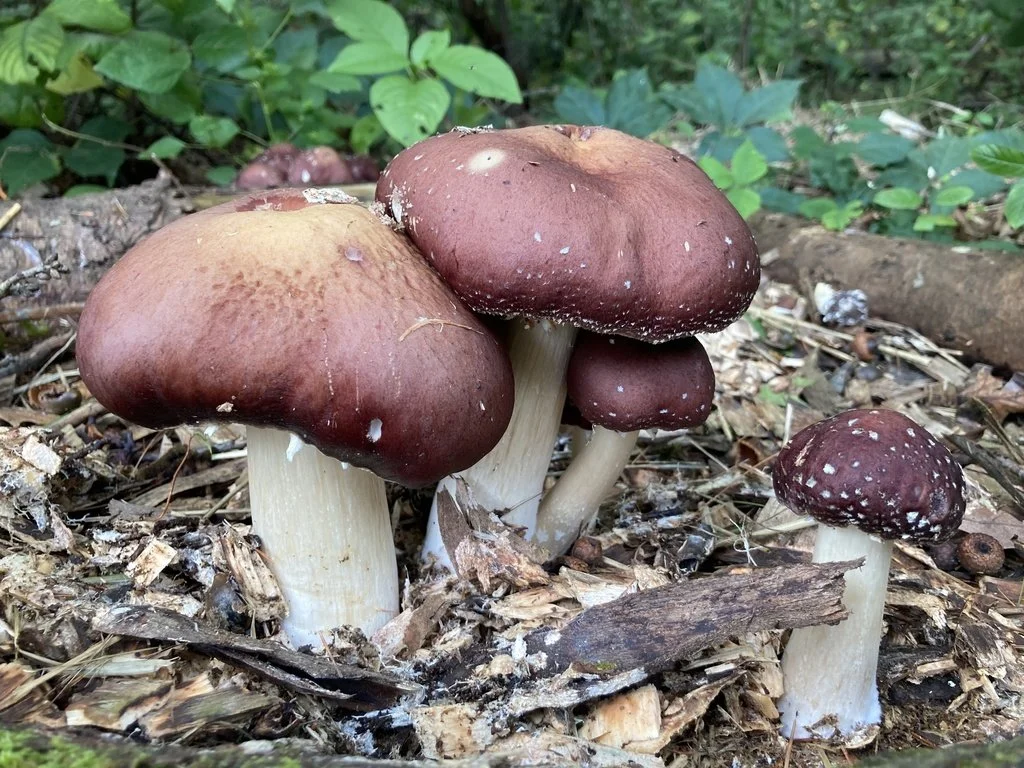
Stropharia rugosoannulata naturalizes in wood chip beds, produces big burgundy-capped fruiting bodies for years, and actively improves the soil system it lives in. The dense mycelial mat suppresses weed germination both physically and chemically. The mycelium produces nematicidal compounds and supports beneficial soil bacterial communities that knock back plant pathogens. It's essentially a composting engine that you eat from.
Beyond the garden ecology angle — Stamets' published research with Washington State University showed fungal compounds can significantly reduce viral loads in honey bee colonies. The mycelium improves nitrogen cycling and nutrient availability for surrounding plants.
Culinary profile: earthy, mild, savory with a meaty texture. The 'wine cap' name comes from the deep burgundy-red cap color that fades as it matures. Harvest them young for best flavor and texture.
This is also the entry-level gateway mushroom for anyone who wants to grow but doesn't have space for indoor cultivation. A bed in your yard. A pile of wood chips. Done.
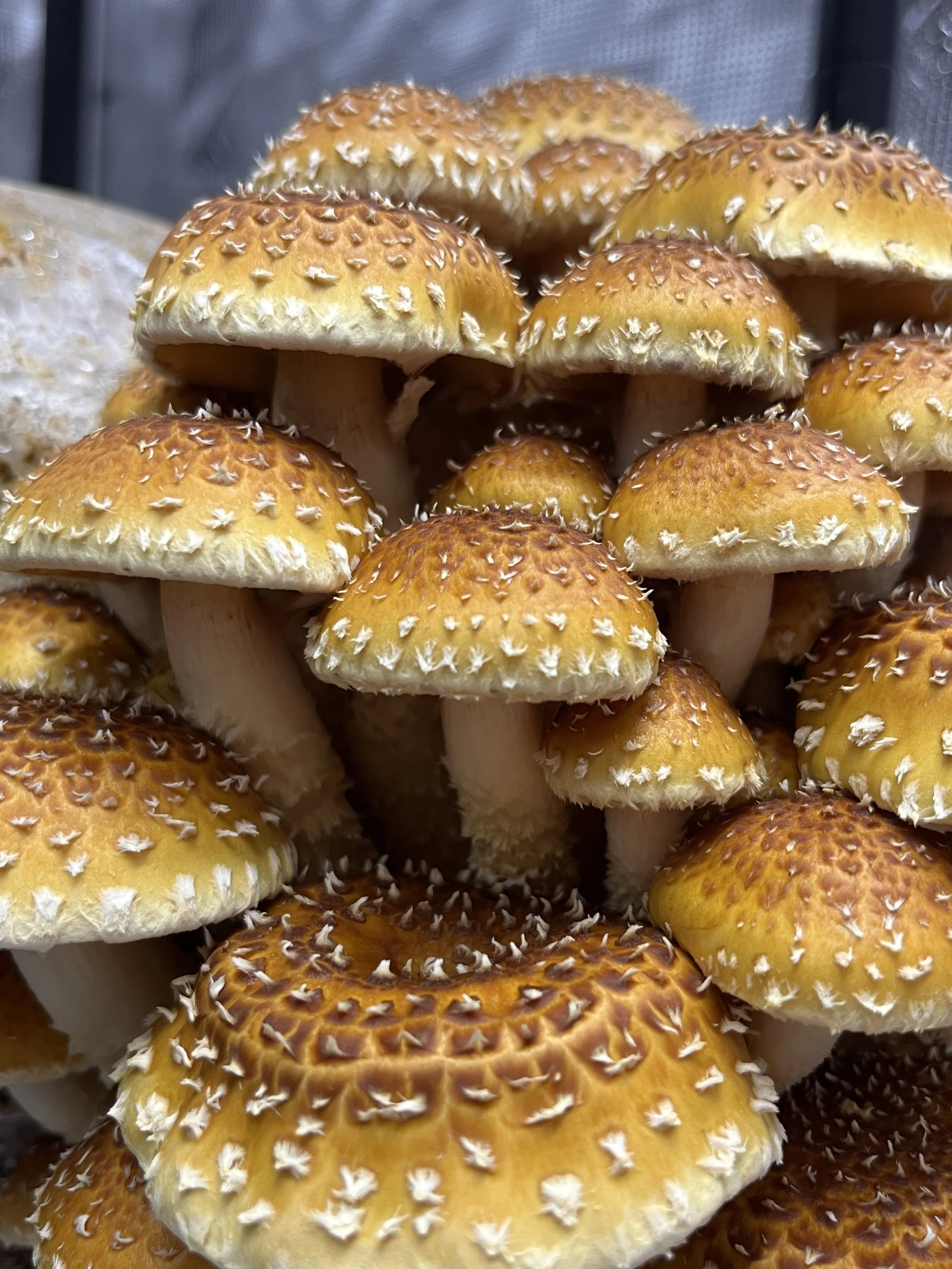
“PA-321” - Freckled Chestnut (Pholiota adiposa)
Origin: Selected culture
Substrate: Supplemented hardwood blocks — sterilized
Fruiting Temp: 55–65°F fruiting / 70–75°F colonization
Humidity: 85–95% RH
Difficulty: Intermediate — patience required
One of my personal favorite mushrooms to grow and eat — and probably the most underrated species in this whole list.
P. adiposa needs about 6 weeks of incubation before fruiting. That's not a typo. You're looking for the substrate to develop rich golden-amber metabolites before initiating — don't rush it. The patience is the whole deal with Chestnuts.
When they come, they come right. Little spikey turtle shell caps with a crunchy, slick texture and a rich, nutty, savory flavor that holds up beautifully in a pan. These want it cool — 55–65°F fruiting temps — so they're ideal for fall and winter runs, or a climate-controlled cold chamber.
Chestnuts are gaining traction with chefs who want something genuinely different on the plate. If you're a cultivator looking to stand out from the Blue Oyster crowd, this is your culture.