
Agar or Liquid Culture?
If you start digging deeper into mushroom cultivation, eventually you run into two things pretty quickly: agar and liquid culture.
Both are ways of working with mushroom mycelium, and both have their place. They just solve different problems.
So which one should you use?
The answer depends a lot on what you are trying to do, how much you have learned so far, and how much control you want over the culture you are working with. Let’s start with what we are actually trying to grow.
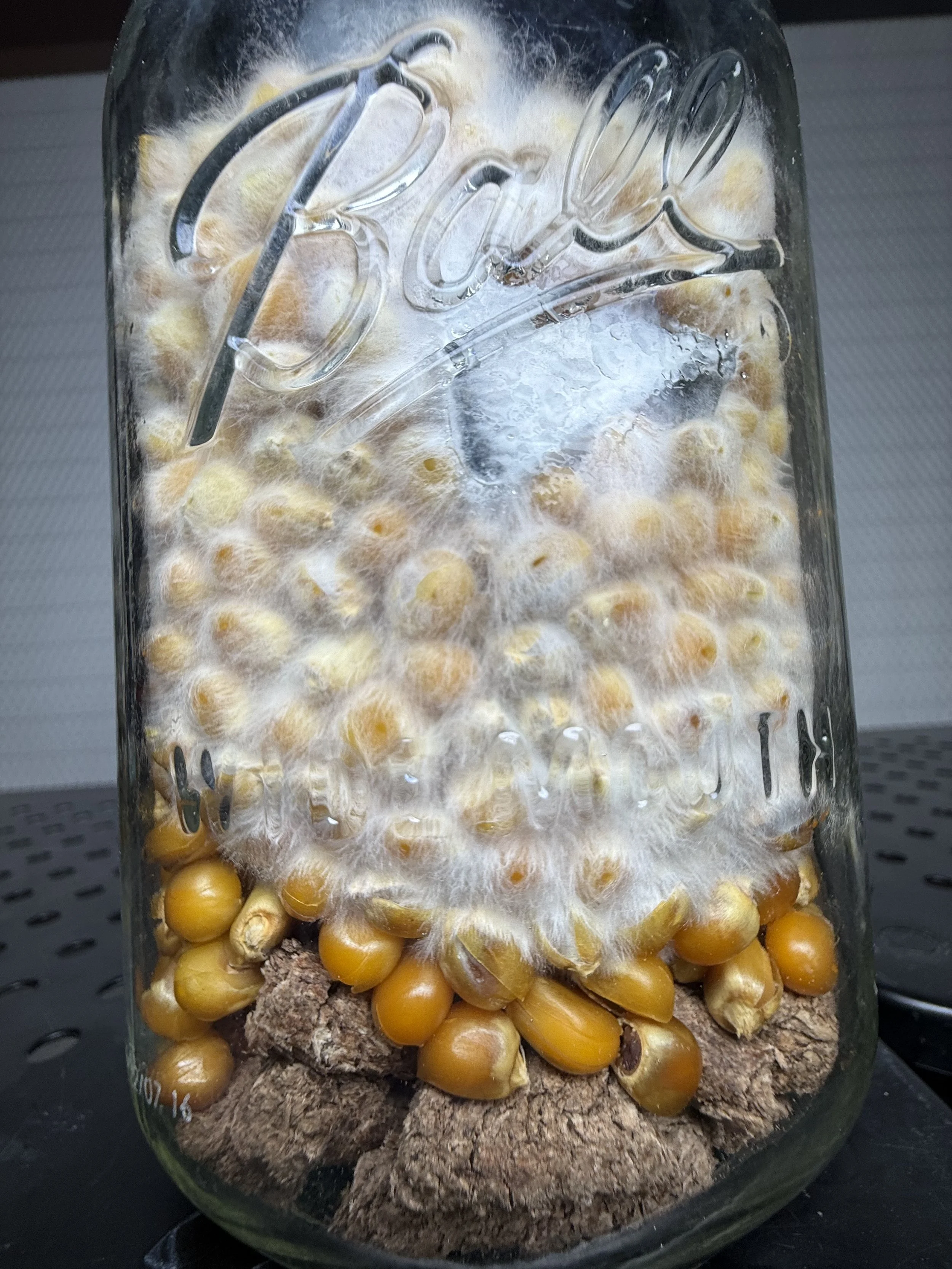
A slice of Agar colonizing sterile grain spawn.
Mushroom Mycelium: What Are We Growing?
The mushroom is only one part of the organism.
The part we are usually working with during cultivation is the mycelium, a network of microscopic fungal threads called hyphae. Mycelium grows through its food source, breaking down and absorbing nutrients as it goes. When the right environmental conditions come together, that network can produce the mushrooms we recognize.
So when we clone a mushroom, germinate spores, transfer a culture, or inoculate grain or substrate, we are usually not growing a mushroom directly.
We are growing and moving mycelium.
Agar and liquid culture are simply two different ways of giving that mycelium somewhere to grow.
Agar: The Culture Checkpoint
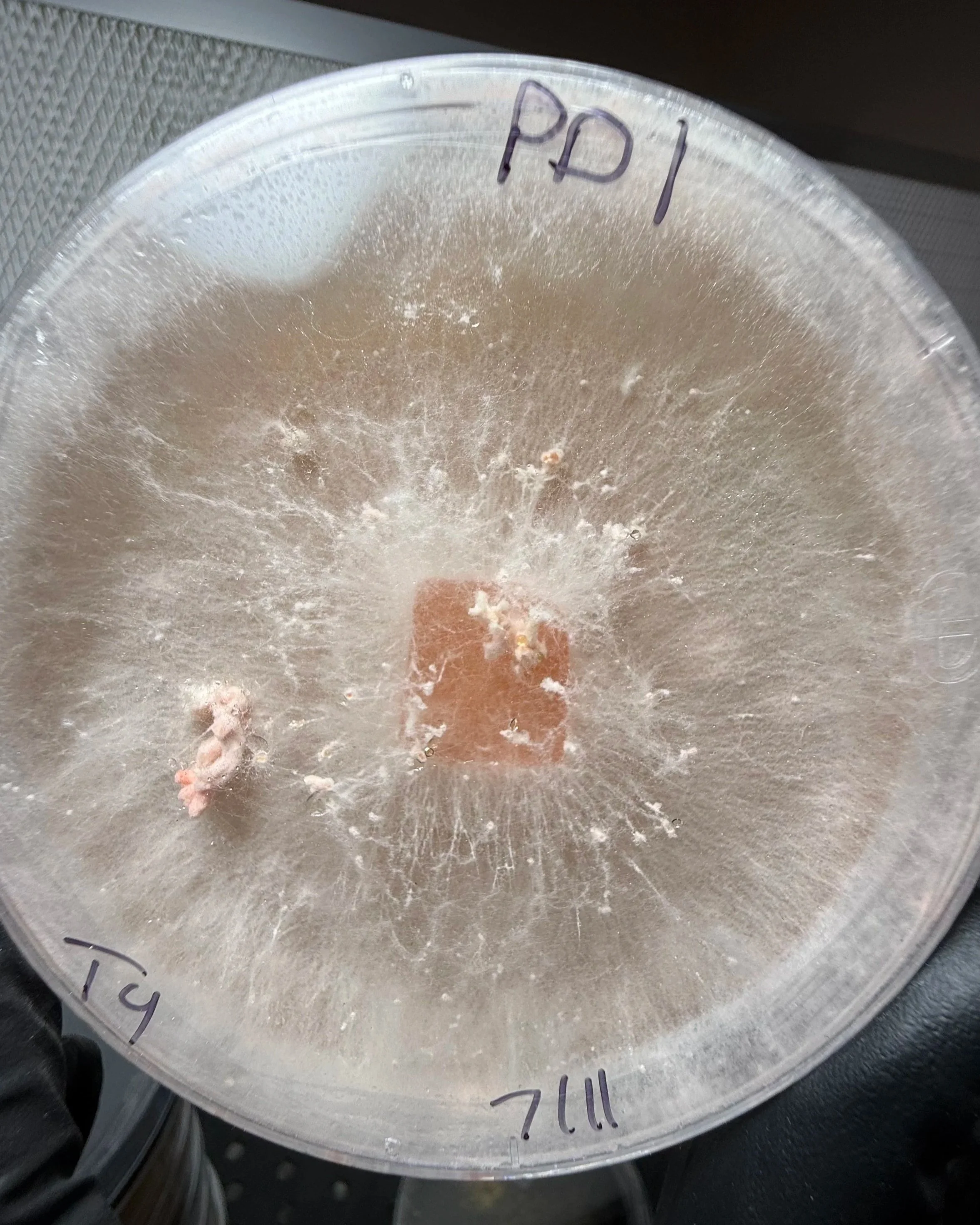
Agar is a firm growth medium used to grow fungi and other microorganisms. For mushroom cultivation, it is commonly poured into petri dishes and given a nutrient source such as malt extract and yeast extract. This is done in either a Still Air Box or infront of Clean Flowing Sterile Air from an FFU/Flow Hood.
The biggest advantage is pretty simple:
You can see what is happening.
Mycelium grows across the surface of the agar, giving you a chance to watch how it develops, make transfers, isolate cultures, and catch problems before you commit a large amount of grain or substrate. This makes agar especially useful when you are starting with something uncertain.
Found a wild mushroom you want to clone?
Agar gives you somewhere to start.
Want to germinate spores?
Agar gives those spores a place to grow.
Want to compare different nutrients, temperatures, or genetics?
Agar gives you a small test system.
Want to test your Liquid Culture to see if its clean???
Couple drops on an agr dish and you’ll see in a few days!
This is why I think of agar as the checkpoint between guessing and knowing.
It also gives you a way to maintain a known culture that you can return to and work from again. A standard agar plate is not a magical forever storage container, but it can become part of a culture library that you maintain through transfers and longer term storage methods. And this is where agar starts becoming more than just something you use to get mushrooms growing. You are beginning to work with the fungus itself.
If you want to go deeper into agar, check out my guide to [Malt Yeast Agar] for the basic medium I use here at Swamp Fox Fungi.
Liquid Culture: Expansion
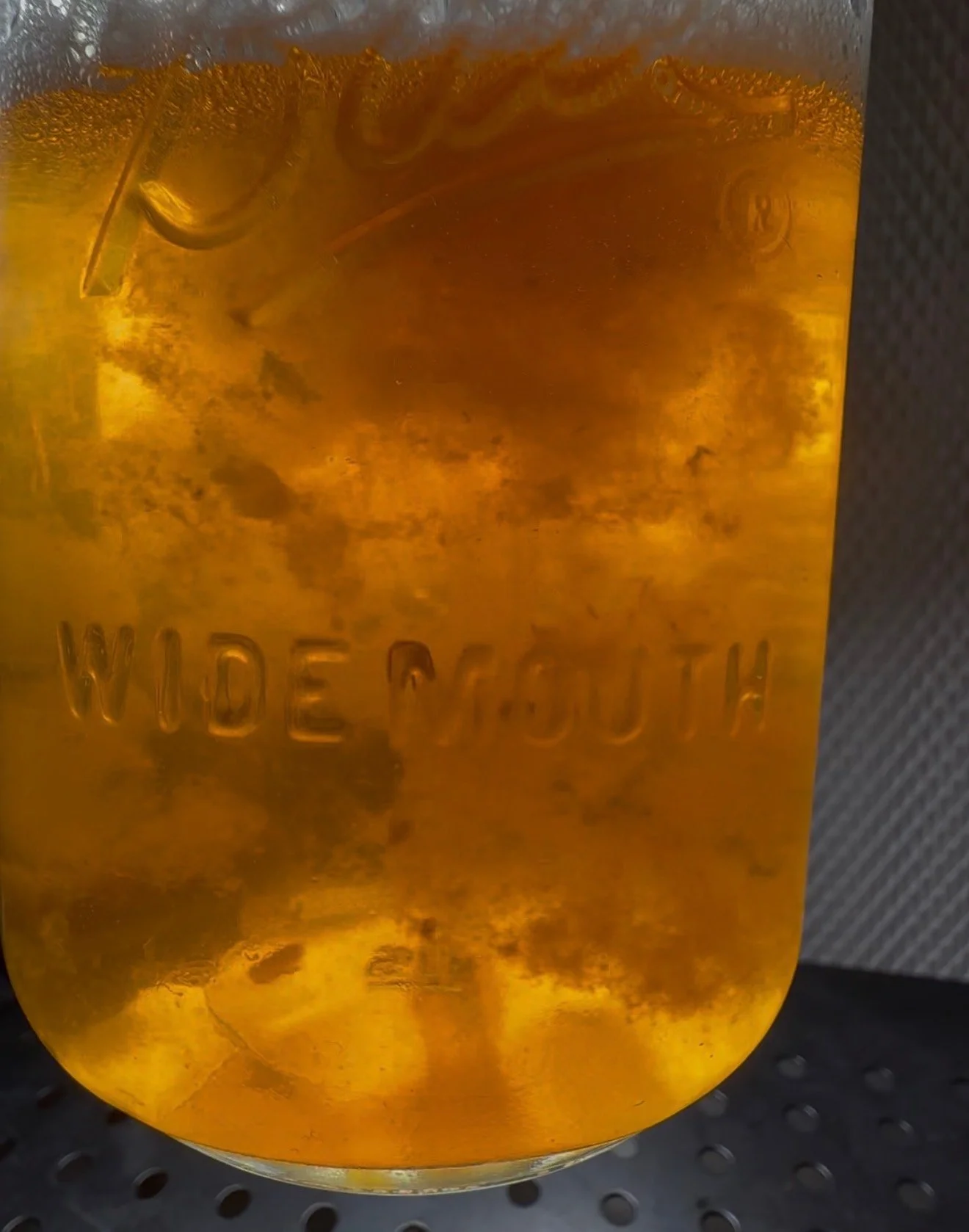
Liquid culture, usually shortened to “LC”, takes a different approach. Instead of growing mycelium across a solid surface, you grow it throughout a nutrient rich liquid. Once established, that culture can be used to inoculate other sterile media.
This is where LC becomes really useful.
If you have a clean culture and want to inoculate a lot of grain, liquid culture can make the process much faster. Rather than transferring individual pieces of agar to every jar or bag, you can distribute liquid culture across many containers. Plus you can do so in a less clean environemnt. It’s harder to contaminate the small needle before injecting into a bag or jar versus the whole surface of the agar dish plus anothe tool. (This is where folks start to use little condiment cups for agar then squeeze out the dish quickly. See Mycrodex and Oven Tek)
It can also be inexpensive to expand once you have a good system established.
But there is an important tradeoff.
You lose a lot of the visibility that agar gives you.
A liquid culture can look perfectly healthy while still carrying something you do not want. You may not find out there is a problem until that culture has been used to inoculate a much larger amount of grain. That is one of the biggest reasons I would not look at LC as a replacement for agar. I think of it more as an expansion tool.
Agar helps you establish and check the culture.
LC can help you make more of it.
So Which One Should You Use?
This is where I think the “agar vs. LC” conversation gets a little misleading.
They are not really competing methods. They are tools that become useful at different points in the process.
If You Are Brand New
You probably do not need either one yet.
If your goal is simply to grow and eat mushrooms, a ready to fruit block or established spawn is going to get you growing much faster.
Once you start wondering what is actually happening inside that bag, that is when agar and cultures gets interesting.
It gives you a way to start seeing mycelium, learning clean technique, and understanding what a fungal culture actually looks like.
Once you are a little more comfortable with mushrooms; buying Liquid Culture from different Vendors can be an easy way to inolcuate your own grain without the culture work, or get new cultures!
If You Are Getting Deeper Into Mycology
Agar becomes incredibly useful.
You can clone mushrooms, germinate spores, isolate cultures, compare growth, experiment with different media, and begin building your own culture library. I’ m keeping notes on all my cultures here.
This is especially fun with wild mushrooms! You can take a piece of tissue from a wild specimen, put it onto agar, work toward a clean culture, and eventually move that culture into grain or another medium.
At that point you are doing more than following somebody else's cultivation recipe. You are starting to investigate the organism yourself.
If You Already Have a Culture You Trust
This is where liquid culture starts making a lot of sense. Once you have a clean, established culture, LC can become a convenient way to expand it and inoculate larger amounts of grain, or get out to a lot of people!
But I would still want an agar culture somewhere in the background. Think of it like keeping your original file before making a bunch of copies.
If something goes wrong during expansion, you have a known starting point to return to.
What About Contamination?
Contamination is part of working with cultures. It happens.
Agar does not magically prevent it, and liquid culture does not automatically cause it. Your sterile technique, workspace, equipment, and handling all play a role. The difference is that agar gives you a much better opportunity to see a problem before scaling it up.
If one agar plate has a problem, you may have lost a dish. That’s pretty cheap!
If you use a contaminated culture to inoculate a whole rack of grain, you may not realize what happened until you have lost considerably more time, grain, and work. That gets expensive!
That is one reason I like having agar somewhere in the workflow even when liquid culture is being used for expansion.
Agar and LC Work Better Together
For me, the simplest way to think about it is:
Agar helps you understand what you have.
Liquid culture helps you make more of it.
Grab a wild mushroom clone, or new genetics, get it cleaned up on agar and backstocked in your library.
Expand this culture out to LC then you can easily run large amounts easier, faster and cheaper than just agar alone. Save some LC for later, share with friends, but always test on agar to be sure the jar was clean!
There Isn't One Right Tool
If you are just starting out, do not feel like you need a laboratory full of equipment to grow mushrooms.
Start with the level of cultivation that makes sense for you.
If you want to grow food, start growing food. Focus on Ready to Fruit blocks or grain spawn to substrates then fruiting
If you want to learn cultures, start learning agar!
If you have established clean cultures and need to expand them, liquid culture can become a very useful tool.
And if you eventually find yourself with a shelf full of agar plates, jars of grain, strange wild cultures, and experiments that probably should have worked but somehow didn't...
Welcome to mycology.
There is a lot we still don't know.
That is part of the fun.
The goal isn't to find one perfect way to grow mushrooms. It is to understand the fundamentals well enough that you can make better decisions, run better experiments, and eventually figure some things out for yourself.
That's how we keep Myceliating Tomorrow.
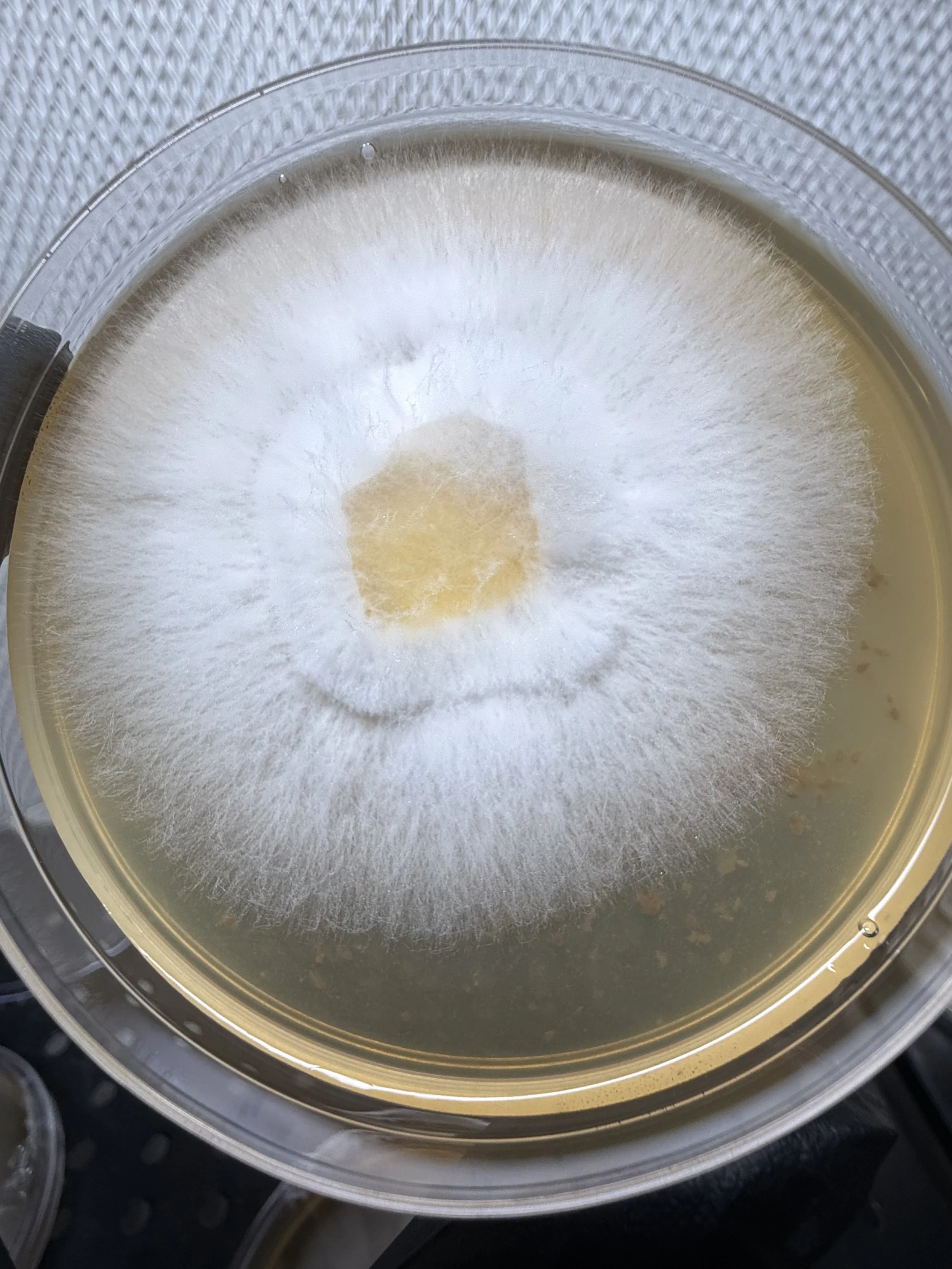
Florida Oyster, Pleurotus ostreatus, on MYA.
