
Aspen Oyster (Pleurotus populinus)
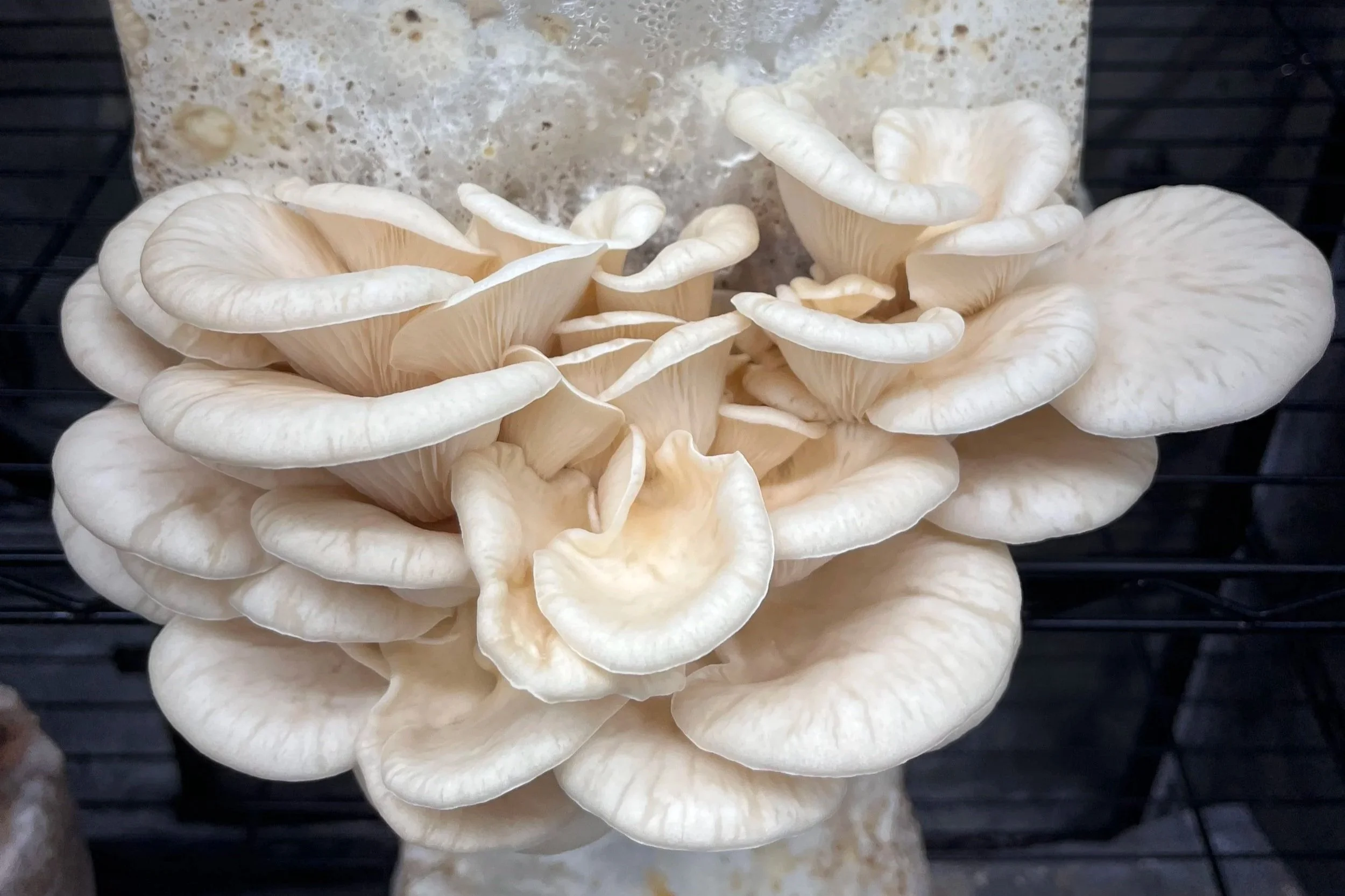
My Wild Maine Aspen Oyster “PP-OG” Growing on sterilized wood substrate (80%HardWood Fuel Pellets 20% Wheat Bran)
Aspen Oyster: Pleurotus populinus, a mushroom I’ll always love.
“PP-OG”, my first wild clone from an old growth Maine forest
Some mushrooms become special because they are rare. Others become special because of the story behind them.
For me, Pleurotus populinus is both.
This species was the first wild mushroom I successfully cloned, collected in early June 2023 from an old growth forest in the western foothills of Maine, named “PP-OG” (Pleurotus populinus - Ordway Grove). At the time, I was still learning how much variation exists within the oyster mushroom group, and this mushroom became one of the cultures that pushed me deeper into that rabbit hole.
It also happens to be one of the more interesting oysters I've grown, especially on agar and the smell!
Getting to Know the Aspen Oyster
Pleurotus populinus, commonly called the Aspen Oyster, belongs to the Pleurotus ostreatus species complex. While it looks familiar at first glance, it is not simply another color or strain of the common oyster mushroom.
Research by Vilgalys and colleagues demonstrated that the North American oysters traditionally grouped around P. ostreatus actually contain reproductively distinct species. P. populinus forms its own biological group and is also supported as a distinct species by later phylogenetic research.
One of the strongest clues is where this mushroom lives.
P. populinus has a marked association with Populus, particularly aspens and black cottonwood. Forager also note its preference for Populus tremuloides, P. trichocarpa and related trees.
That ecological relationship is part of what makes PP-OG so interesting to me. This wasn't a commercial oyster culture that I bought and propagated. It came from a mushroom growing in the forest, carrying whatever genetic history allowed that particular lineage to thrive where I found it.
And it became my first clone! So of course it’s special.
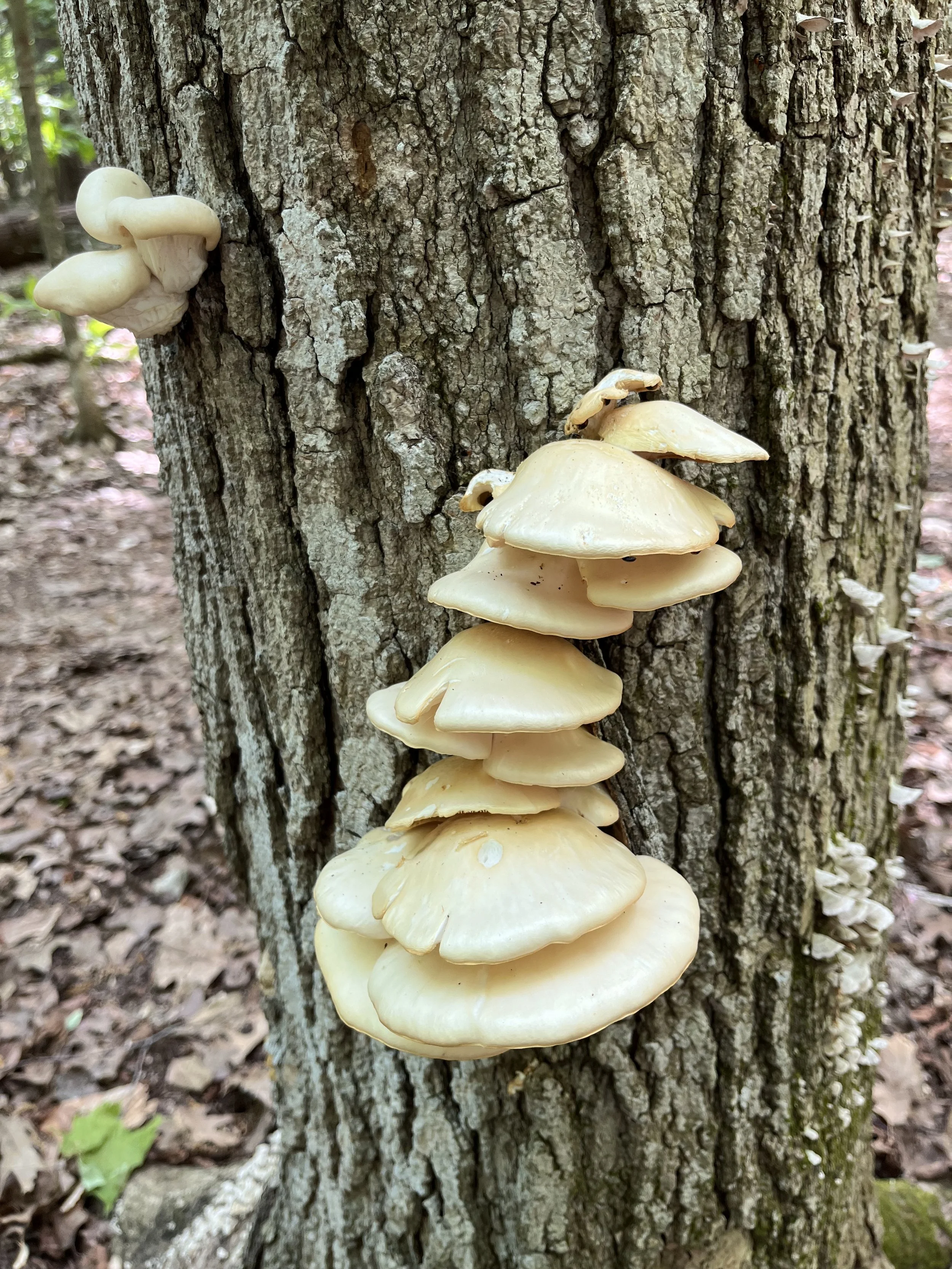
“PP-OG” June 2023 frutiing in the wild before collection
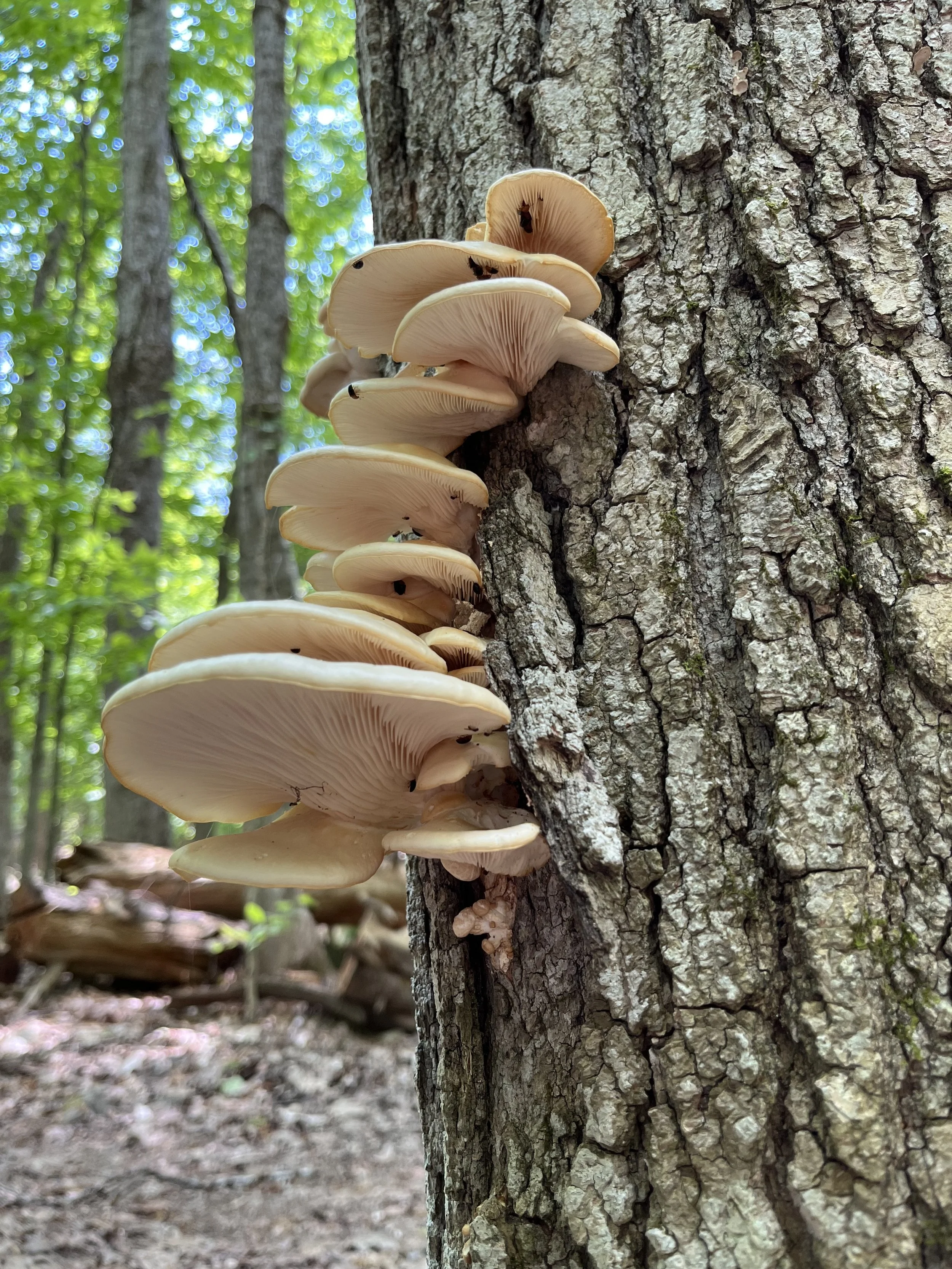
“PP-OG” June 2023 frutiing in the wild before collection
What Makes It Different?
At a glance, P. populinus can look like other pale oyster mushrooms. That is part of the problem.
There isn't one single feature that reliably separates all of the North American oyster species. Identification works better when several characteristics are considered together, including habitat, host tree, season, morphology and microscopic features.
Compared with P. ostreatus, P. populinus is generally characterized by its pale cap, whitish to buff spore deposit, relatively widely spaced gills and larger spores. Stamets gives spores around 9–12 × 3–5 μm, while noting that they can extend toward 15 μm.
It also tends to be associated with northern and montane environments and early-season fruiting. That combination is much more useful than simply looking at a blurry photograph and saying, "that's an oyster."
PP-OG: My First Wild Clone
PP-OG came from an old growth forest in the western foothills of Maine, collected in early June 2023.
It was the first wild mushroom I successfully brought into culture. It represents the point where I started connecting wild fungal ecology with cultivation. Instead of simply growing commercially available strains, I wanted to know what would happen when I brought a piece of the forest home and gave it the opportunity to express itself under controlled conditions.
The result has been a slightly slower growing oyster than many of the aggressive commercial strains I've worked with, but the fruit is impressive. Gorgeous and Tasty!
PP-OG produces large, dense clusters with thick, meaty caps. The coloration ranges through beautiful ivory, cream and pale gray tones, sometimes creating a marbled appearance across the cluster.
And then there is the smell. Open up an agar dish even and it fills the lab.
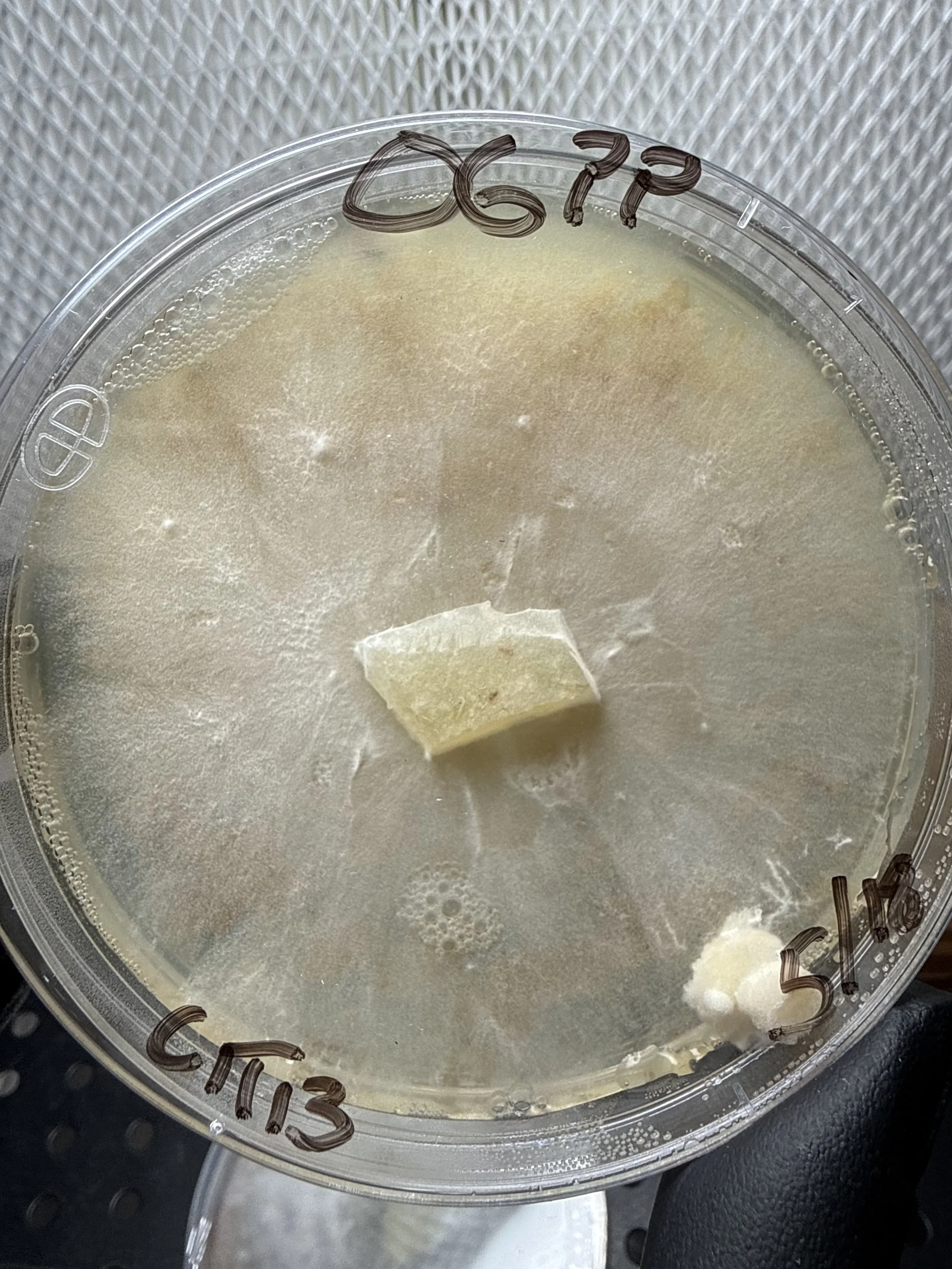
“PP-OG” mycelium growing on Malt yeast Agar, with small pins developing
The Taste and Smell of wild Oysters
This is probably my favorite part of this mushroom.
PP-OG has a rich, unmistakably oystery aroma, but it doesn't stop there. Alongside that savory mushroom smell is a soft sweetness with a floral, black licorice character.
It's difficult to describe until you've smelled it yourself. The licorice note isn't harsh or medicinal. It's softer and more rounded, sitting underneath the richer oyster aroma.
The flavor follows the same direction.
The mushrooms are dense and meaty with a naturally sweet flavor, rather than being delicate or watery like some oyster strains can be. The texture holds up well when cooked, giving PP-OG a satisfying bite.
Published descriptions of P. populinus have included mild, pleasant flavors and, in some collections, an anise-like aroma.
My description of PP-OG is more specific because it comes from actually growing and eating this particular lineage: rich oyster, sweet, floral and softly reminiscent of black licorice, with a dense, meaty texture.
I wouldn't claim that every P. populinus will taste exactly like this. That's one of the reasons I think documenting individual wild cultures is worthwhile. Genetics, growing conditions, maturity and substrate can all influence what we experience from a mushroom.
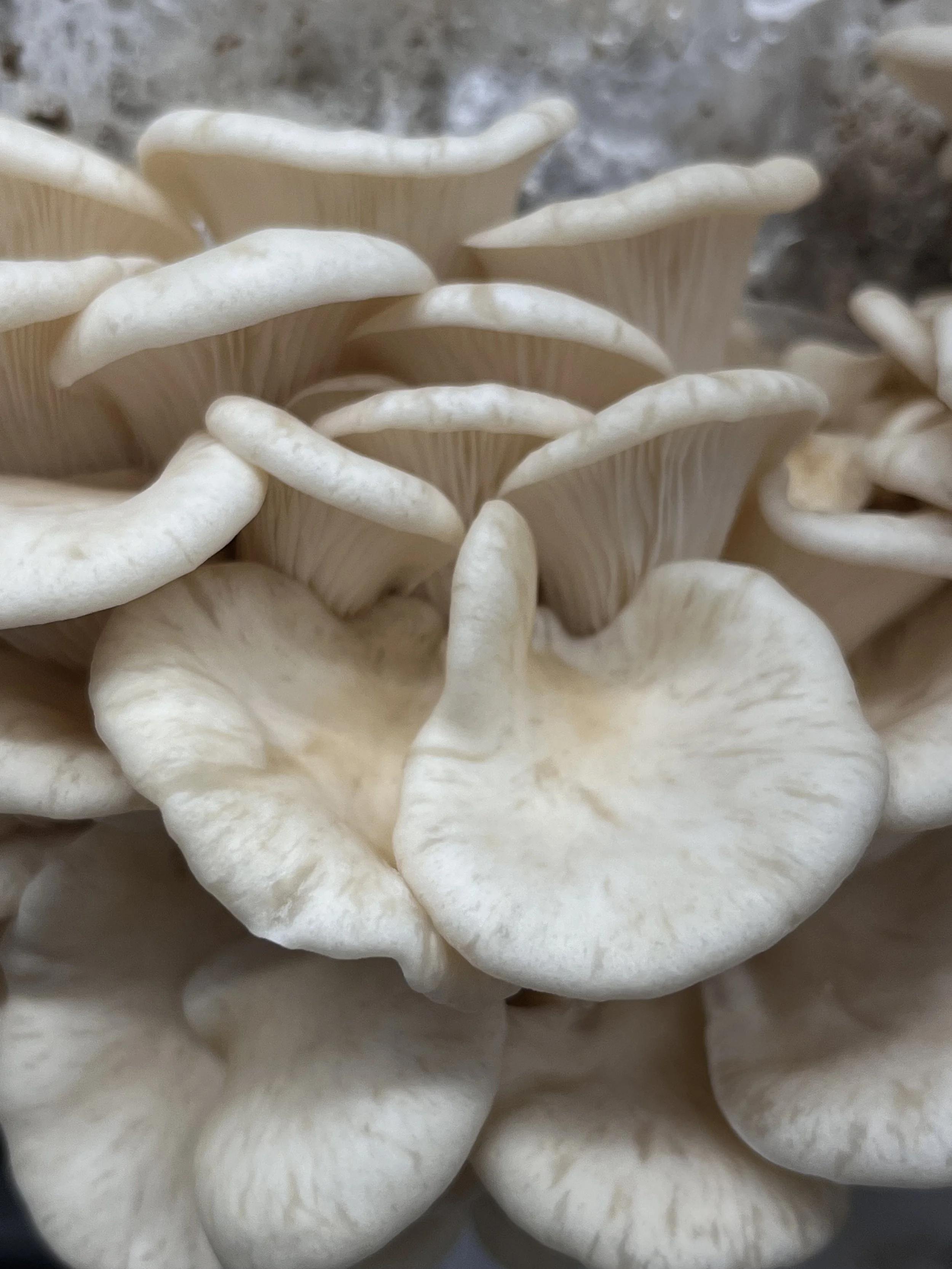
Growing PP-OG
One of the first things I noticed about this culture is that it really does seem to appreciate cooler weather.
My experience with PP-OG puts its preferred fruiting range around 50–70°F, with colonization performing well around 60–74°F. It can push into warmer temperatures, but its strongest performance has consistently been on the slightly cooler side, not Florida summers.
That makes sense considering where this particular lineage came from.
For substrate, I've had success with supplemented hardwood rather than trying to recreate an aspen log inside a grow bag. Oak and mixed hardwood pellets have worked well for me.
A mushroom's natural host preference can tell us something about its ecology without necessarily meaning that the same tree species is required for cultivation. In the laboratory, we're giving the fungus a concentrated and accessible source of carbon and nutrients rather than asking it to colonize an intact tree.
Why I Think Wild Clones Are Worth Exploring
One of the things I enjoy most about working with wild fungi is that we don't really know what we're going to find. Commercial strains have been selected for particular characteristics such as speed, yield, temperature tolerance, appearance and shelf life. Those are incredibly useful traits. But wild mushrooms are coming from a different experiment. Selected by Nature!
They have been shaped by their local environment, competing organisms, available resources and seasonal conditions. A wild clone might not outperform a commercial strain on a production farm, but it might have characteristics that we haven't thought to select for yet.
PP-OG is a good example for me.
It is not the fastest oyster I've grown. It isn't necessarily the easiest oyster for a Florida grower. But it produces beautiful, substantial mushrooms with a flavor and aroma that I find genuinely distinctive.
And because it started as my first successful wild clone from an old growth Maine forest, every time I fruit it I'm reminded why I started working with fungi in the first place.
There is still so much we don't know.
Sometimes the best way to learn is to bring something home from the forest, put it on agar, and see what it has to teach you.
I’m going to be working on breeding and furthering these spores from my Maine specimen; if you’d like to donate wild spores I’m always willing and accepting!.
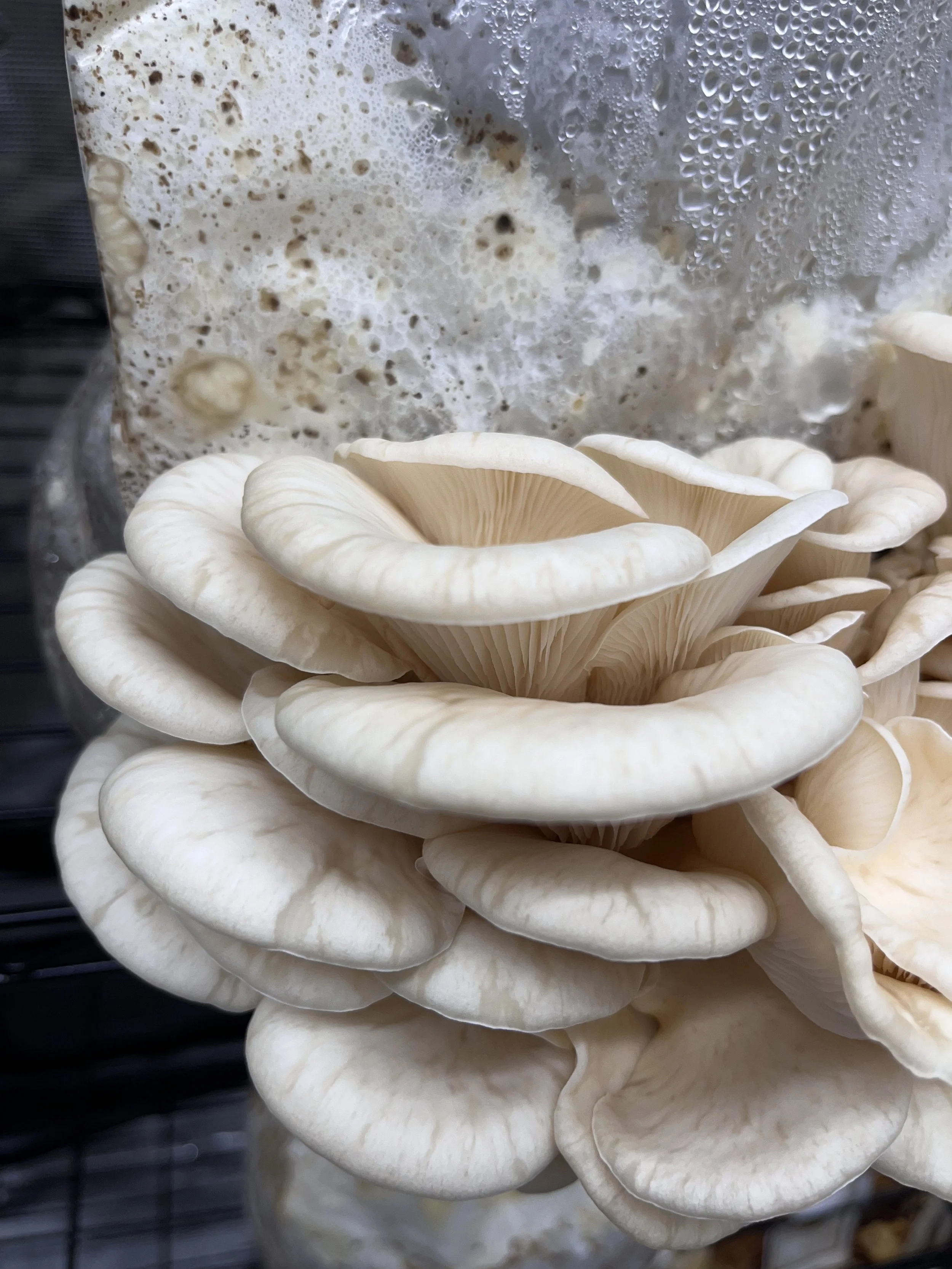
My Wild Maine Aspen Oyster “PP-OG” Growing on sterilized wood substrate (80%HardWood Fuel Pellets 20% Wheat Bran)
