
How To Grow Mushrooms: Mimic Nature!
The Basics of Fruiting Mushrooms: Recreating Nature
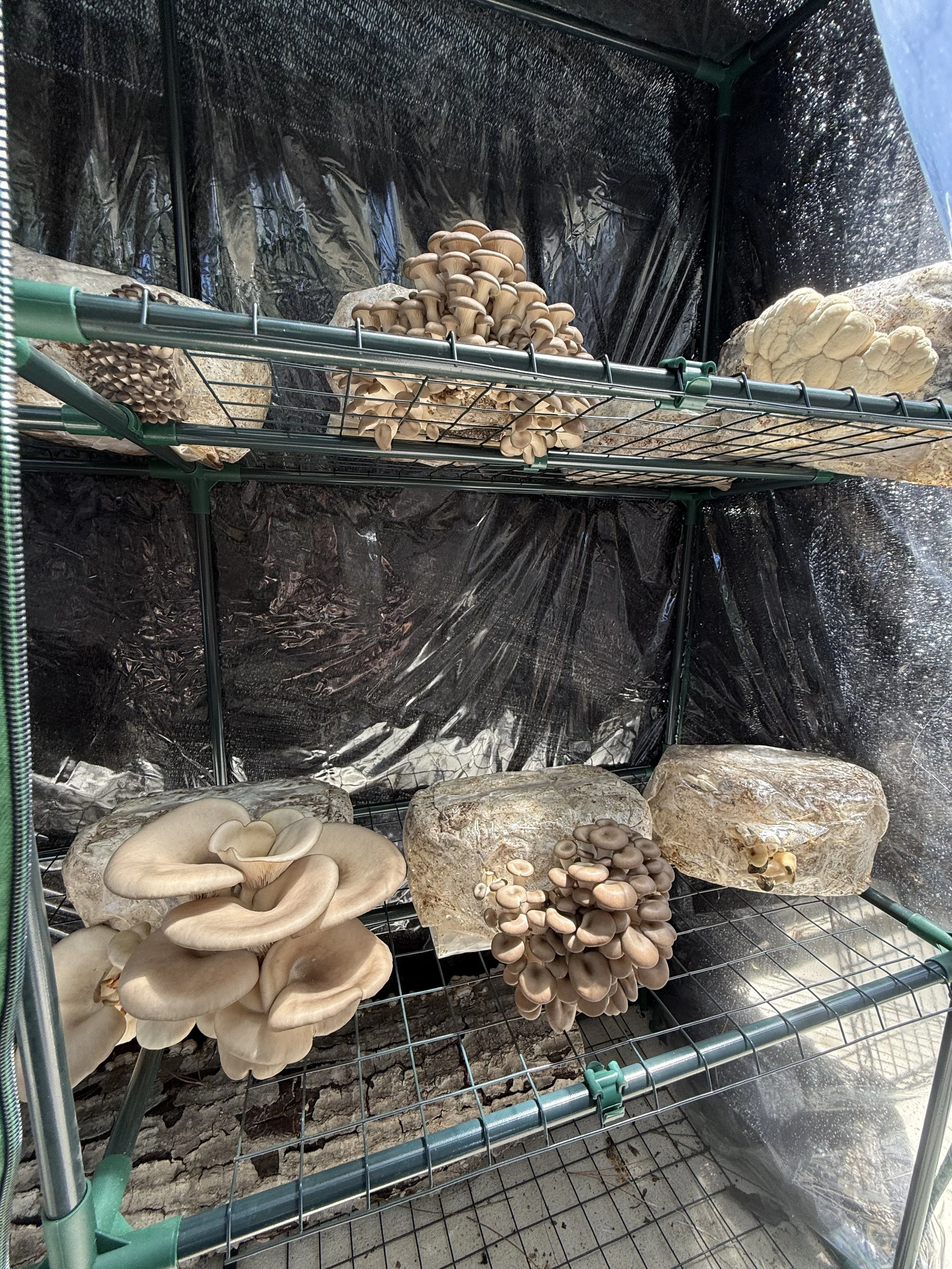
This is My simple Outdoor Martha Tent with no technology prodcuing Oyster and Lions Mane Mushrooms in Florida!
All this talk about mushrooms, fungi, and how incredible they are, but buying gourmet and medicinal mushrooms all the time can get pricey!
Luckily, you can grow your own. It can be incredibly simple or wonderfully complicated if you want it to be. That's one of the best parts about working with mushrooms: they meet you where you're at. Whether you have a garden bed, a stack of logs, a Martha tent, or just a small tub on the counter, there's probably a species that will work for your setup. You just have to choose the right one and give it the conditions it needs.
In this post, I'll walk through the environmental basics that tell a fungus it's time to fruit and how we can recreate those same signals at home. Once you understand why mushrooms fruit, growing them becomes much easier than simply memorizing numbers from a grow guide.
First Things First: It Depends
I’m sorry, I wish it didn’t. One of the biggest lessons you'll learn in mushroom cultivation is that biology isn't baking.
Every species, and often every individual strain, has its own preferences. Growth rates, yields, appearance, temperature tolerance, humidity requirements, and even flavor can vary dramatically.
Just like tomatoes or peppers have dozens of cultivars selected for different climates and characteristics, mushrooms have countless isolates and cultivars that growers have selected for vigor, appearance, yield, heat tolerance, cold tolerance, and everything in between.
Sometimes success isn't changing your setup; it's simply choosing genetics that thrive in your environment.
What Makes a Mushroom Fruit?
At its core, mushroom cultivation is simply recreating nature.
Most cultivated mushrooms grow on logs, wood chips, straw, compost, or supplemented substrate blocks that simulate their natural habitat. Plastic grow bags even act somewhat like bark, protecting the substrate while allowing mushrooms to emerge through small openings.
As the mycelium spreads through its food source and reaches the boundaries of the substrate, environmental signals begin telling it that reproduction may be possible. Moisture, oxygen, temperature changes, evaporation, and light all work together to signal that conditions are favorable.
The fungus responds by producing primordia: tiny baby mushrooms, that quickly develop into mature fruiting bodies. Depending on the species, this may happen in just four or five days for fast oysters or take weeks or even months for species like Reishi.
The mushroom itself exists for one reason: to reproduce and spread spores. It’s the Apple of the Apple tree, a Mushroom is the Fruiting Body of a Fungi.
Moisture: Mushrooms Are Mostly Water
Most cultivated mushrooms are roughly 80–90% water, with some species like Reishi containing somewhat less once mature.
Because of this, moisture is one of the biggest factors in successful fruiting.
A supplemented hardwood pellet block often performs well around 54–61% moisture content, giving enough stored water to support multiple flushes and allowing mushrooms to fully expand as they grow.
Outdoors, nature usually provides this through rainfall, high humidity, seasonal soaking, or consistently moist garden beds and logs.
Without enough water, mushrooms simply cannot develop properly.
Surface Moisture and Evaporation
One concept many beginners overlook is evaporation.
It's not just humidity that matters, t's the balance between moisture and gentle drying at the substrate surface.
As tiny amounts of water evaporate from the surface of a colonized block or log, the fungus often interprets this as a signal that conditions are changing and reproduction should begin. Too much drying can damage pins, while too little evaporation may delay fruiting.
Finding that balance is one of the little secrets experienced growers learn over time.
Fresh Air and Fruiting Sites
In nature, mushrooms often emerge from cracks in bark, branch scars, woodpecker holes, damaged wood, or other exposed areas where moisture and oxygen exchange are favorable.
We mimic this by carefully cutting a small slit or a ¼-inch "X" into a colonized mushroom block, giving the mushrooms a place to form and emerge.
This does NOT mean raking outdoor beds or tearing open colonized blocks. We simply create a controlled opening while leaving the rest of the mycelium protected.
Many species will fruit readily with minimal environmental triggers, while others are more selective and may require temperature drops or specific oxygen and carbon dioxide balances before initiating fruiting.
Again, finding the right genetics for your environment makes life much easier.
Humidity: Important, But Not Everything
For a baby mushroom to develop into a beautiful harvest, it needs moisture in the surrounding air as well.
Many cultivation books recommend 80–95% relative humidity, and those conditions often produce excellent results. However, they are not always absolutely necessary.
I've grown Blue Oysters, Chocolate Oysters, and Lion's Mane outdoors with humidity swinging from over 90% during early morning dew down to nearly 30% during the hottest part of the afternoon.
Is that ideal? Probably not.
Can it still produce beautiful mushrooms? Absolutely. If your genetics are vigorous, your substrate stays hydrated, and fresh air and humidity remain balanced.
Sometimes we're simply working with the environment we have.
Humidity can be maintained by allowing substrate blocks to naturally humidify a tent, misting walls or tubs, using absorbent pads that slowly evaporate water, or by running humidifiers. Humidifiers work wonderfully but require additional maintenance and cleaning.
Fresh Air Exchange (FAE)
One of the biggest balancing acts in cultivation is Fresh Air Exchange, or FAE.
Mushrooms consume oxygen and release carbon dioxide. If carbon dioxide accumulates too heavily, many species begin stretching in search of fresh air.
You'll see long stems, tiny caps, and leggy mushrooms that look like they're reaching upward.
That's your mushrooms telling you they need more oxygen.
Many Oysters and species like Tiger Sawgill thrive under very high fresh air exchange and produce dense, thick clusters when given enough oxygen.
If your mushrooms are getting leggy, increase FAE by adding another filtered hole to your tub, increasing fan cycles, or manually fanning your grow chamber more frequently.
But here's the catch:
More fresh air also removes moisture.
As airflow increases, humidity decreases through evaporation, so you have to balance oxygen and moisture together. That's where cultivation becomes both the fun—and sometimes frustrating—part of mushroom growing.
Listen to what your mushrooms are telling you.
Light Matters Too
Mushrooms don't photosynthesize like plants, but many species use light as a developmental signal.
Indirect daylight or low-intensity LED lighting often helps orient growth and encourages proper mushroom formation. They don't need bright grow lights, but complete darkness isn't always ideal either.
Think of light as another environmental cue that helps tell the fungus it's time to reproduce.
Temperature: Genetics Matter
Temperature is another area where "it depends" really applies.
I've grown the "June Cut" Lion's Mane outdoors with daily tent temperatures reaching 94–104°F while humidity dropped below 50%.
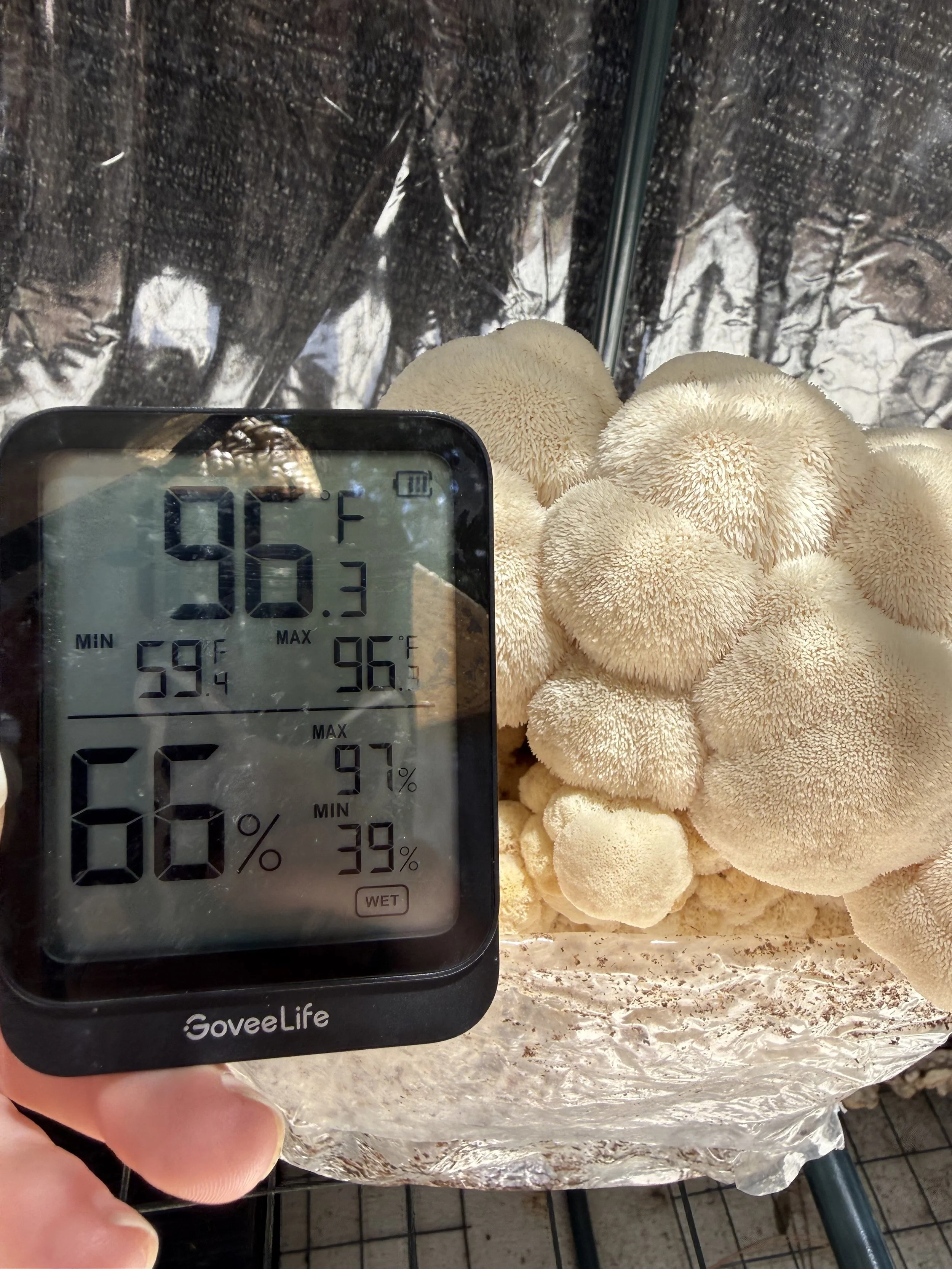
Meanwhile, other Lion's Mane cultures refuse to fruit under those same conditions or brown prematurely.
The genetics simply aren't the same.
I've also been experimenting with Freckled Chestnuts outdoors, and they seem to prefer a significant cool period before initiating fruiting—something difficult to provide in Florida during June.
Choosing strains adapted to your climate can make a world of difference.
One useful trick during hot weather is increasing humidity or lightly wetting your fruiting environment. Evaporation can noticeably cool the surrounding air, helping keep sensitive species happier during warm periods.
Putting It All Together
Whether you're growing from a tub, Martha tent, kitchen countertop, log stack, wood pile, or garden bed, successful mushroom cultivation comes down to recreating nature.
The fungus needs:
Food (its substrate)
Moisture
Fresh air
Appropriate temperatures
A little light
And the environmental signals that tell it reproduction is worthwhile.
When those pieces come together, the mycelium usually does the rest.
You can even manipulate those conditions to influence growth. Reishi grown under elevated CO₂ often develops long antlers, while high fresh air encourages broad conks and heavy spore production.
Learning to guide those environmental factors is part of what makes mushroom cultivation so rewarding.
Grow Your Own Mushrooms!
They don't need perfection.
They just need the right conditions—and a chance to succeed.
The more you grow, the more you'll realize that mushrooms are constantly communicating through their shape, color, and growth habits. Learn to read what they're telling you, and they'll become some of the best teachers in the garden.
Have more questions?
Email SwampFoxFungi@gmail.com, and I'll be happy to help with whatever you're growing, curious about, or trying to figure out.
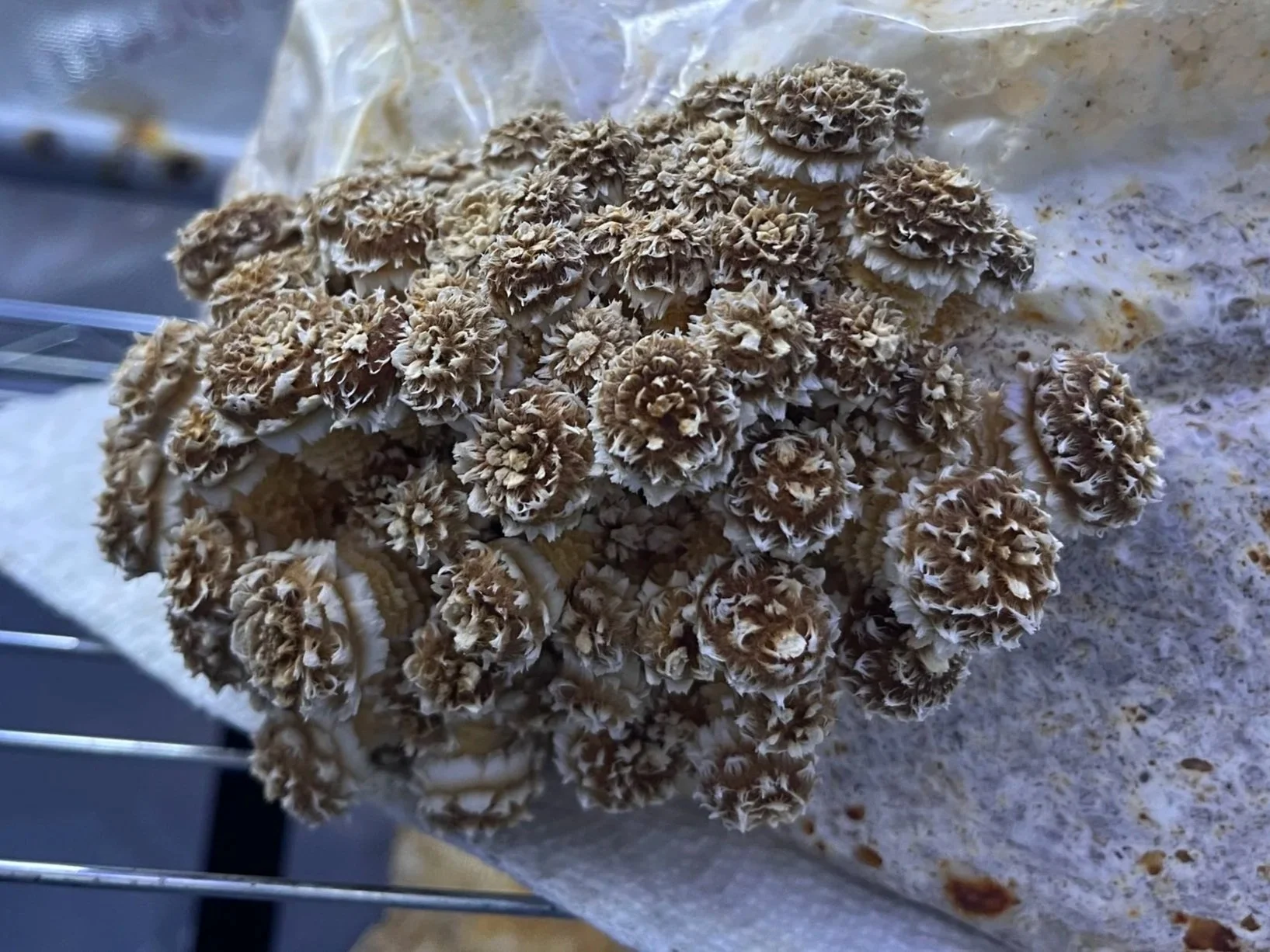
Baby Freckled Chestnuts Mushrooms in a Cooled Climate Grow Room about to BOOOM.
