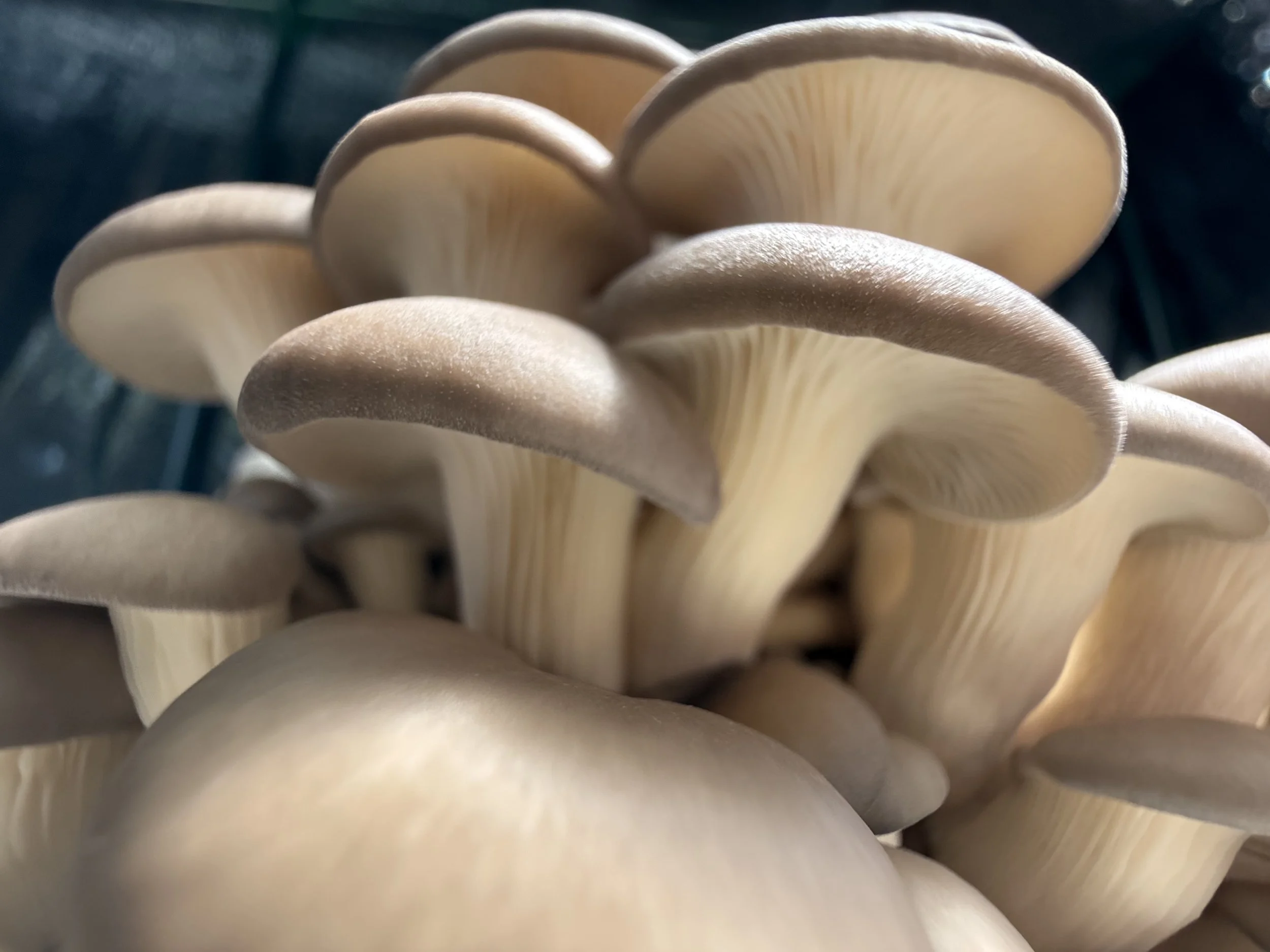
Start Your Mushroom Grow Here:
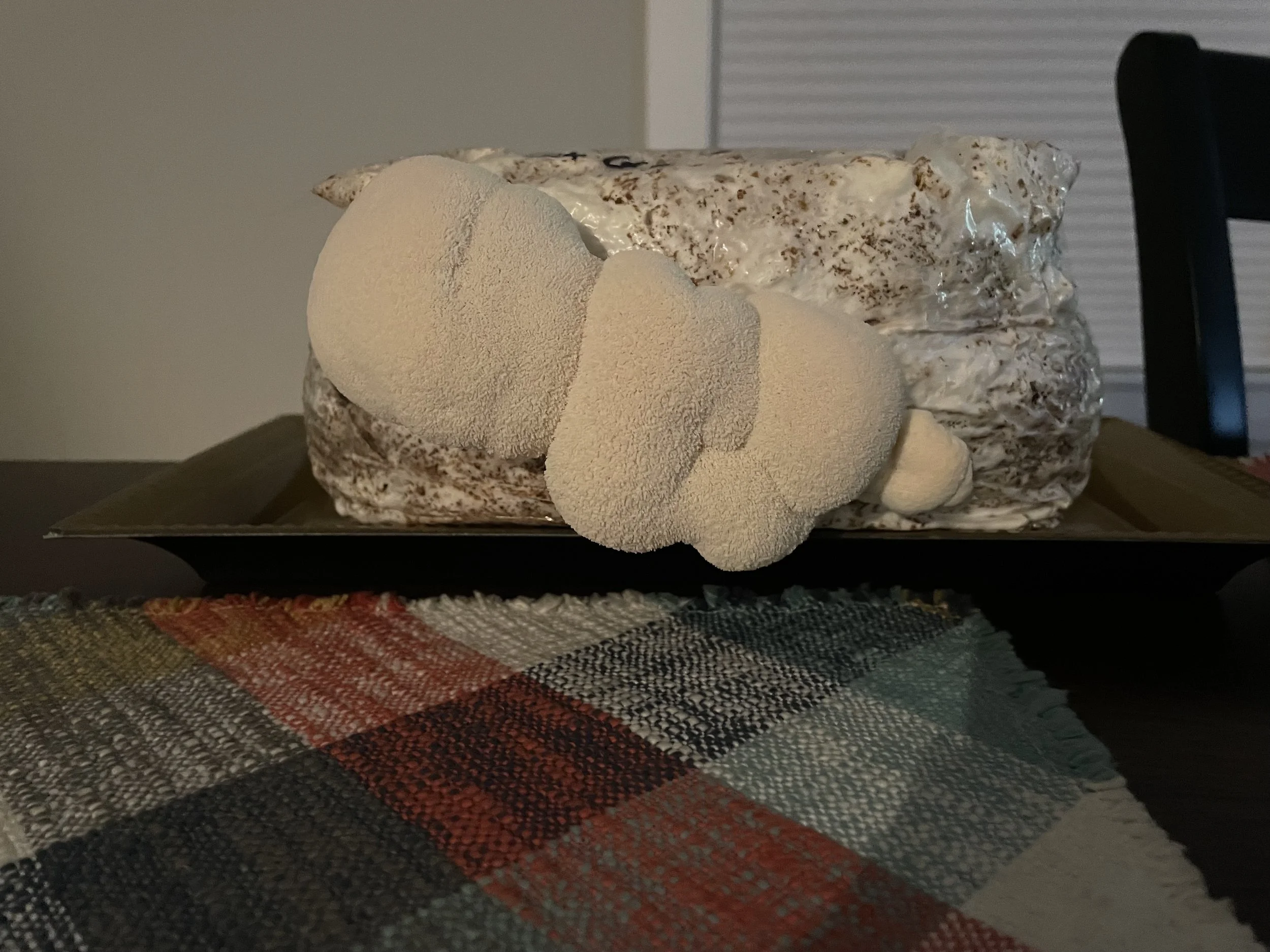
My Mom grew this stellar Lion’s Mane flush with a Ready to Fruit Block on her Kitchen Table!
Start Here :
Growing mushrooms can feel mysterious at first.
You hear people talking about agar, liquid culture, mycelial expansion, grain spawn, substrate, pasteurization, fruiting blocks, humidity, fresh air exchange, contamination, and suddenly what started as “I want to grow mushrooms” sounds like you accidentally signed up for a microbiology class.
Good news: you do not need to start there.
At Swamp Fox Fungi, we help people begin where they actually are. That might be a ready-to-fruit block on the counter, a wine cap bed in the garden, an oyster mushroom block tucked outside in a shady spot, or culture work with agar and liquid culture when you are ready to go deeper.
The goal is not to know everything before you begin.
The goal is to start with the right first step.
Not Sure what to Start with?
Want mushrooms soon? Start with a ready-to-fruit block. Or from Your Local Farm/Grower!
Have a garden? Start with wine cap spawn. These colonize wood chips/plant material in the garden!
Want a low-tech outdoor experiment? Try oysters. This species can grow on almost anything!
Want to learn the lab side? Explore agar and liquid culture. Lets bust out some sterile technique and get mycelial!
Already stuck or overwhelmed? Email me with what youre thinking or stuck on OR visit Youtube University! (https://www.youtube.com/@SwampFoxFungi) Myself and many other growers like Mossy Creek Mushrooms, PGT, Fresh From the Farm Fungi, and more have hours on hours of Video content with examples, chats, and experiences!
Mushroom cultivation can go as deep as you want it to, but your first grow should be simple enough to actually finish.
First, What Are You Actually Growing?
The mushroom is the fruiting body. It is the part you see, harvest, cook, and eat.
The living body doing most of the work is the mycelium: a network of fine fungal threads growing through a food/water source called substrate. That substrate might be hardwood sawdust, straw, wood chips, logs, composted material, or another carbon-rich material the fungus can digest.
A good way to think about it is this:
You are not forcing mushrooms to appear. You are caring for the mycelium first, then giving it the right conditions to fruit.
That mindset will save you a lot of frustration. Mushrooms are living organisms, not machines. They respond to moisture, temperature, fresh air, genetics, nutrition, and timing. Your job is to learn what each mushroom is asking for and make the setup as friendly as possible.
The Easiest First Grow: Ready-to-Fruit Blocks
For the fastest and simplest start, begin with a ready-to-fruit block or from your local Mushroom Farmer!
This is the easiest entry point because the hardest work has already been done. The substrate has been prepared, inoculated, colonized by mycelium, and brought to the point where it is ready to make mushrooms.
With Swamp Fox Fungi ready-to-fruit blocks, you start with a fully colonized mushroom block. Your job is to open the bag, provide humidity, give the block fresh air, and watch the mushrooms develop over the next several days to weeks.
This is the best starting point for anyone who wants fresh mushrooms without building a lab.
It teaches you the fruiting stage first: how mushrooms pin, expand, dry out, abort, mature, and respond to their environment. That is valuable knowledge before you ever touch agar, grain spawn, or liquid culture.
Think of it like buying a healthy starter plant instead of starting seeds under lights. You still learn a lot, but you skip the most fragile early steps. Check your farmers markets and find local growers to buy cheaply in bulk and avoid shipping costs!
The Best Garden Start: Wine Cap Mushrooms
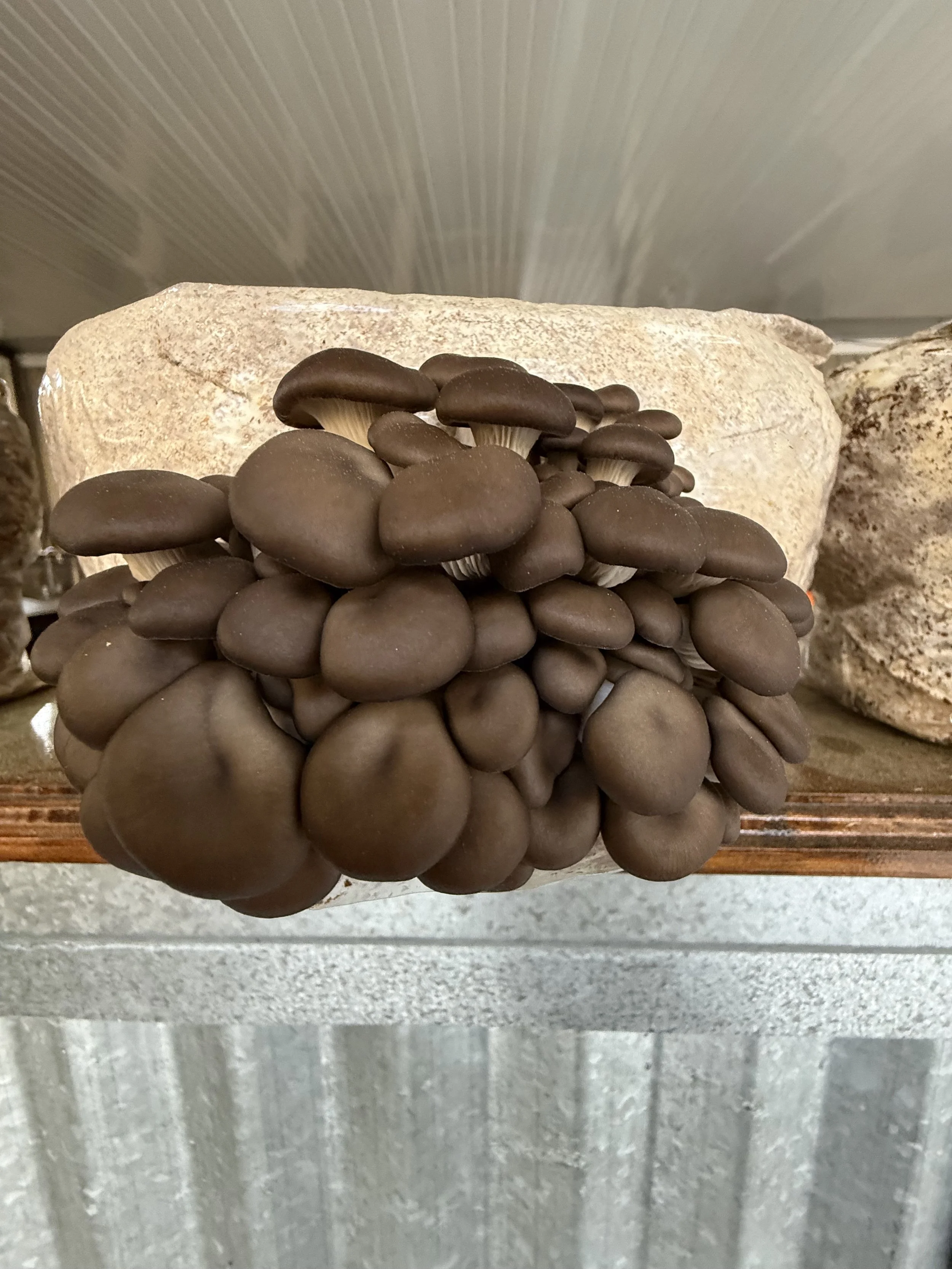
For gardeners, wine caps are one of the best places to begin.
Wine cap mushrooms, also called King Stropharia or Garden Giants, are outdoor decomposers that grow well in wood chips, straw, leaves, cardboard, and mulch beds. You do not need a sterile lab, pressure cooker, or fruiting tent. You need spawn, moisture, shade, and a good place for the mycelium to run.
Planting wine cap spawn is a lot like adding sourdough starter to flour or compost microbes to a pile. You are introducing living mycelium into a fresh food source and letting it spread.
Wine caps are not mycorrhizal, so they are not directly plugging into plant roots like some fungi do. But they still make excellent garden companions because they live right where mulch, roots, worms, insects, bacteria, and soil all meet.
A simple wine cap bed can be built with:
Hardwood chips, straw, or both
Wine cap spawn
Water
Shade or partial shade
Direct contact with soil
Build the bed about 4–6 inches deep, keep it moist but not swampy, and let the mycelium do its work. After the bed colonizes and the weather lines up, especially after rain or cooler wet periods, mushrooms may push up through the mulch.
Outdoor beds teach patience. They are not push-button grow kits. They behave more like garden crops, perennial herbs, or fruit trees. You build the system, keep it fed, keep it watered, and let the season do some of the work.
One important note: outdoor beds can grow surprise mushrooms too. Even after planting wine cap spawn, do not eat every mushroom that appears in the bed. Confirm the ID every time. When in doubt, leave it out.
Low-Tech Outdoor Oysters
Wine caps are not the only outdoor option.
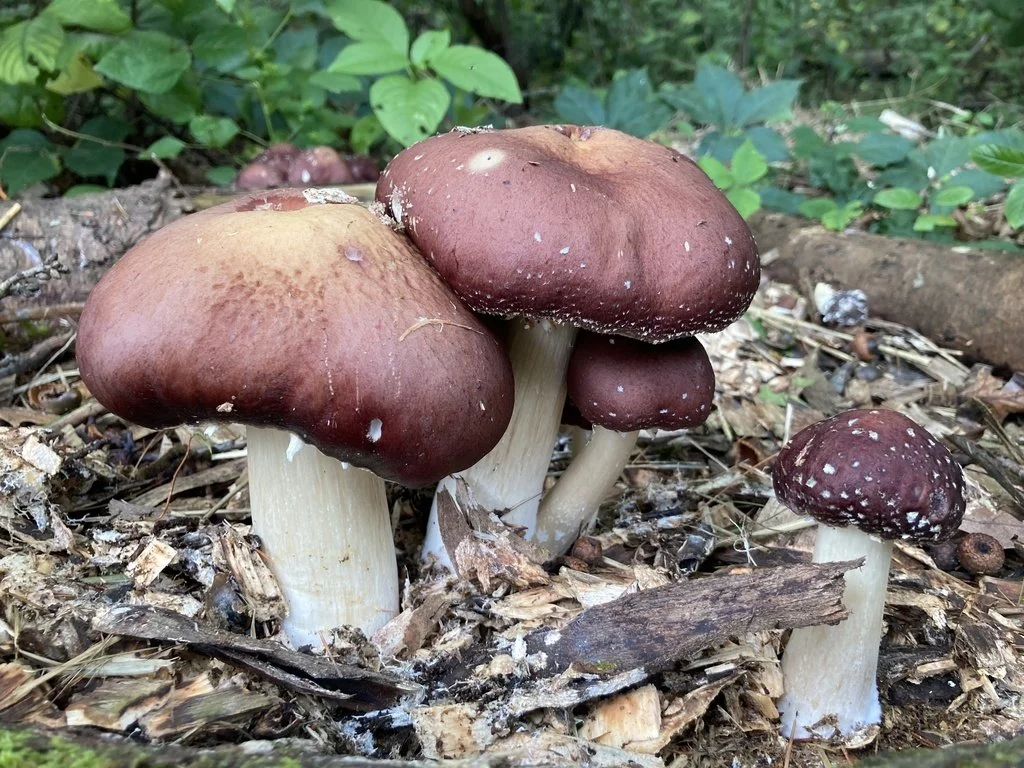
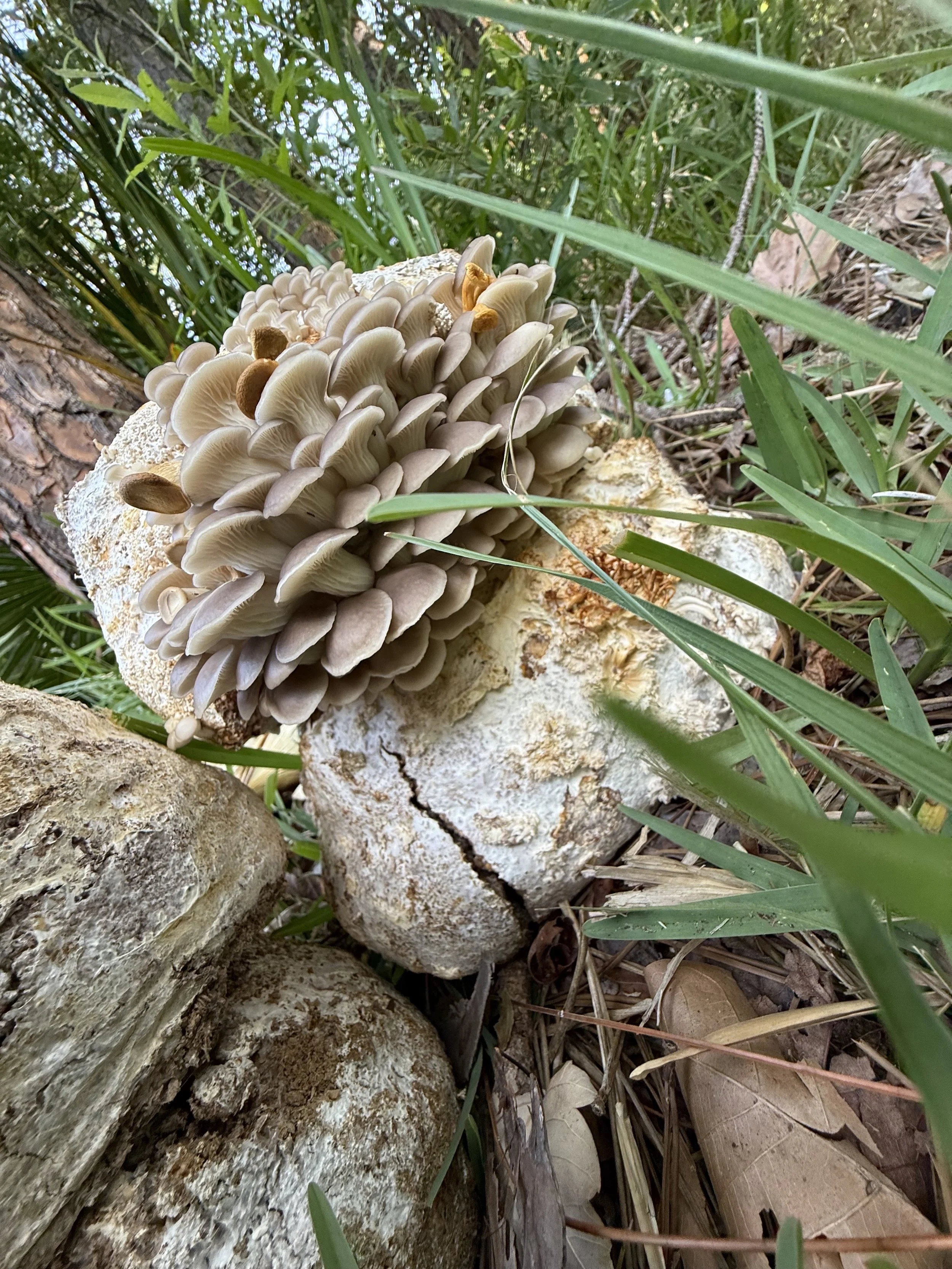
Oyster mushrooms can also be grown in low-tech outdoor setups, especially when you are working with aggressive, warm-tolerant species or strains. This is where outdoor mushroom growing gets fun, but also a little less predictable.
Oysters are fast, hungry decomposers. They grow well on straw, hardwood sawdust, wood pellets, logs, buckets, columns, and spent blocks. In the right conditions, they can fruit outside with very little equipment.
A few beginner-friendly outdoor oyster approaches include:
Putting a ready-to-fruit oyster block outside in a shaded, humid spot
Fruiting a block in a simple tote, bucket, or shaded shelf setup
Using pasteurized straw in a bucket with holes and inoculating with spawn.
Mixing a spent oyster block into the garden to try for another flush
Burying or crumbling old blocks into mulch or compost zones
This is not as controlled as indoor cultivation. Outdoors, you are working with weather, insects, airflow, rain, heat, and competing microbes. That does not make it bad. It just means the expectations need to be different.
Wine caps are better for long-term garden beds.
Oysters are better for fast outdoor experiments.
Here in Florida, strain selection matters. Some oyster cultures handle warmth better than others. Pink oysters, phoenix oysters, and Florida-adapted oyster cultures are often better candidates for warm outdoor trials than cold-loving strains selected for cool commercial grow rooms.
The tradeoff is that oysters can attract bugs quickly outdoors. That is part of the system. Harvest young, keep your setup clean, and do not expect every flush to look like a perfect grocery store mushroom.
Outdoor oysters are a great teaching tool because they show you how powerful fungi are when you give them food, moisture, and a little breathing room.
The Deeper Skill: Culture Work and grain Spawn
Once you understand fruiting blocks and outdoor growing, the next layer is culture work and grain spawn.
This is where agar and liquid culture come in. Or boiling and sterilizing specific grains.
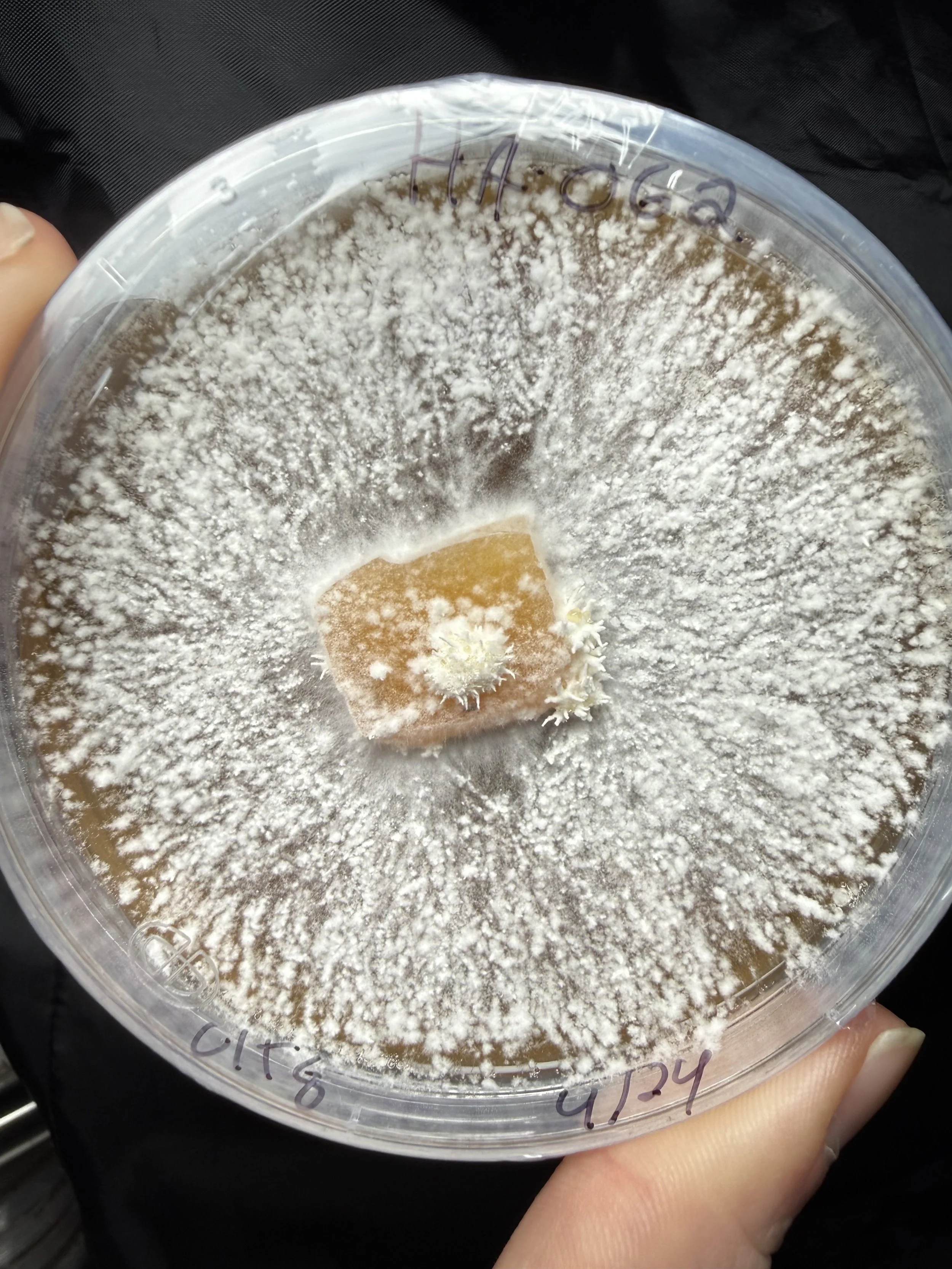
Agar is a firm gel medium poured into petri dishes. Fungal mycelium grows across the surface, which lets you actually see what is happening. You can watch a clean culture expand, spot contamination early, and transfer healthy mycelium before expanding it further.
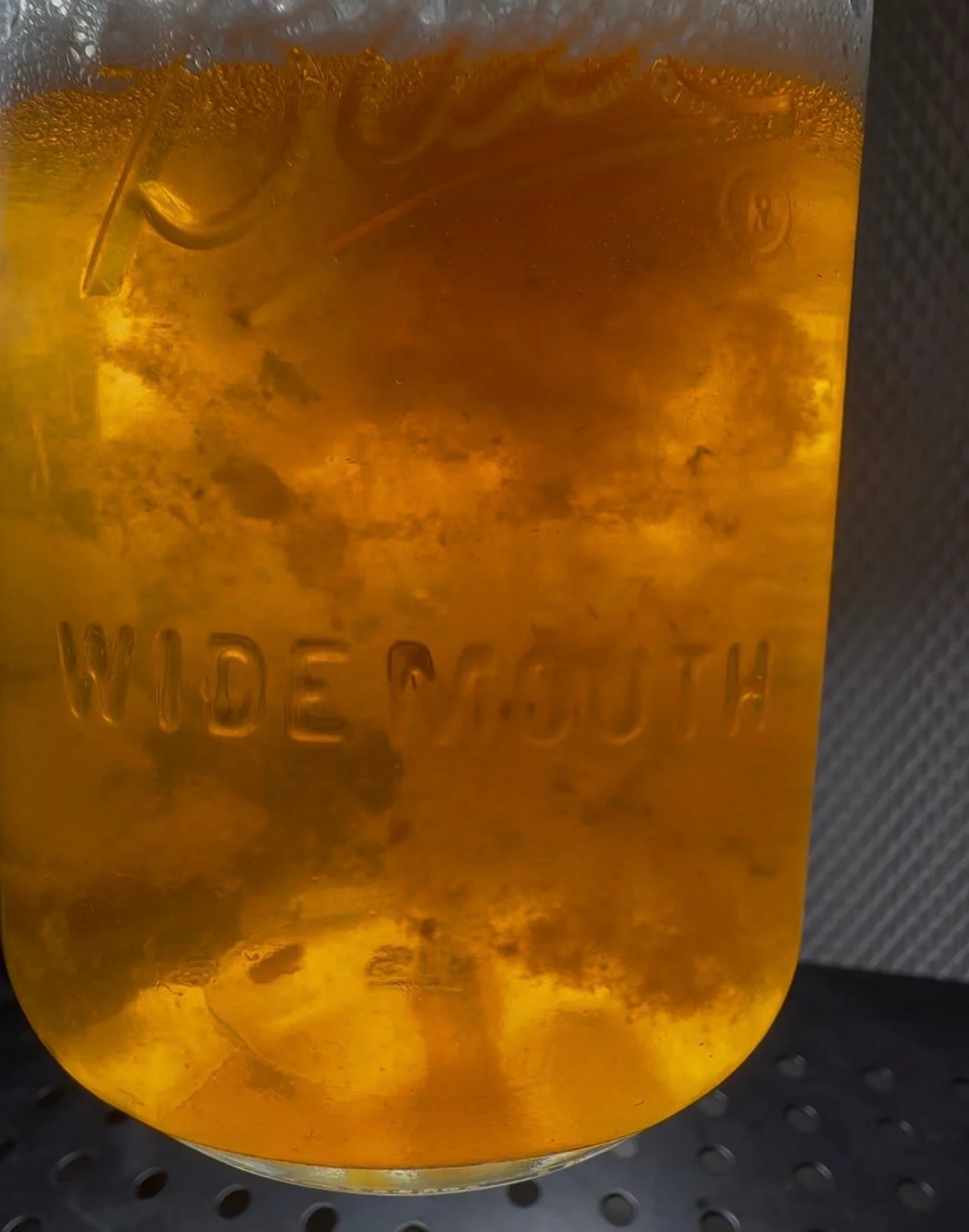
Liquid culture is different. Instead of growing across a flat plate, the mycelium grows suspended in a nutrient broth. Once clean and healthy, liquid culture can be used to inoculate grain, expand genetics, and speed up the early stages of a grow.
Agar is your inspection window/qaulity control; Liquid culture is your expansion tool.
Liquid culture is powerful, but it can also hide contamination. A culture syringe may look fine while bacteria or yeast are waiting inside. Agar gives you a clearer view before you trust and expand a culture.
For that reason, serious growers often use agar to check or clean genetics, then use liquid culture to scale them.
Grain Spawn is the expansion/nutrient vessel the spreads through substrates after being inoculated by the Agar/LC. Its a step by step build of mycelium from small culture into many healthy thriving blocks with fat clusters of mushrooms
You do not need to begin here on day one. Most growers should start by learning what healthy mushrooms look like in fruiting. Then, once the curiosity takes over, agar and liquid culture open the door to cloning, strain testing, grain spawn, and more advanced cultivation.
The Basic Mushroom Cultivation Path
Most mushroom grows follow the same general rhythm:
Choose the mushroom.
Match it with the right food source.
Introduce living mycelium.
Let it colonize.
Expand the culture further, or move the colonized substrate into fruiting conditions.
Manage moisture, fresh air, temperature, and light.
Harvest, enjoy, and decide whether to fruit again, compost, or move the block into the garden.
That path can be very simple or very advanced.
A ready-to-fruit block lets you start near the end of the process.
Wine cap spawn lets you build an outdoor fungal garden.
Outdoor oysters let you experiment with low-tech fruiting.
Agar and liquid culture take you deeper into the beginning of the process. but requires sterile technique.
None of these are the “only right way” to start. They just teach different parts of the organism’s life.
Growing in Florida Is Different
A lot of mushroom advice online comes from cool indoor farms, northern climates, or commercial grow rooms.
That information can be useful, but it is not always the full story for Florida growers.
Here in Northeast Florida, heat, humidity, insects, airflow, shade, substrate moisture, and strain selection all play a delicate interesting inter-tangled game. Some mushrooms struggle in warm outdoor setups. Others can handle it surprisingly well when the genetics and microclimate line up.
This is why Swamp Fox Fungi focuses on Florida-tested education, warm-weather trials, and practical growing methods that make sense here.
Your conditions are not automatically wrong just because they do not match a chart written for a 60°F grow room.
The better question is:
What does this mushroom need, and what can I actually control?
Fresh air matters.
Moisture matters.
Genetics matter.
Observation and Adaptation matters most.
So, Where Should You Start?
Start with the path that matches your life right now.
For fresh mushrooms with the least setup, start with a ready-to-fruit block. No techniques required or preparations of medias.
For garden integration, start with wine cap spawn. Easy, outdoor, just add fresh wood chips and keep moist!
For low-tech outdoor experiments, try oyster mushrooms in shaded, humid setups. Can cold pasteurize straw and produce good yields with no technology needed!
For lab-style cultivation, begin learning agar and liquid culture. This will require the use of a FFU, still air box (SAB) or otherwise Sterile Techniques. Then you must prepare the next medias or purchase, but starting with the culture give you the full control and power of the organism.
For troubleshooting, Email me or again, check out Youtube! Endless rabbit holes of Mushroom/fungi on there.
For community, join The Swamp on Discord/Patreon and subscribe to the ShroomLetter. I want to connect people to other like minded individuals so we can all learn and grow together!
Swamp Fox Fungi exists to help people grow with fungi from wherever they are starting: kitchen counter, backyard garden, classroom, lab bench, or full curiosity spiral.
You do not need to know everything before you begin.
You need a living culture, a healthy dose of curiosity, and enough support to keep going when questions pop up.
Start simple.
Watch closely.
Ask questions as you grow.
Myceliate Tomorrow: one block, one bed, one culture, one connection at a time.