
Ornamental Fungi: Growing Mushrooms for Art, Beauty, and Expression
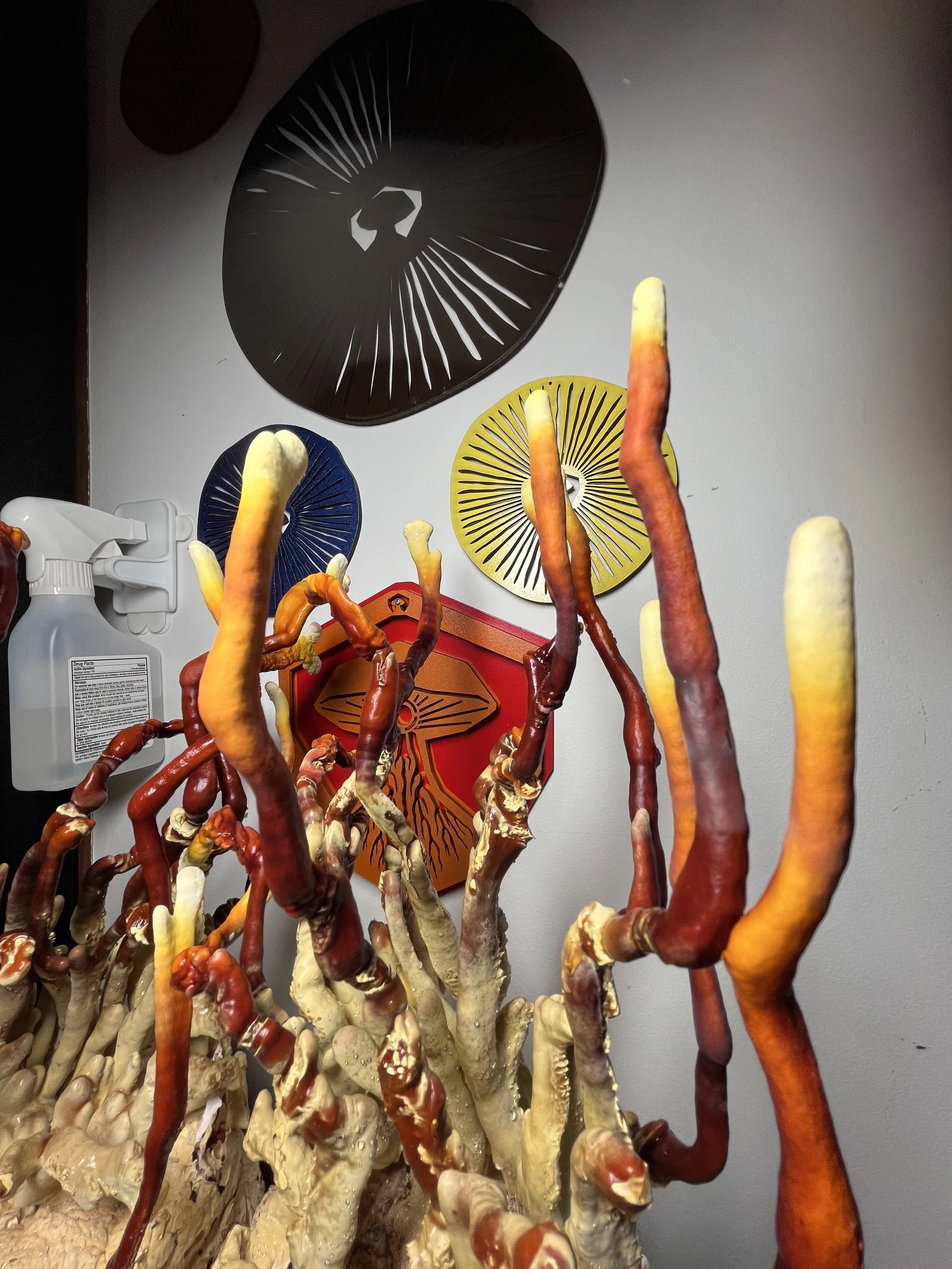
What if we stopped asking what mushrooms can do for us and started appreciating what they can look like? From living Reishi sculptures to fungal arrangements and locally grown works of art, ornamental mycology opens up an entirely different way to grow.
Mushrooms Don't Have to Be Useful to Be Beautiful
We all know how incredible mushrooms can look. Yet when we talk about fungi, we tend to focus on what they can do for us. We grow them for food, study them for their medicinal potential, explore their chemistry, or investigate how mycelium might become the next sustainable building material.
But what about growing fungi simply because they look cool?
Think about ornamental plants. Nurseries and garden centers are full of plants grown primarily for their colors, shapes, textures, and flowers. We bring them home because they make our gardens and living spaces more beautiful.
So why don't we approach fungi the same way?
Ornamental means serving a decorative or aesthetic purpose rather than a practical one. Applied to mycology, that opens the door to growing mushrooms for their appearance, experimenting with their natural forms, creating fungal arrangements, and even sculpting with living mycelium.
And fungi offer something particularly exciting for artists. They grow, respond to their surroundings, change shape, and eventually decompose. We aren't simply arranging a finished object. We're working with a living organism that contributes to the final piece.
Reishi: A Living Sculpture You Can Grow
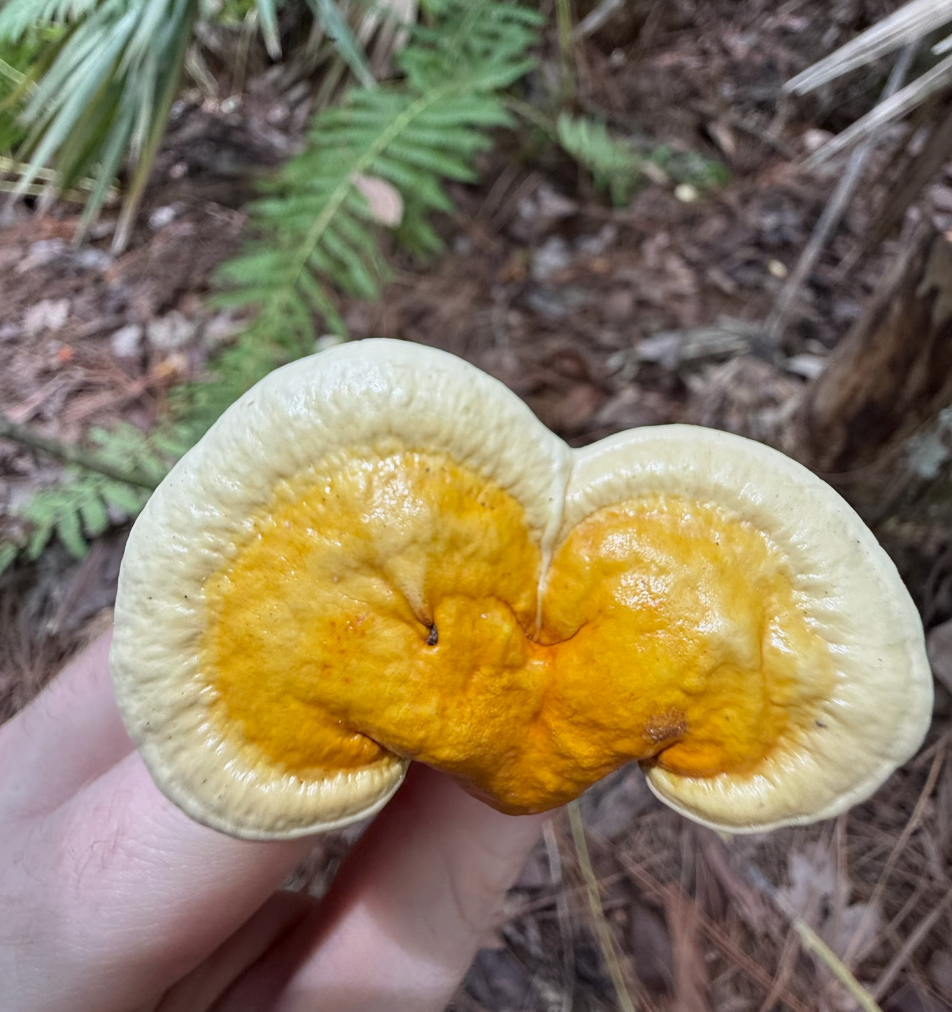
Wild Florida Ganoderma curtisii
One of my favorite places to start is the Ganoderma genus, commonly associated with Reishi or Lingzhi mushrooms.
These wood-decaying polypores occur across many regions of the world and can produce remarkable differences in color, texture, and shape. Their tough, woody fruiting bodies can develop glossy, lacquer-like surfaces, layered shelves, branching antlers, and unusual contortions.
Under traditional cultivation, many growers focus on producing a particular fruiting body for harvesting. But what happens when the goal is to influence its shape instead?
Certain Ganoderma species can develop long, branching structures called antlers under elevated carbon dioxide conditions and restricted fresh air exchange. With greater fresh air exchange, the same fungus may develop broader, more familiar shelf-like structures called conks. Light direction, the growing environment, genetics, and the stage of development can also influence the final appearance.
This is where cultivation begins to resemble sculpture.
By adjusting the growing environment, you can encourage different expressions of the same organism. Some growers create Reishi bonsai, twisting antlers, or elaborate forms that resemble miniature trees and otherworldly structures. Others grow fungi in shaped containers or guide their growth around objects to explore new forms.
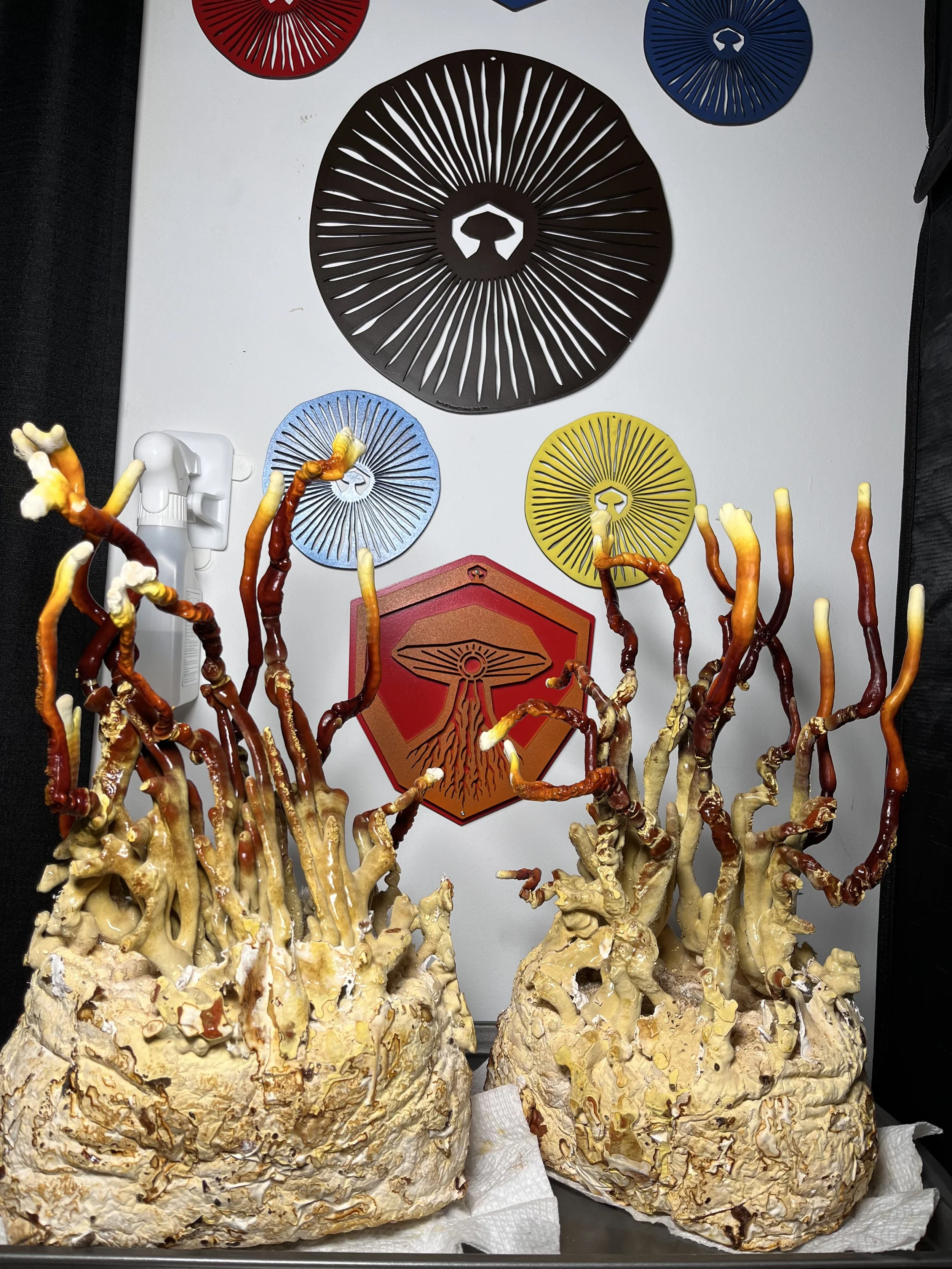
G. lucidium antlers
I've been experimenting with different wild Ganoderma species in different shaped vessels myself, watching how they respond and what colors, textures, and shapes develop.
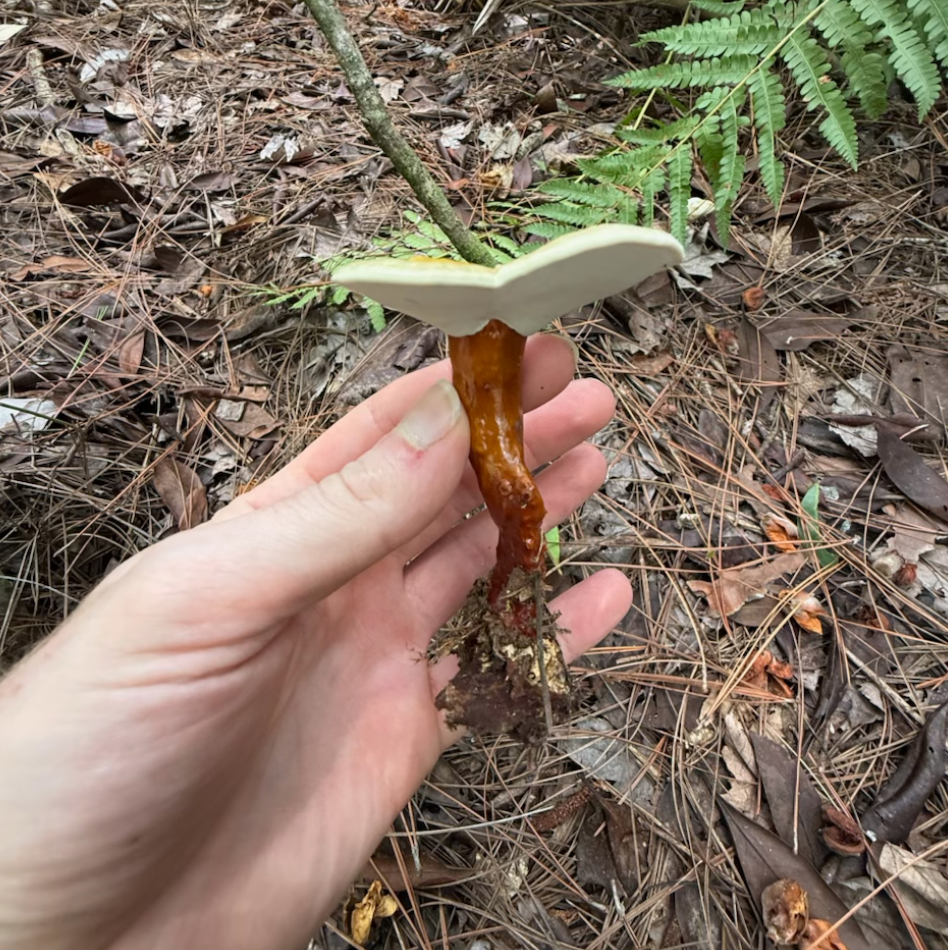
You can see similar processes happening in nature. Here in Jacksonville, I've observed local Ganoderma, including specimens identified as G. curtisii, growing from buried dead roots. Some produce elongated structures as they emerge through soil and decomposing material. Once the fruiting bodies encounter conditions with greater air exchange, they can develop broader caps.
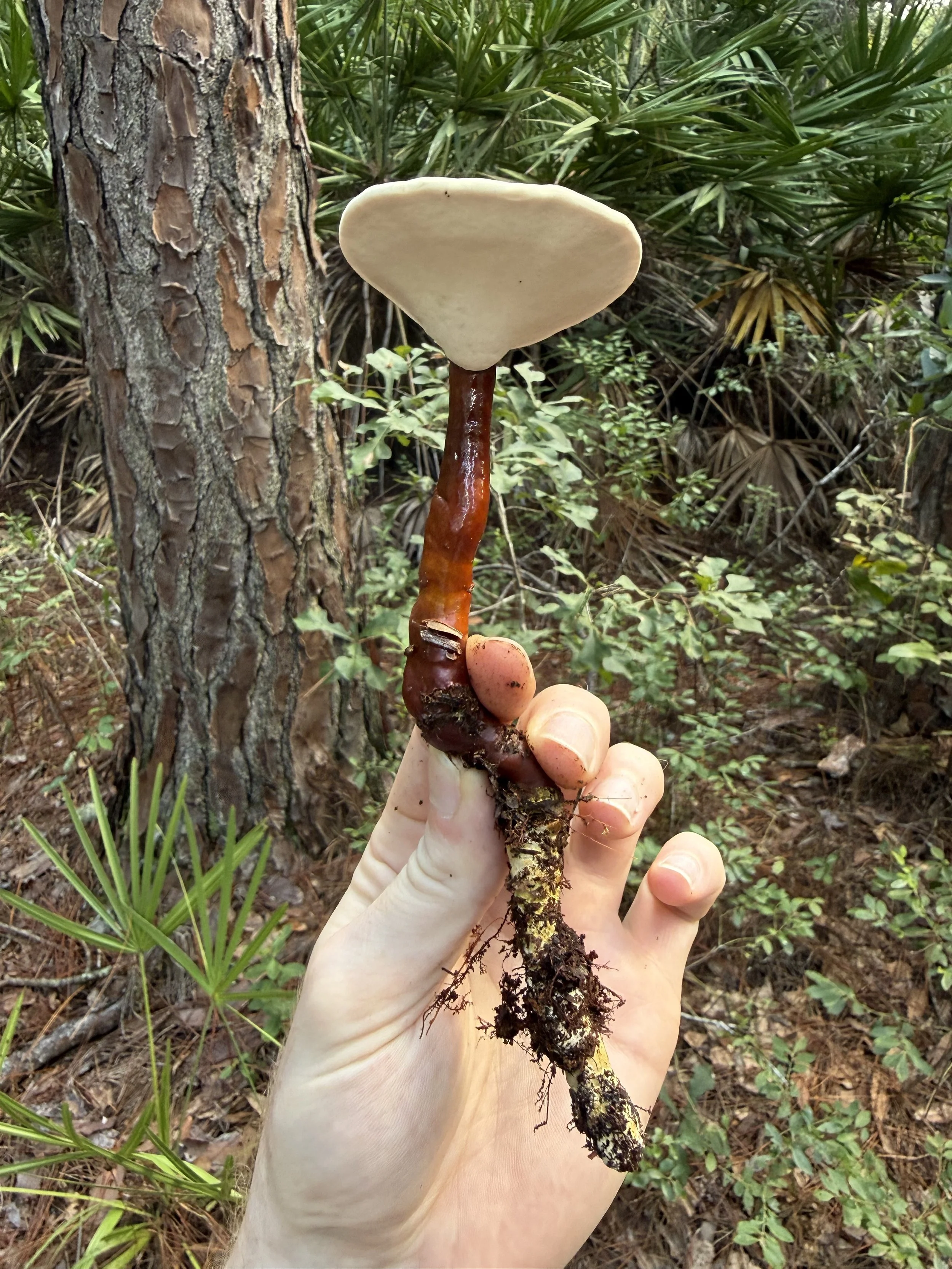
Loooonnggg G. curtisii here in Florida. Can see the long antler from reaching through CO2 rich environmental until it hit fresh air and conked out. “GC-LO3”
That transition is a reminder that the shapes we cultivate aren't entirely artificial. We're learning to work with growth patterns fungi already express in response to their environment.
One important detail: the exact form is never guaranteed. Different species and strains respond differently, and changing one condition can affect several others. That uncertainty is part of the experiment.
How to Get Started With Ornamental Mycology
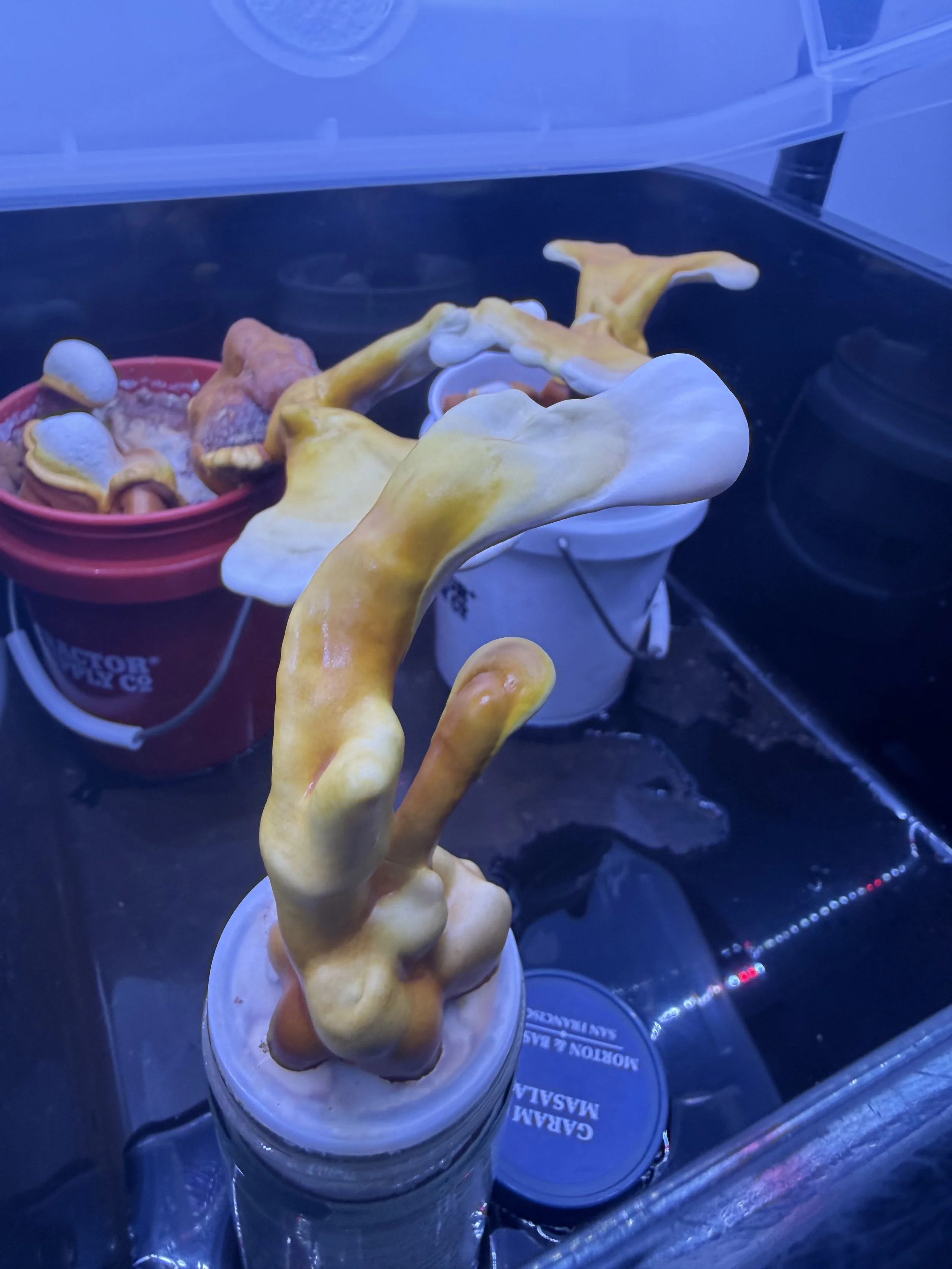
Wild Ganoderma curtisii sculptures growing in a used spice jar, and mini buckets in a monotub in my closet
You don't need a professional art studio or an expensive laboratory to begin. If you've already grown mushrooms at home, you may have much of what you need.
Start with a species you can cultivate reliably. Reishi is an excellent candidate for exploring antler formation and sculptural growth, while branching Hericium species, such as Coral Tooth, offer their own striking natural architecture. Oysters can also be beautiful, particularly when grown into unusual arrangements or used in experimental mycelium projects. These softer fleshed fungi have their artistic role too, but if you want it to stick around look for things with harder skins and less water like Ganoderma species or other polypores!
Your basic starting point is a healthy culture, a suitable colonized substrate, and a fruiting environment you can adjust. For Reishi, hardwood-based substrates are a common choice. Clean cultivation practices help establish healthy cultures, while moisture, temperature, fresh air exchange, and lighting influence how the fruiting body develops.
Rather than changing everything at once, keep a simple record of your experiments. Try different light directions, compare fresh air exchange levels, or grow the same culture in different shaped vessels. Photograph the results as they develop.
This is where a little patience and curiosity go a long way. You're not just trying to produce a mushroom. You're learning how a particular fungus responds to its environment.
Once you have a form you like, you can decide whether to display it while living or preserve it for longer-term use. Many Reishi fruiting bodies can be carefully dried and displayed as natural sculptures. Drying helps stop active growth, but it doesn't make a specimen indestructible. Humidity, sunlight, handling, and pests can all affect its longevity.
For a living sculpture, the challenge is different. The organism continues to grow and change, so the piece becomes an ongoing collaboration between the grower and the fungus.
From Fungal Bouquets to Living Bioart
Ornamental mycology goes FAR beyond simple Reishi antlers.
The Fungi Florist explores incredible complex Reishi-centered floral design, incorporating fungi into arrangements that challenge how we think about traditional bouquets. Explore The Fungi Florist for inspiration.
Artist and bio-designer Chris Ritson takes another approach, using cultivated fungi and colonized wood canvases to create artworks shaped by fungal growth. His work explores how living organisms can participate in making art, rather than simply serving as materials selected by an artist. Read about Chris Ritson's mushroom sculptures.
Kirsten Tingle works at the intersection of art, sculpture, and mycelium biofabrication. Her projects include large living mycelium sculptures that can fruit, change, and decay throughout an exhibition. Explore Kirsten Tingle's work.
These artists and so many more demonstrate that fungi can become much more than decorative objects. They can be collaborators in the creative process, shaping the appearance and lifespan of the artwork itself.
And you don't have to work at that scale. A single dried Reishi, a locally collected polypore, a fungal centerpiece, or a carefully documented cultivation experiment can be a meaningful starting point.
For those of us interested in ecology, there's another opportunity here: working with fungi native to our own regions. Cultivating locally sourced species, where collection and cultivation are appropriate, connects the artwork to a particular landscape and its fungal diversity. Just be sure to identify your cultures carefully, obtain material responsibly, and avoid releasing cultivated fungi into the environment without understanding the ecological implications.
Grow Something Just Because It's Beautiful
Ornamental mycology is an invitation to approach fungi differently. You don't need to justify every grow through a harvest, a health claim, or a practical application. Sometimes, watching an organism build something unusual is reason enough.
And if you already grow mushrooms, you have an advantage. You understand the basics of culture, substrate, and fruiting conditions. Now you can start asking different questions: What happens if I change the light? How does this species respond to different air exchange? Can I encourage a particular shape? What can I learn by growing the same culture in several environments?
At Swamp Fox Fungi, that's part of the fun of learning mycology. We can study fungi, grow them, work with them, and find new ways to appreciate them.
If you'd like to see more of the process, watch my Ornamental Fungi livestream on YouTube.
Ready to experiment? Browse the Swamp Fox Fungi Culture Library to explore available species and find a starting point for your own fungal art projects.
Get growing, keep experimenting, and show me what you create. Let's see what happens when we grow fungi for the beauty of it.
