Species Spotlight: Lion’s Mane
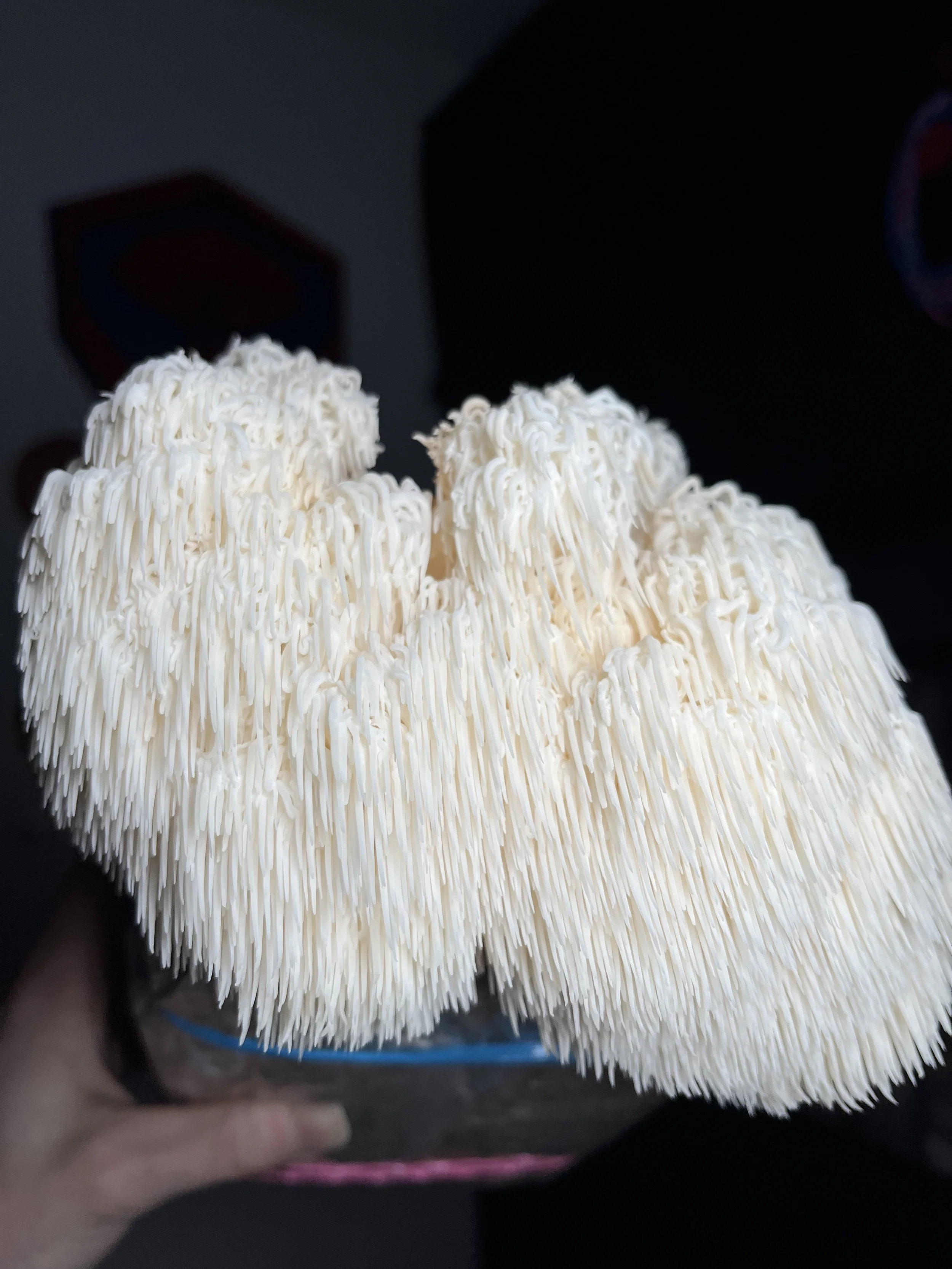
This is the first in my Species Spotlights, where I want to focus in and provide a bit of history, uses, and rundown for some of the different species we work with here in The Swamp.
So without further ado, I give you:
Lion’s Mane
Latin Name: Hericium erinaceus
Also known as hóutóugū, yamabushitake, Monkey Head Mushroom, Bear’s Head, Old Man’s Beard, Pom Pom Mushroom, Hedgehog Mushroom, and more!
The scientific name is almost as fitting. Hericium comes from the Latin ericius, meaning hedgehog, while erinaceus also refers to something hedgehog-like. So essentially, somebody looked at this strange white fungus covered in spines and decided it needed to be called Hedgehog Hedgehog.
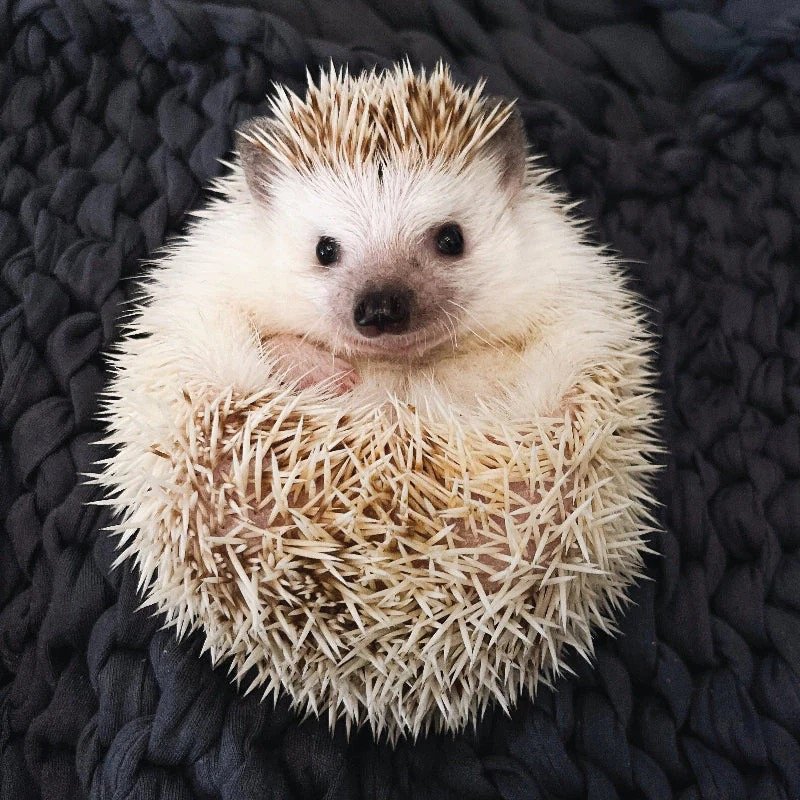
And honestly, I can see it.
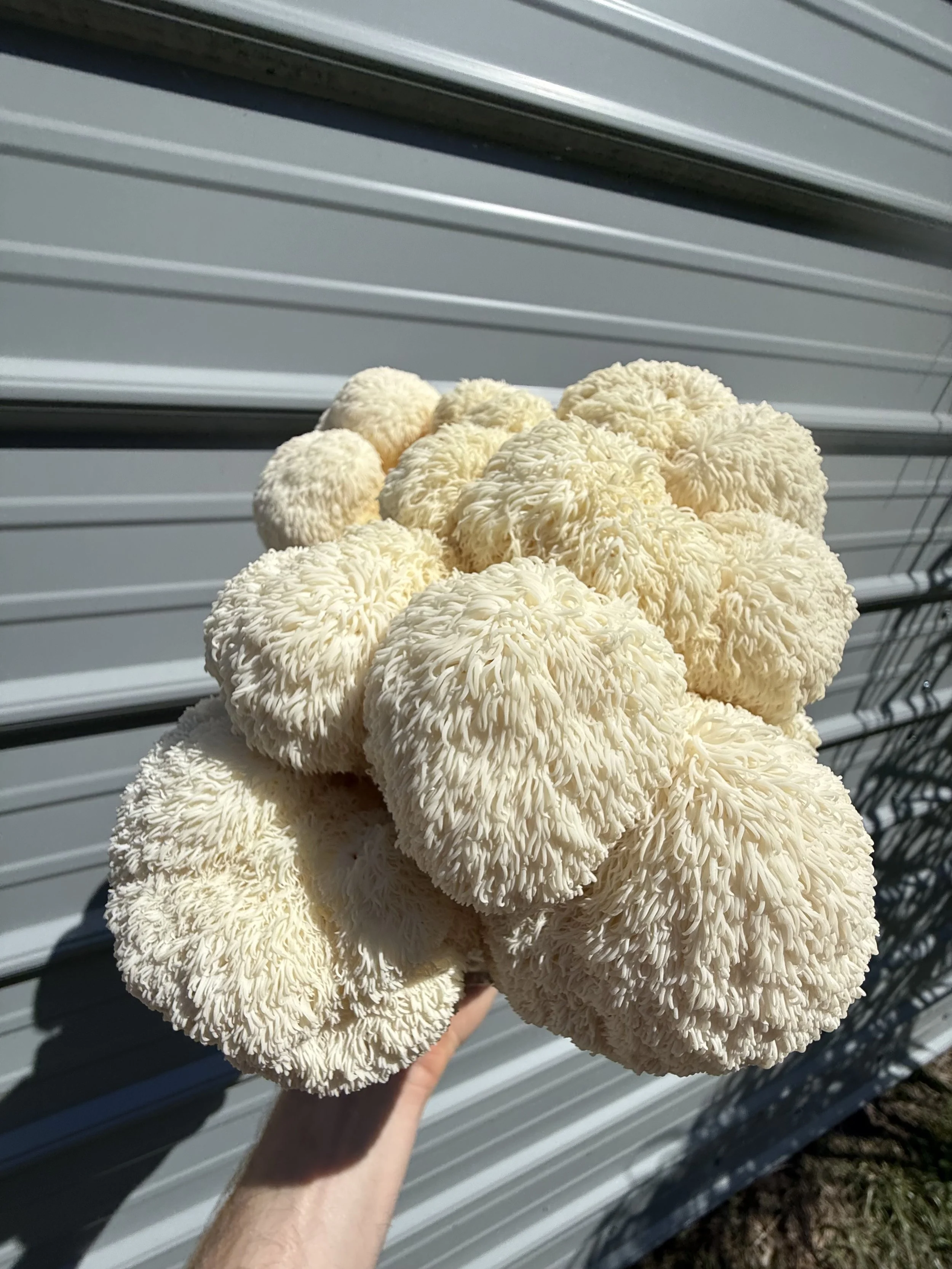
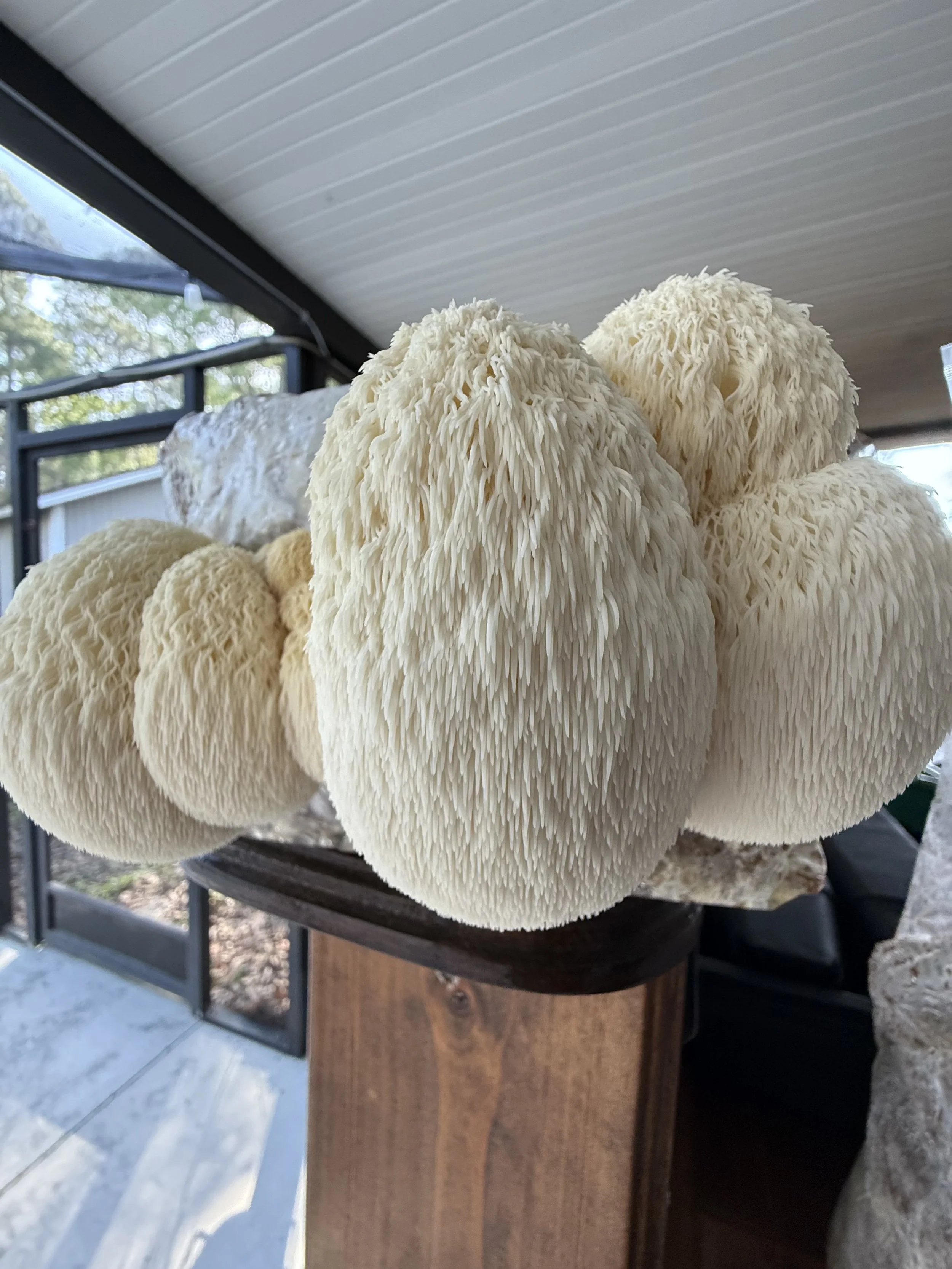
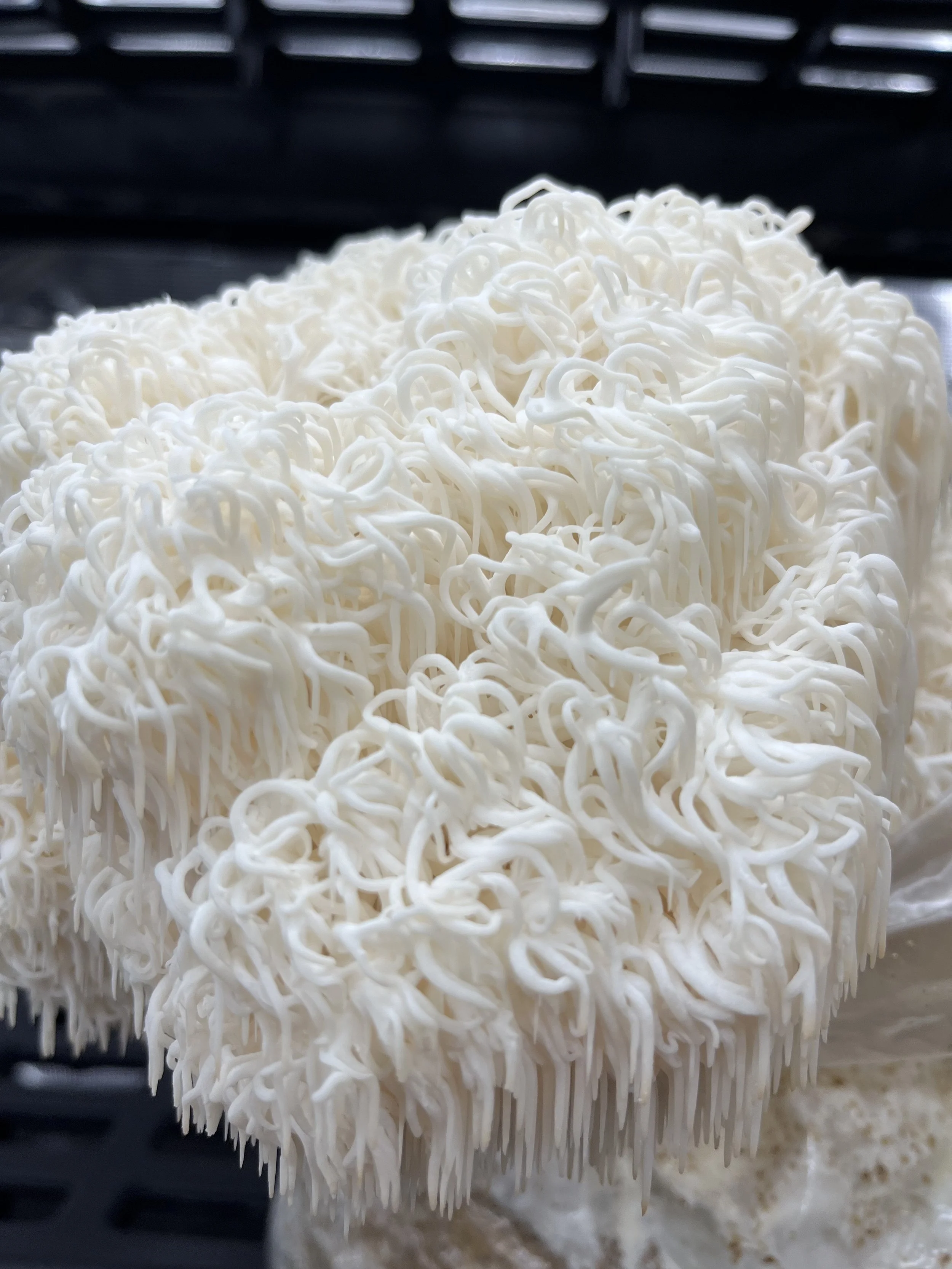
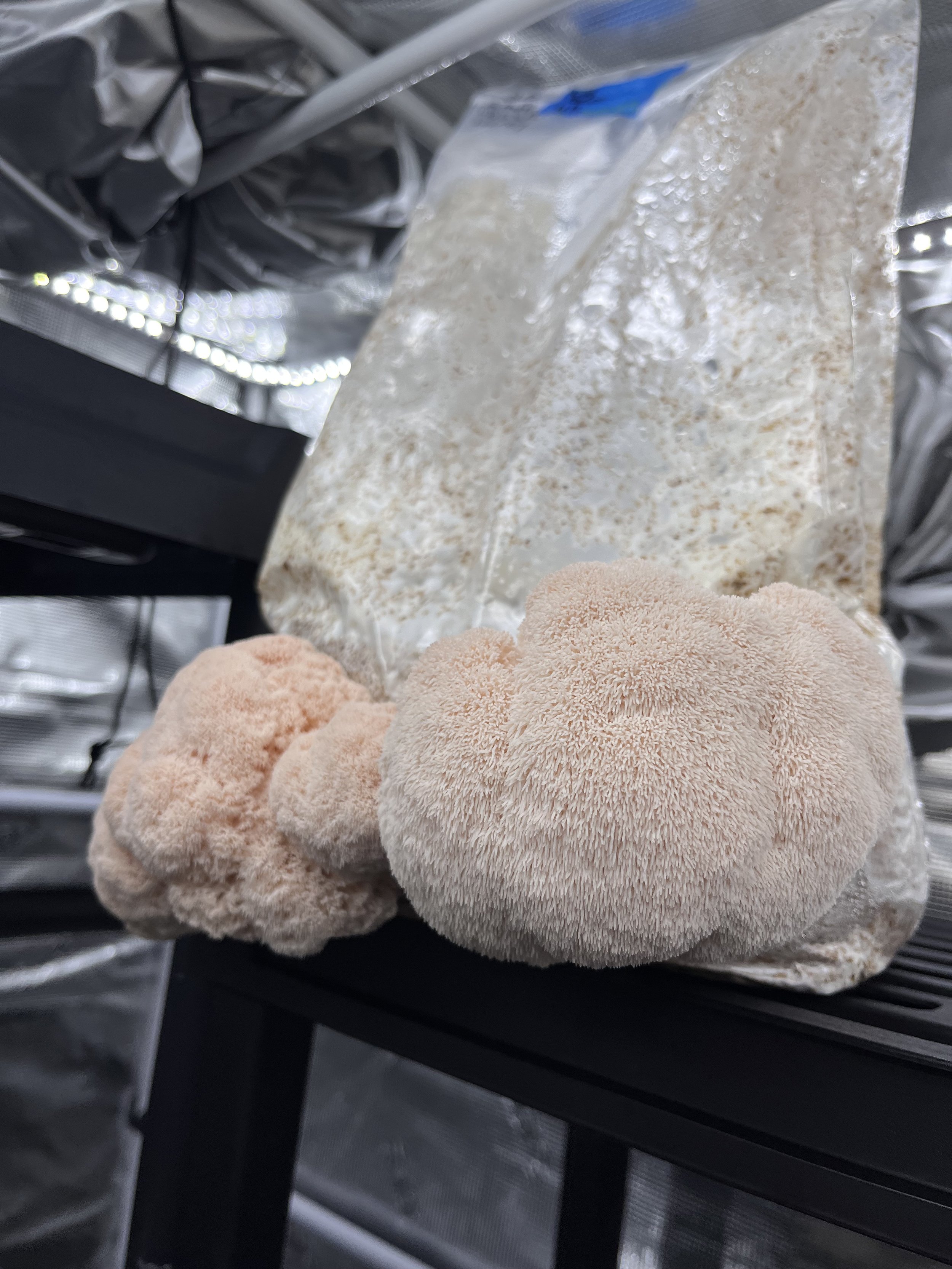
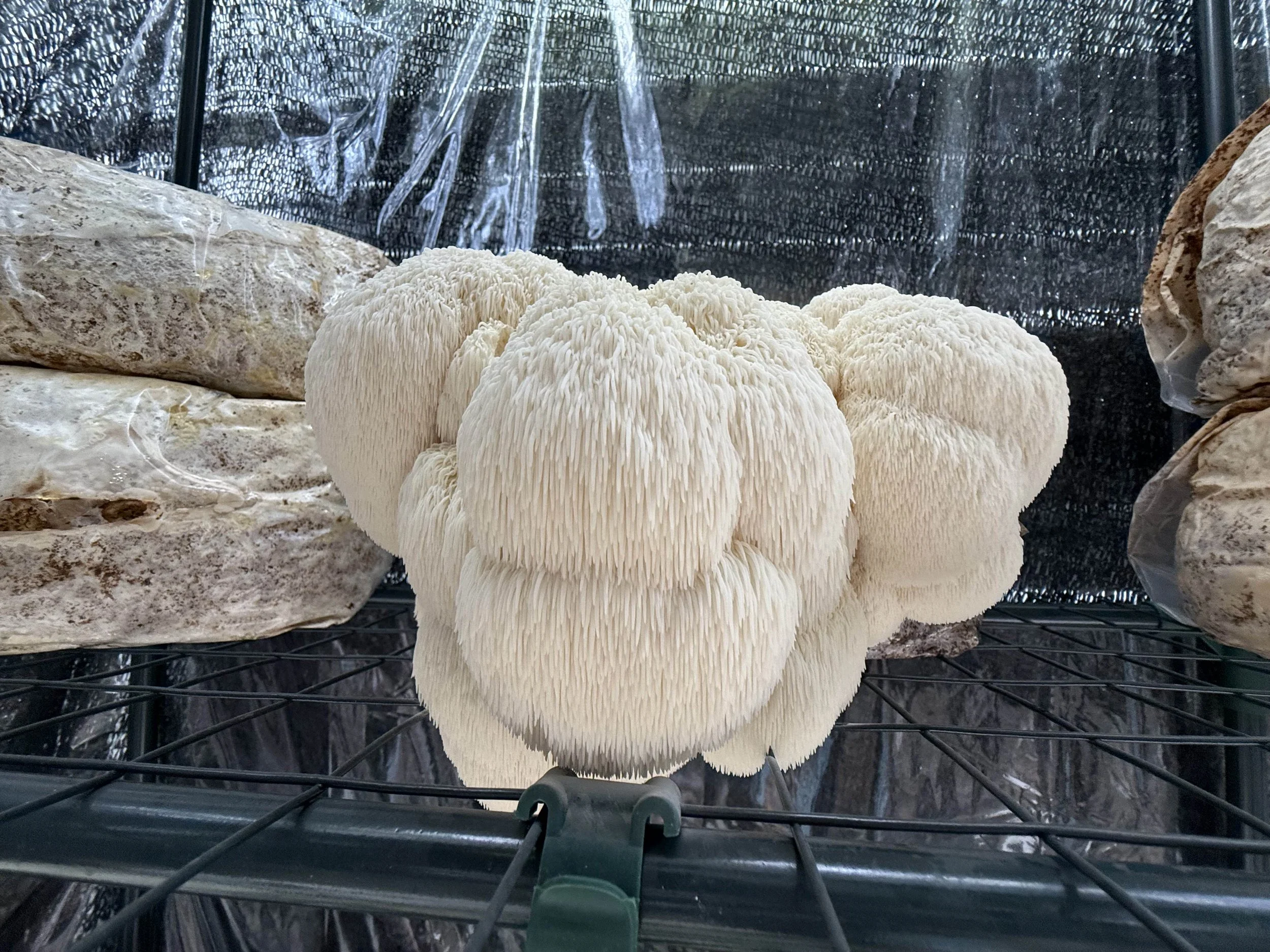
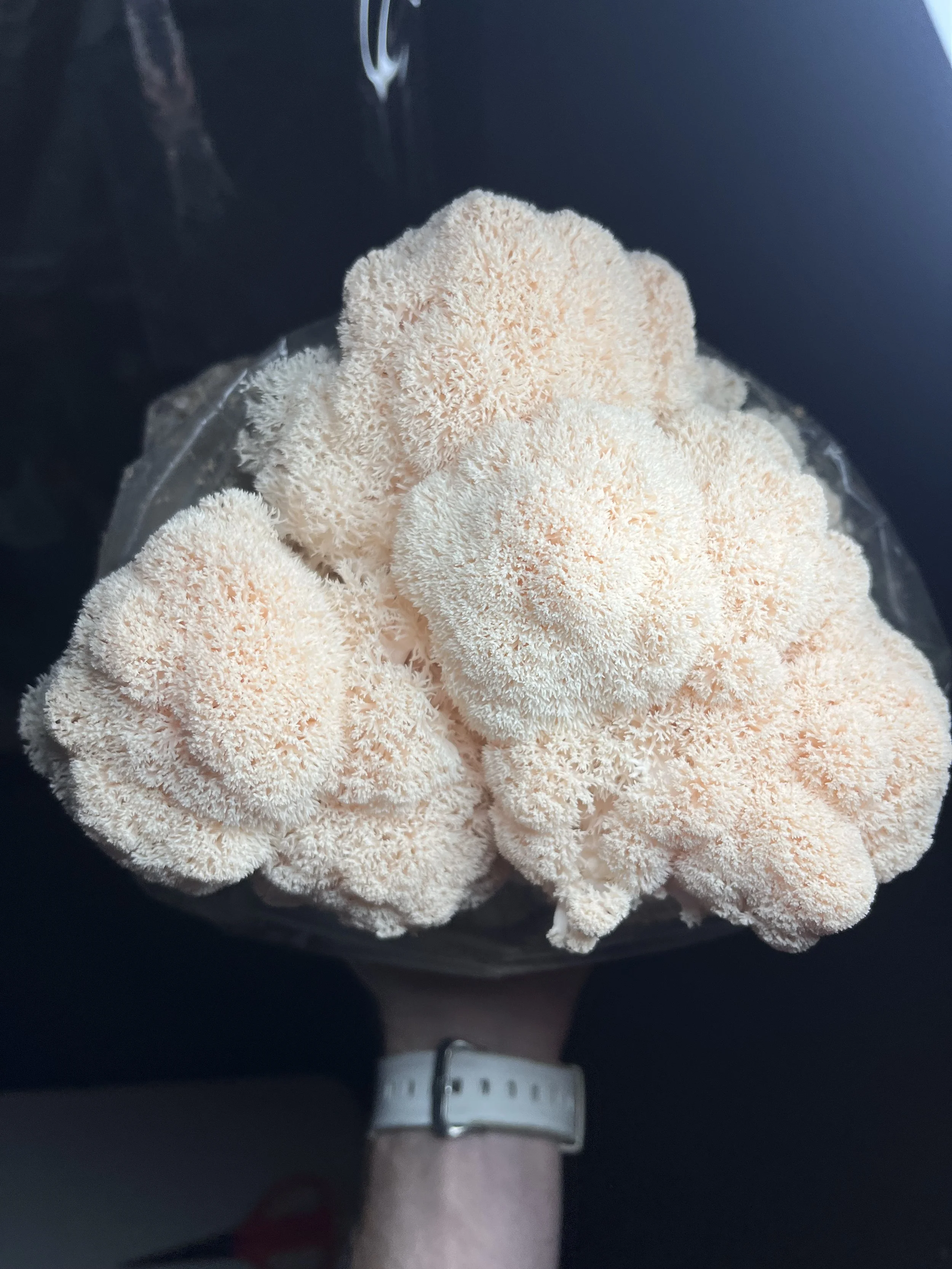
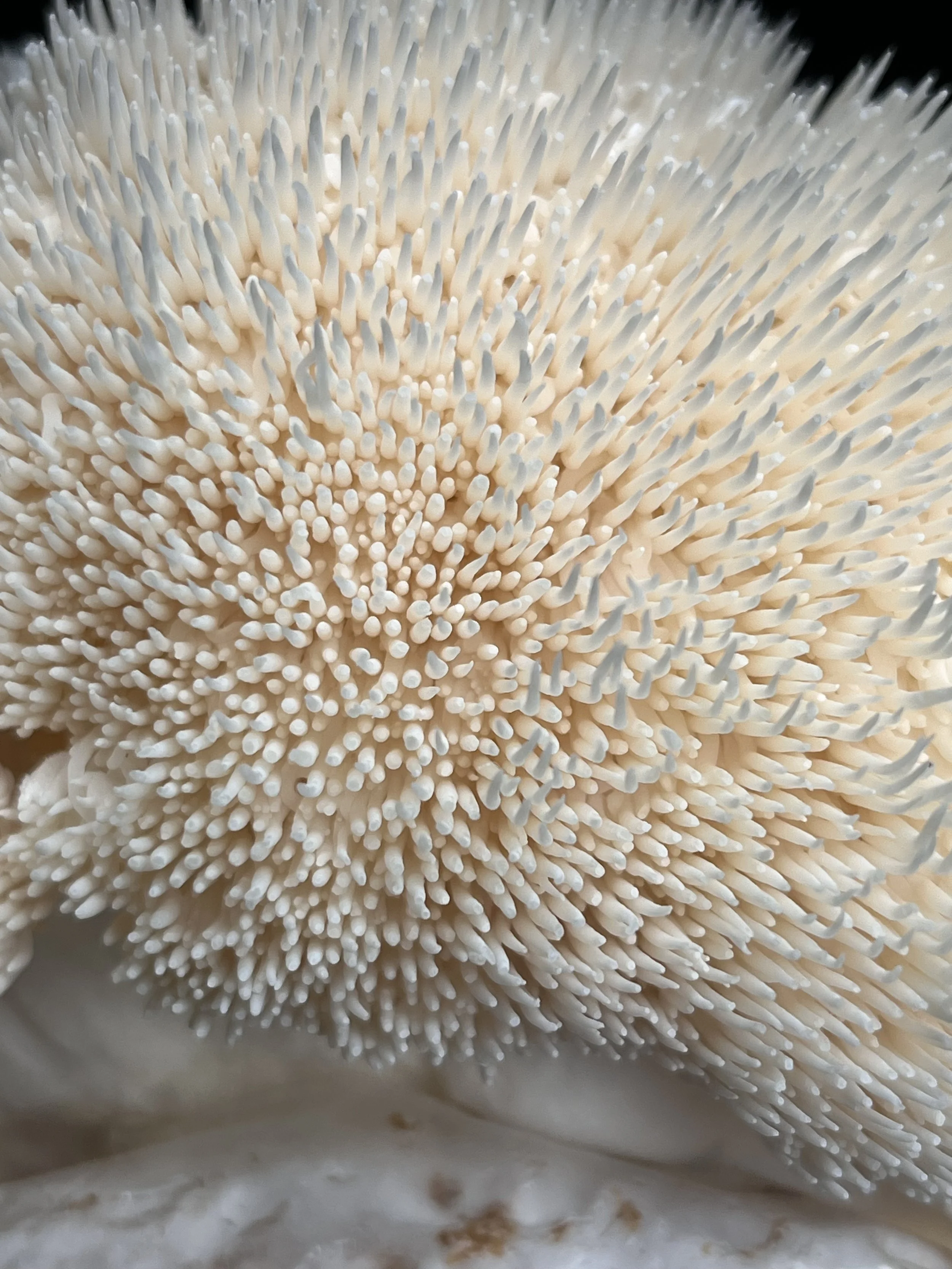
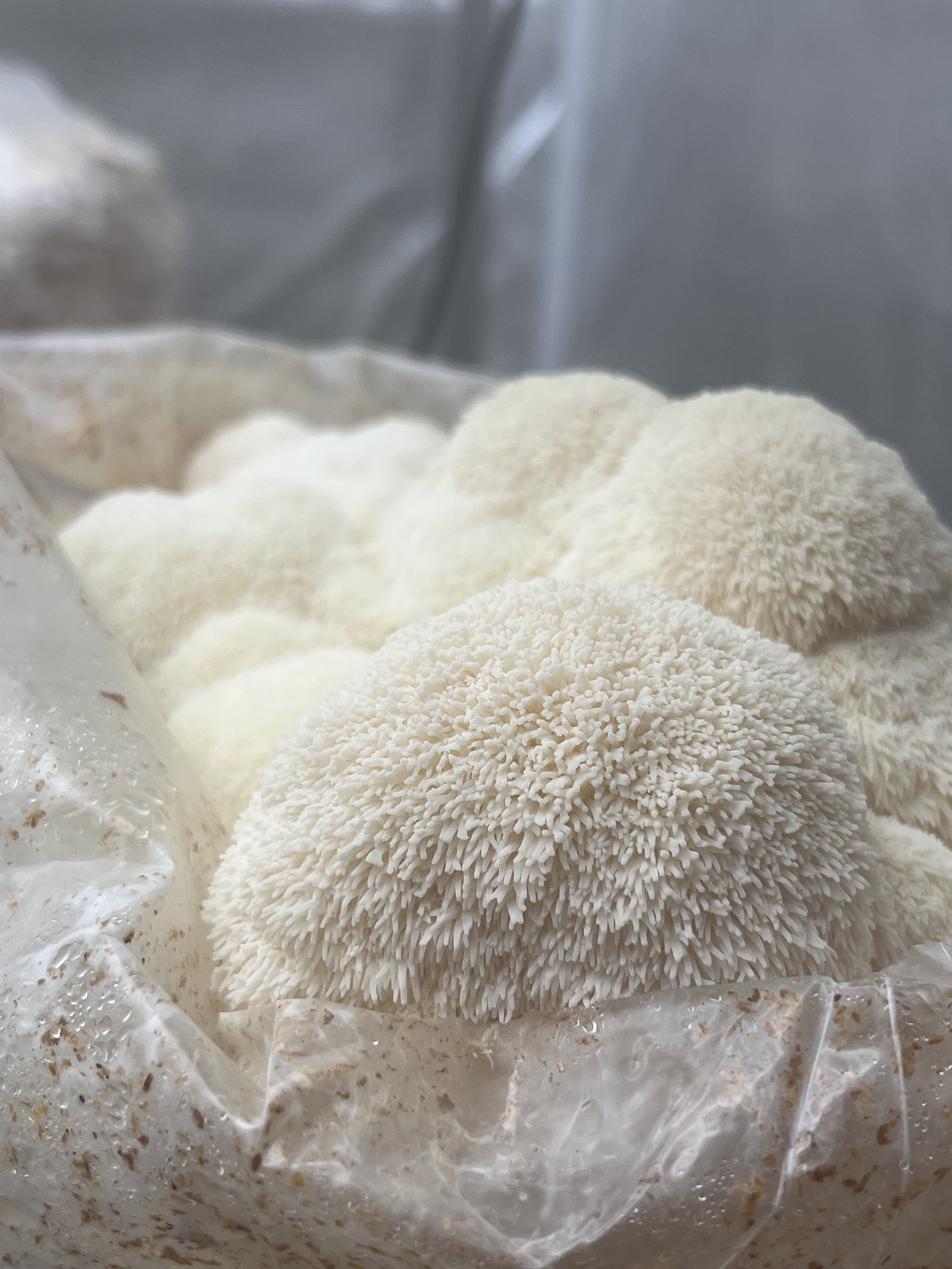
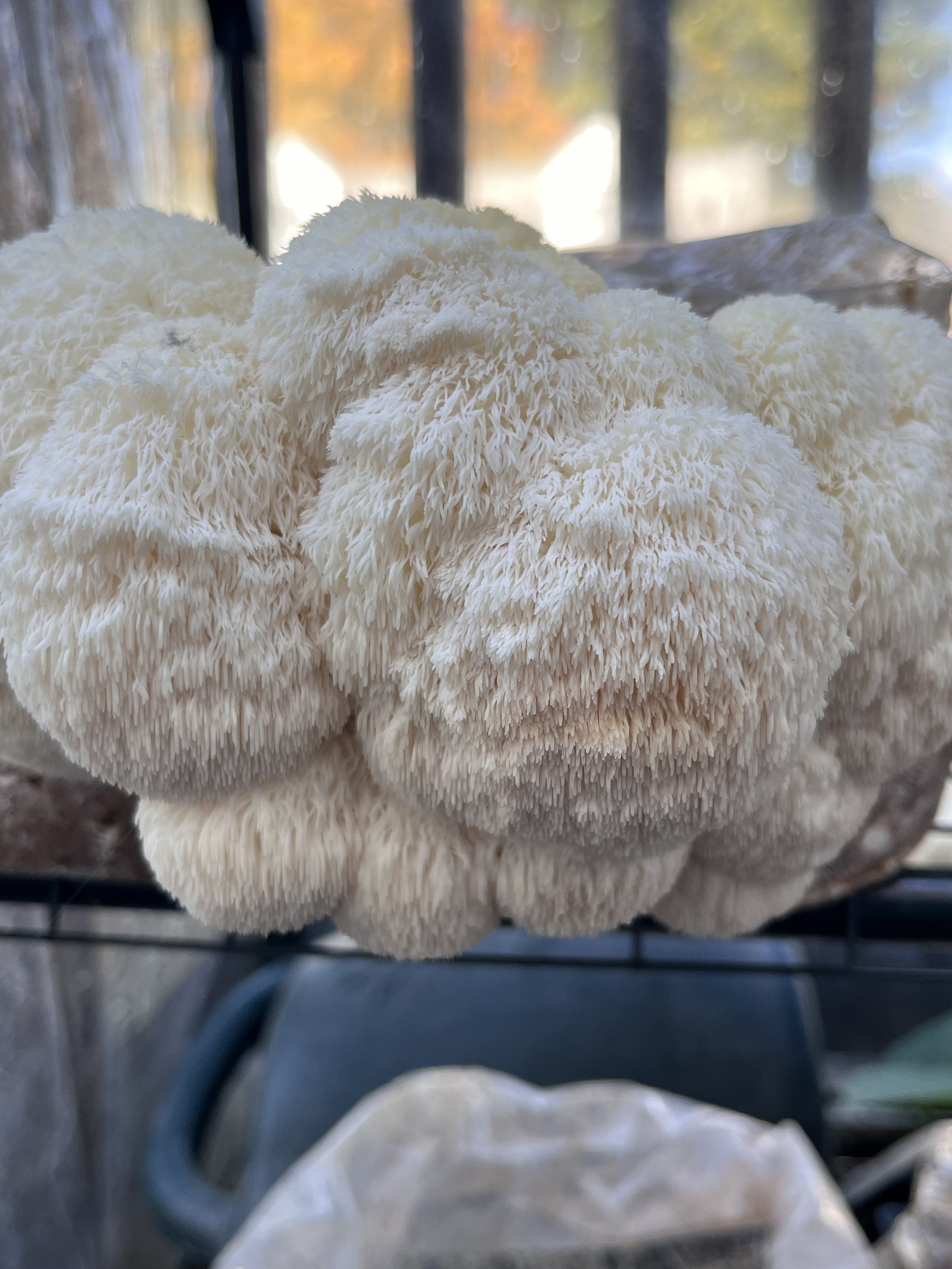
Unlike most of the mushrooms we are used to seeing with caps, gills, or pores, Lion’s Mane produces its spores across these long, cascading teeth or spines. As the mushroom develops, those spines elongate and hang downward, eventually forming that unmistakable white mane.
This was also the very first mushroom I ever grew.
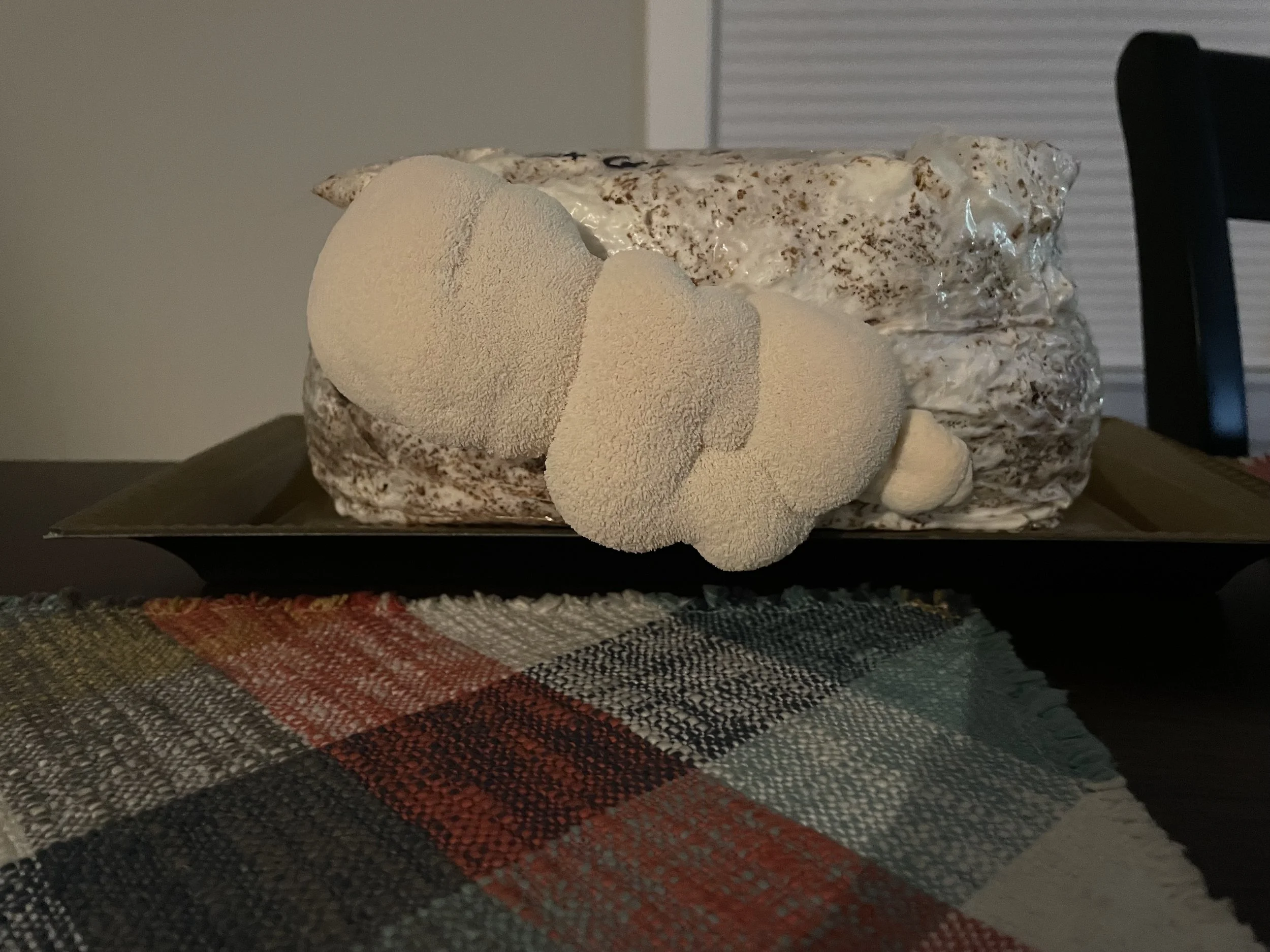
A good friend of mine got me a Lion’s Mane ready-to-fruit block for Christmas in 2022, and that was that. It sent me down this deeeeeeep rabbit hole of fungi that I am still in today.
At the time, I had absolutely no idea what I was working with, what I was trying to do, or just how much there was to learn about this organism.
And Lion’s Mane is a pretty damn good mushroom to fall down the rabbit hole with.
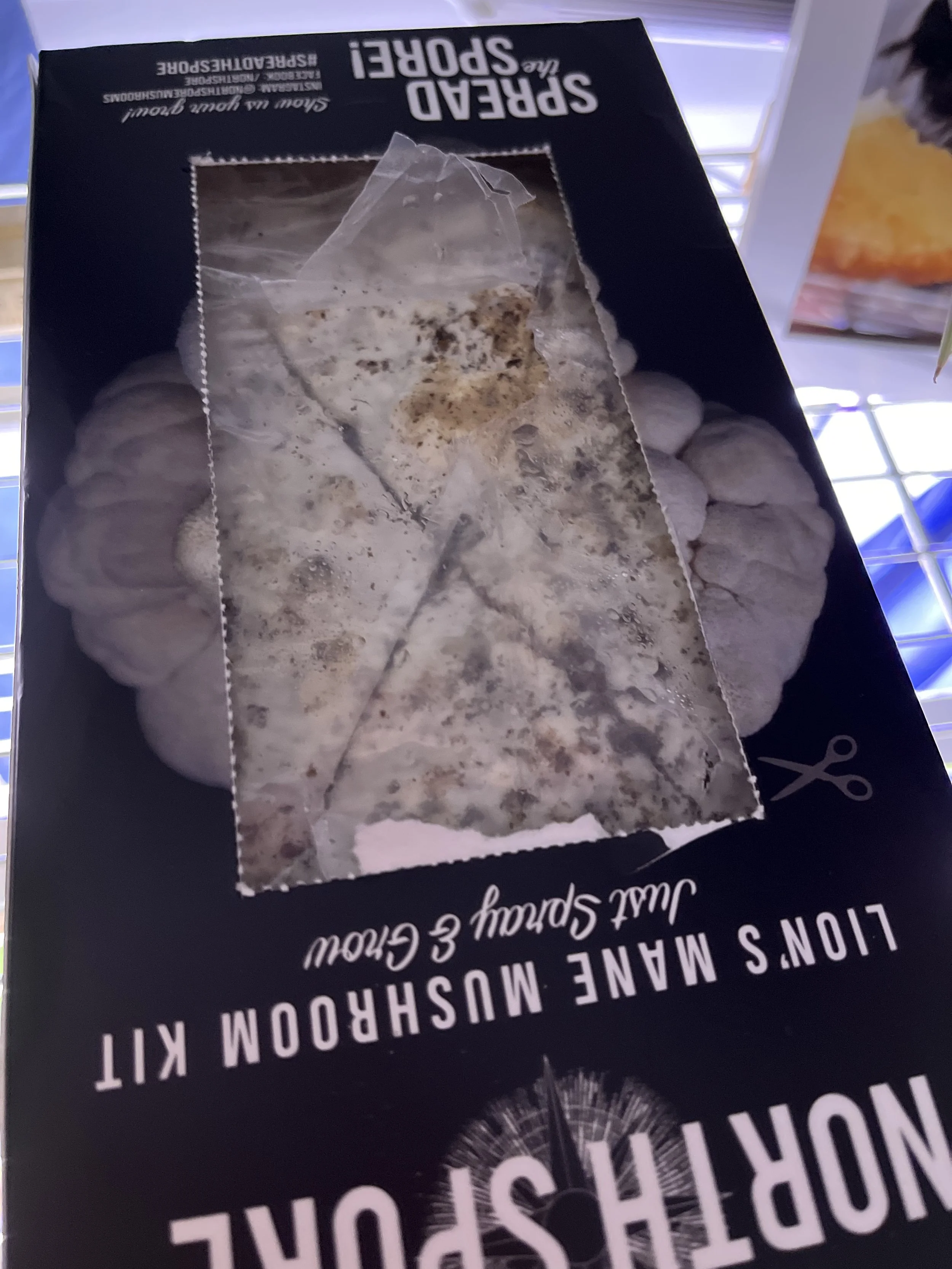
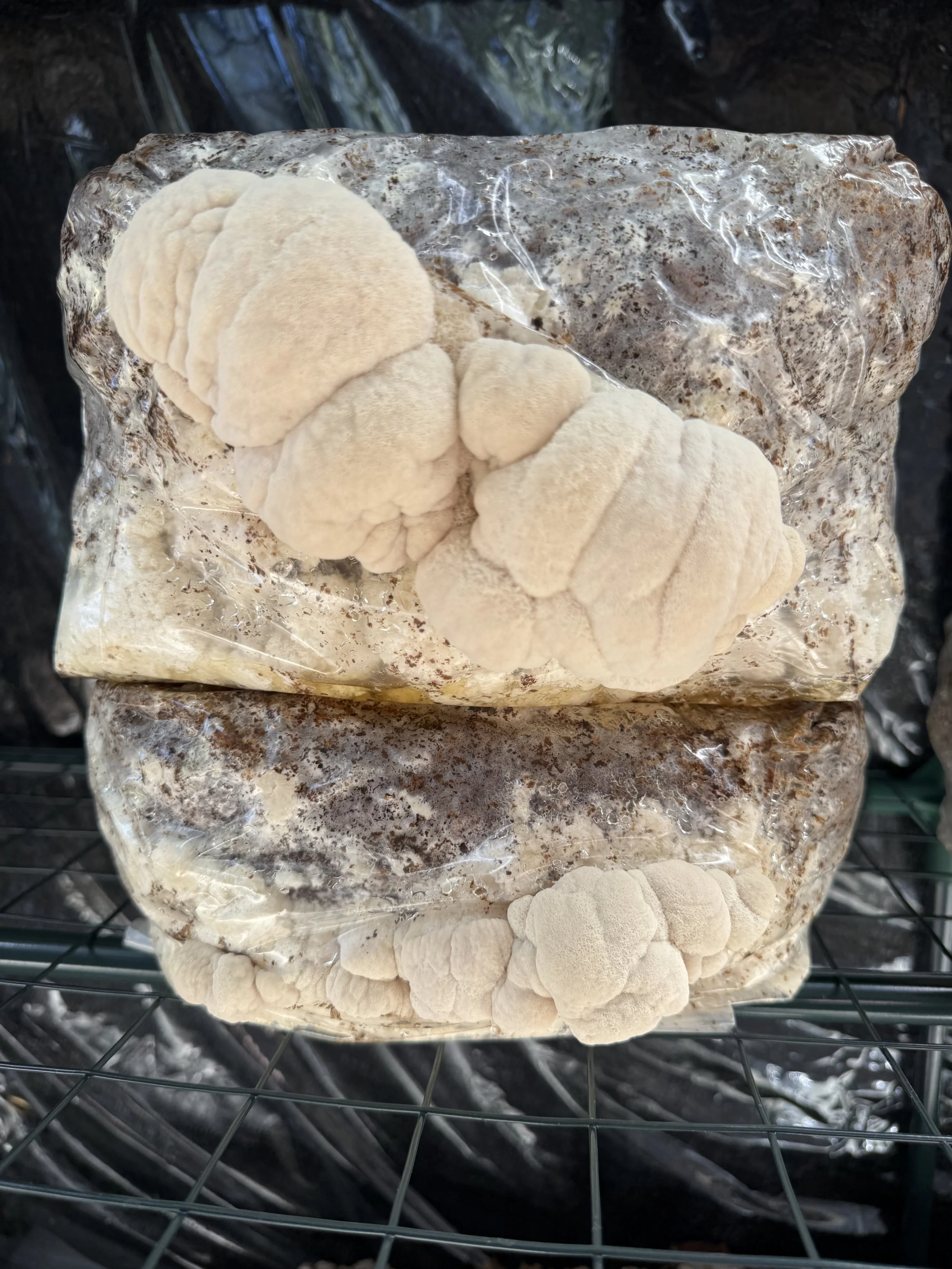
This didn’t end up fruiting pretty as it was on a very dry, warm, bedroom shelf and I had no clue what it was, BUT IT GOT ME STARTED
An Old Mushroom With a proven Reputation
Today, Lion’s Mane is one of the hottest, most talked-about, click-baity mushrooms on the planet.
Depending on who you listen to, this mushroom is going to make you smarter, regenerate your brain, prevent dementia, turn you into a superhuman, and probably save the world before dinner.
Obviously, some of that needs to be taken with a grain of salt.
But what I find interesting is that we don't actually need the hype to make Lion’s Mane fascinating.
Humans have been eating and using this mushroom for centuries. It has a remarkable appearance, an unusual nutritional and chemical profile, a fascinating relationship with hardwood trees, and compounds that modern researchers are actively investigating for their effects on the nervous system.
Long before anyone knew what a neuron was, humans had already decided that this was a mushroom worth paying attention to.
Where Lion’s Mane Comes From
Hericium erinaceus is a wood-decaying basidiomycete found throughout parts of Asia, Europe, and North America.
In nature, it is most commonly associated with dead or dying hardwoods. It has been documented on trees including oak, walnut, beech, maple, sycamore, and other broadleaf species. It is often found growing from logs, stumps, wounds, and cavities in trees.
And this is important when you look at the mushroom we cultivate today.
The Lion’s Mane fruiting from a sawdust block isn't fundamentally different from the fungus growing from a dead tree. We are simply giving the mycelium a concentrated, controlled version of the woody environment it evolved to inhabit.
The organism is still doing what it has always done:
grow through wood, digest it, build itself from it, and eventually produce a fruiting body.
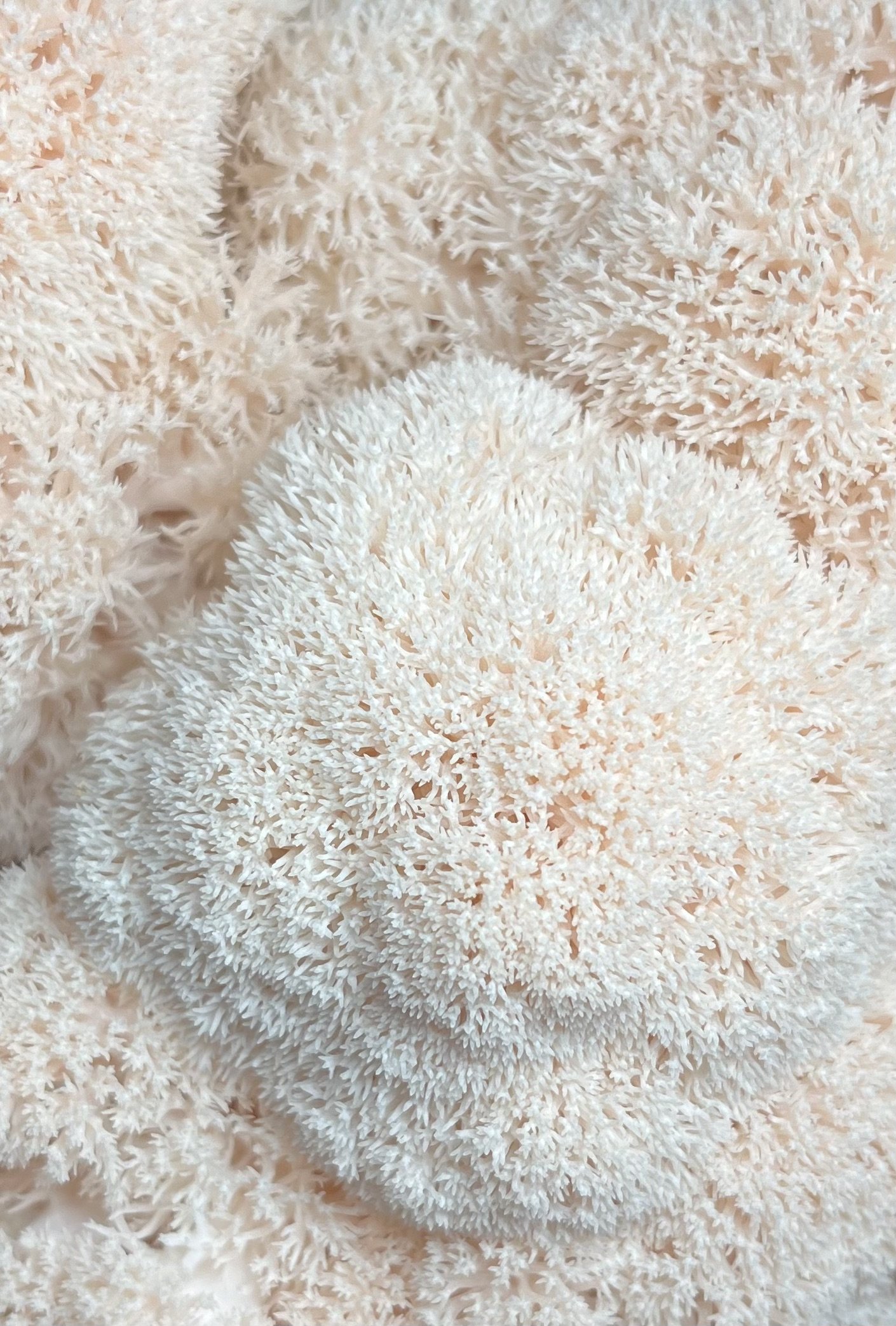
Before We Had Cultivation
For most of human history, Lion’s Mane wasn't something you ordered online as a culture. (speaking of: if you need some, I got them here!)
You had to find it.
Wild specimens can become somewhat large, sometimes reaching tens of centimeters across, but they aren't necessarily something you encounter every time you walk through the woods. They are tied to particular trees, particular stages of decay, and particular environmental conditions.
That rarity, combined with its excellent flavor and unusual appearance, helped make Lion’s Mane a highly valued wild mushroom.
And nowhere is that history more interesting than in East Asia.

iNaturalist map of recent Lions Mane observations
Lion’s Mane in China
In China, Lion’s Mane is known as 猴头菇 (hóutóugu), generally translated as Monkey Head Mushroom.
Lion’s Mane has been used in Chinese food and traditional medicine for centuries. Historical Chinese traditions regarded the mushroom as both a food and a medicinal resource, with particular associations with the stomach and digestive system a
It also developed a reputation as a highly prized mushroom.
Lion’s Mane was considered a valuable and prestigious mushroom, including in elite and imperial culinary traditions.
This wasn't a mushroom that suddenly became popular because someone discovered erinacine A. People were already eating it, seeking it out, and assigning value to it hundreds of years before modern chemistry ever entered the picture.
The earliest recorded use dates to the Tang Dynasty in China (618 to 907 AD). It was considered one of the Four Noble Mushrooms, alongside Poria, Reishi, and Tremella, each known for its own delicious tastes and benefits to the body!
Yamabushitake
Then we get to Japan.
There, Lion’s Mane is called 山伏茸 (yamabushitake)
Here it’s associated with the Yamabushi Monks whom were said to have foraged for this mountain and revered it for its abilities to imrpvoe focus and coginition during intense meditiations.
Yes, also before the science and supplements the Monks were finding teas of this mushroom to boost their brains.
So, really it’s surprising how long its taken for science to catch up.
From Wild Mushroom to Cultivated Mushroom
For centuries, Lion’s Mane was primarily something people found in the forest.
Then, sometime in the twentieth century, we started figuring out how to bring the fungus indoors.
Historical cultivation literature places the domestication of H. erinaceus in China around the middle of the twentieth century, with cultivation work associated with the Shanghai Agricultural Academy helping move the mushroom from something collected in deep forests toward a commercially cultivated crop.
From there, cultivation spread and developed rapidly. From placing fresh logs next to fruiting logs to the highly efficient current day production.
Today, we can grow Lion’s Mane on sterilized hardwood substrates, supplemented sawdust, and through traditional log cultivation. Modern commercial production has also developed bottle and bag-growing systems, particularly in Asia.
And the difference between wild and cultivated Lion’s Mane is fascinating.
In the wild, the fungus has to find the right tree and slowly establish itself.
In cultivation, we give it an enormous head start and buffet of food.
We isolate a culture, expand the mycelium, provide a prepared substrate, control the environment, and eventually encourage it to produce the structure we actually want to harvest:
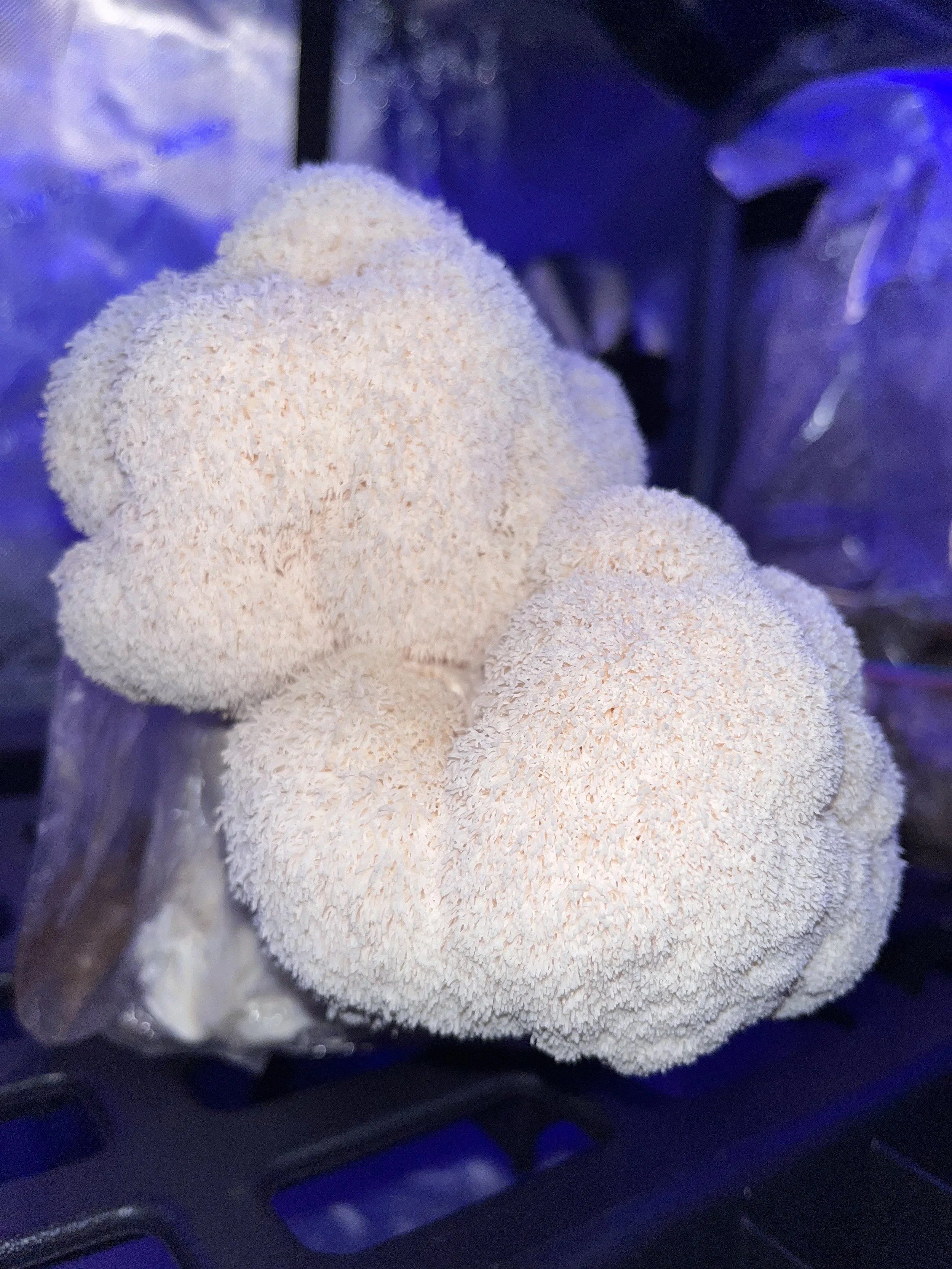
The fruiting body, The Mane
The Fruit Vs the Mycelium
This is one of the most important things to understand about Lion’s Mane.
When we say “Lion’s Mane mushroom,” we're usually talking about that big white fruiting body.
But the mycelium is the main organism.
The mushroom/fruiting body is the reproductive structure it produces.
The mycelium is the mass of threads growing through its substrate.
And these two stages don't necessarily contain the exact same compounds in the same concentrations.
This becomes extremely important once we start talking about Lion’s Mane's famous chemistry.
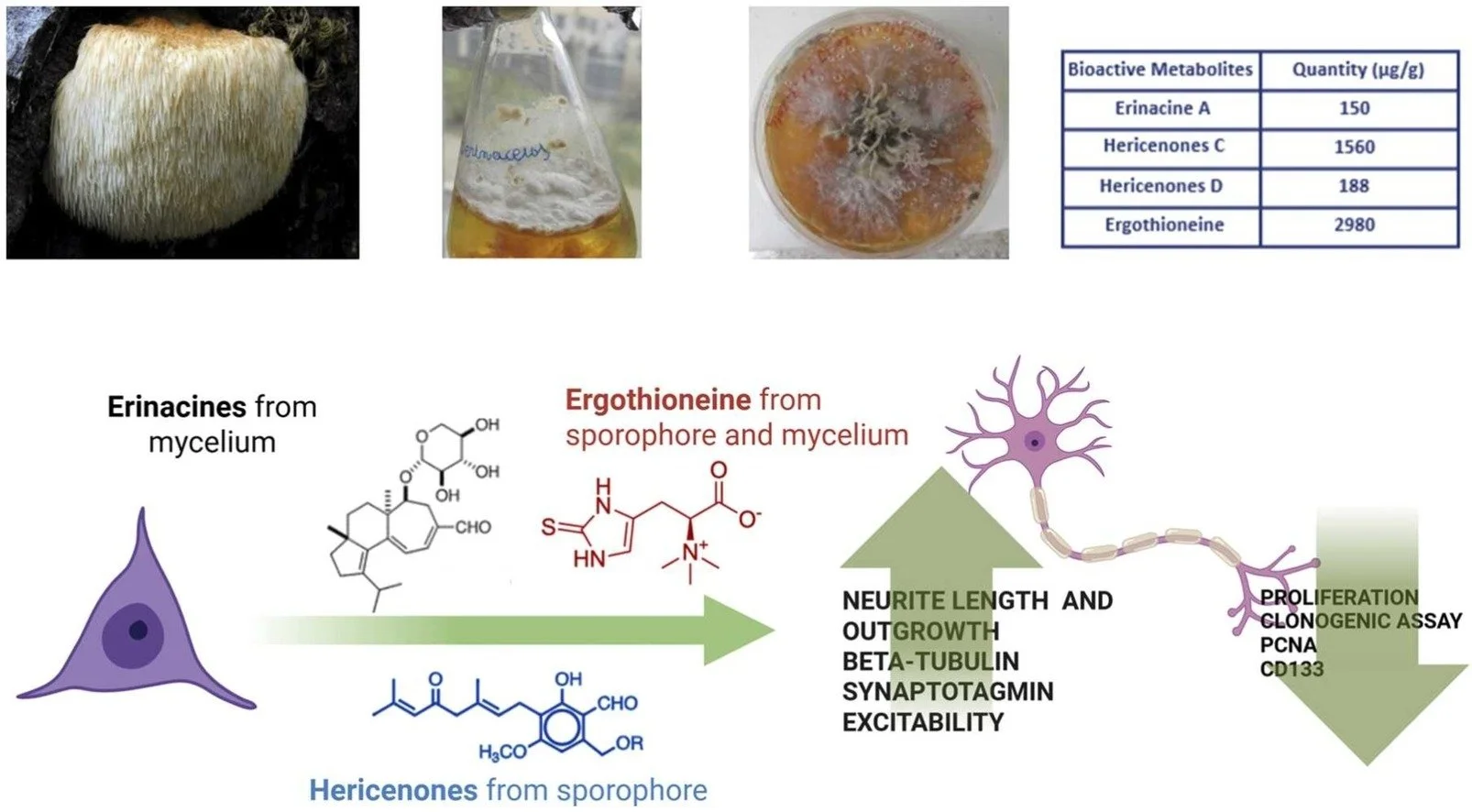
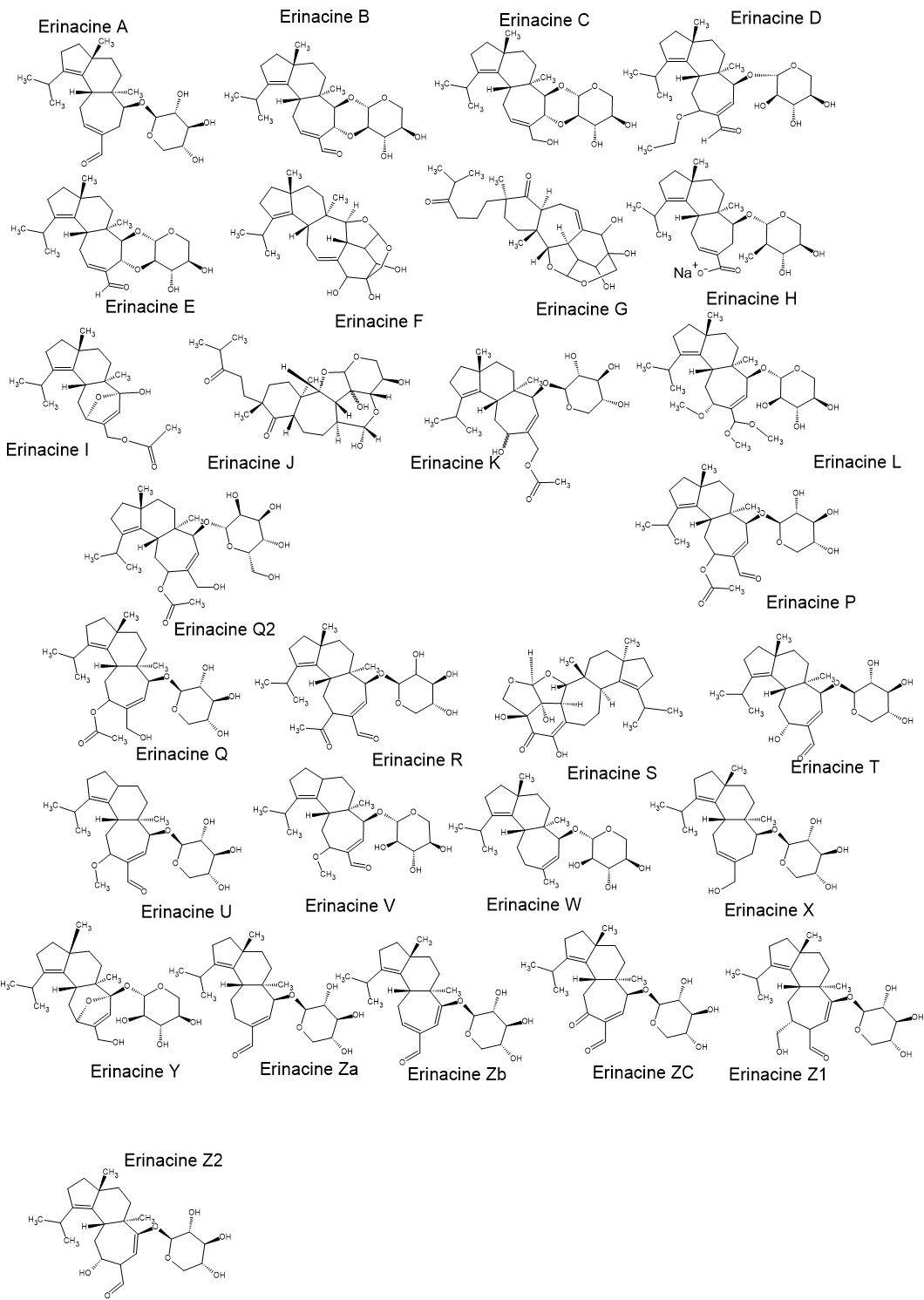
The fruiting body is particularly associated with compounds called hericenones, while the mycelium is particularly known for producing erinacines.
What Makes the Fruit So cool?
The first thing you'll notice about Lion’s Mane is obviously the shape.
Those long reaching overflowing spines can become several centimeters long, and unlike the branching teeth of some other Hericium species, H. erinaceus typically produces non-forking spines.
That gives Lion’s Mane its characteristic dense, spherical appearance.
And this is where another important distinction comes in.
There are several other Hericium species that people sometimes lump together under the Lion’s Mane name.
For example:
Hericium erinaceus — Lion’s Mane
Hericium americanum — Bear’s Head
Hericium coralloides — Coral Tooth
Hericium abietis — a species associated with conifers
They can look similar, but they aren't the same species, and they don't necessarily behave the same way in cultivation or contain the same chemical profiles. Though they can be similar!
H. coralloides, for example, develops branching, forked spines rather than the individual cascading spines characteristic of H. erinaceus.
These spines are where Lions Mane forms its spores!
So when we're talking about Lion’s Mane, I am talking specifically about Hericium erinaceus. None of the others yet!
And Then There Is the Mycelium
If the fruiting body is the part we see, the mycelium is where a huge amount of the interesting biology is happening.
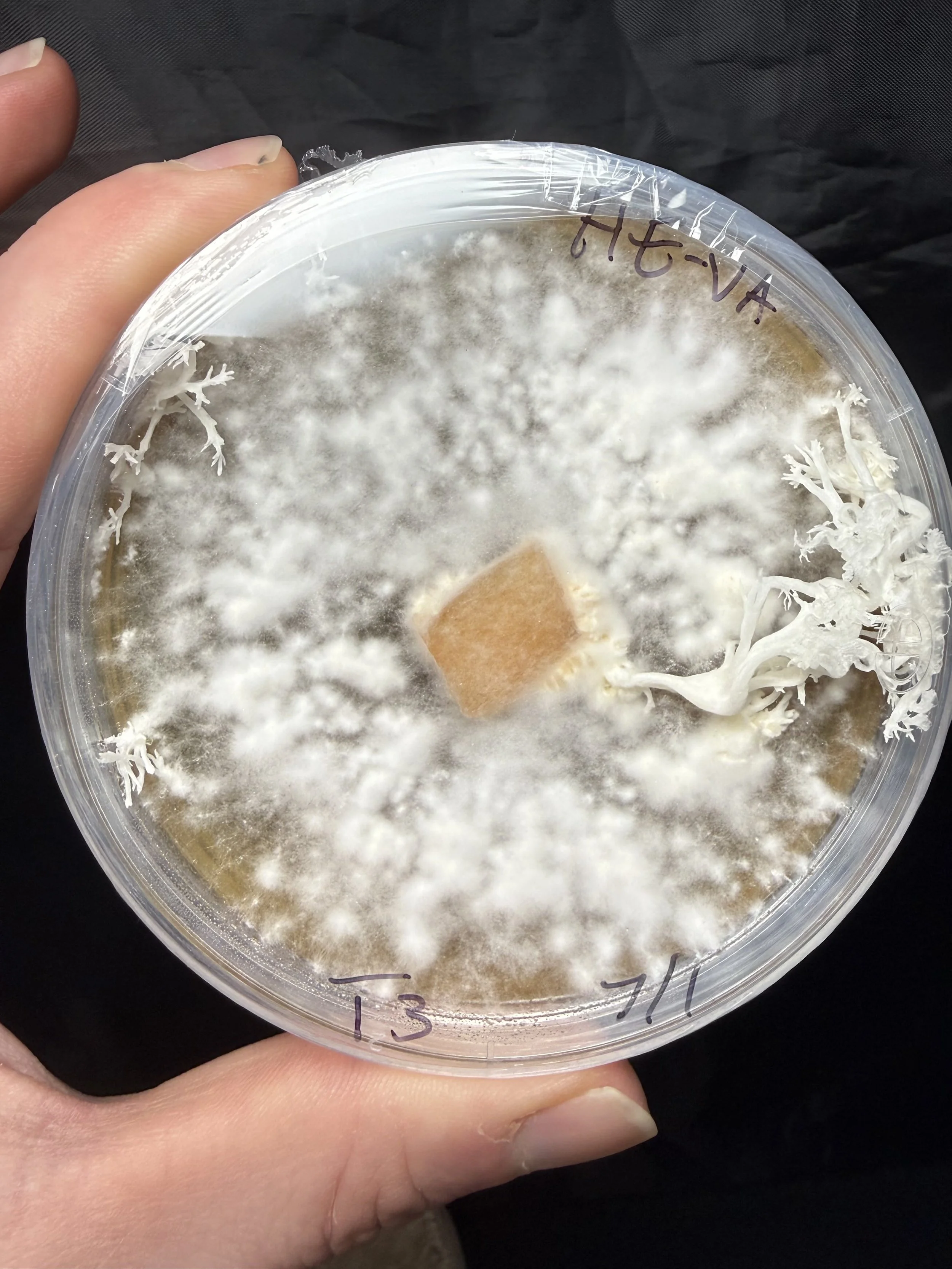
Lion’s Mane mycelium grows as a dense, white network through its substrate. Under cultivation, it can form distinctive growth patterns, and under certain conditions it can even begin producing tiny fruiting structures directly from culture. With a thin but cottony and far reaching mycelium this species is a real joy to work with.
In the 1990s, researchers isolated a group of compounds called erinacines from H. erinaceus mycelium. Erinacines A, B, and C were reported as strong stimulators of nerve growth factor synthesis in the original research.
Around the same period, researchers were also isolating hericenones from the fruiting body, including hericenones C, D, and E, and investigating their ability to stimulate NGF synthesis.
And this is really where modern Lion’s Mane research began to take off and starts to slowly get added into every “Bio-hackers” toolkit.
The Famous Lion’s Mane Compounds
Today, when you hear people talking about Lion’s Mane, you're probably going to hear two words over and over:
Hericenones.
Erinacines.
These are both groups of secondary metabolites associated with H. erinaceus, but they are not interchangeable.
Hericenones are primarily associated with the fruiting body.
Erinacines are particularly associated with the mycelium.
And erinacine A has become one of the most heavily discussed compounds in the modern Lion’s Mane world.
Why?
Because of its relationship to nerve growth factor, or NGF, and other neurotrophic processes.
This is where we have to separate the genuinely interesting science from the supplement marketing.
Laboratory and animal research has found interesting effects involving neuronal growth, neurotrophic signaling, inflammation, oxidative stress, and cognition.
But that does not mean that eating Lion’s Mane has been proven to make humans smarter.
The human evidence is still developing, and the preparations used in different studies aren't necessarily equivalent.
But, I personally love and use Lions Mane Extracts from Performance Fungi very often and feel like it help organize my mind and can even help boost my mood/energy!
Alot of It depends
This is also why I think it is important to stop talking about “Lion’s Mane” as though every product containing the species is chemically identical.
A powdered fruiting body is not necessarily the same thing as a fruitbody or mycelial extract.
A mycelium grown on grain is not necessarily equivalent to purified mycelial biomass.
A hot-water extract is not necessarily equivalent to an alcohol extract.
And a strain grown under one set of conditions may not produce exactly the same chemical profile as another strain.
So when somebody tells you:
“Lion’s Mane contains X.”
My next question is:
Which Lion’s Mane?
Which strain?
Which tissue?
Which growing conditions?
Which extraction?
How much?
All of these can cause some differences in the overall ratio of compounds, values, nutrition, etc. Like lots of things in Fungi and Mushrooms; it depends.
Lion’s Mane as Food
And before we turn this mushroom into a neurological supplement, let's remember something incredibly important:
Lion’s Mane is food. GOOD Food is medicine.
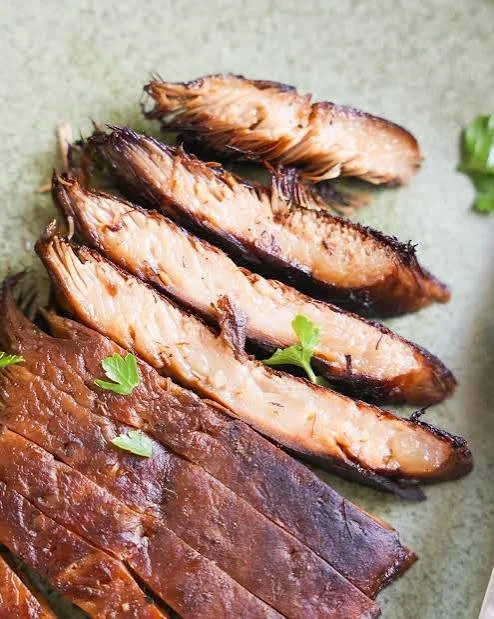
It has been eaten for centuries, and it is one of the more remarkable culinary mushrooms I've ever worked with. May be my favorite mushroom to eat! Even the extracts have a delicious flavor.
When cooked properly, it develops a dense, almost fibrous texture that people commonly compare to lobster, crab, shrimp, or other seafood.
Many describes it as having a lobster-like flavor, while other culinary descriptions compare it to crab or shrimp.
And honestly, this is one of the reasons I think Lion’s Mane is such a great mushroom for introducing people to fungi.
You can talk about the chemistry and the neuroscience all day.
Then you hand someone a properly cooked Lion’s Mane.
And suddenly they understand why people have been eating the damn thing for hundreds of years.
Because it delicious, nutritious and free food if you can forage them!
Full of Amino Acids, Dietary fiber, beta-glucans for you gut and body’s well being and just tastes so good.
What Does Science Actually Say?
The modern scientific interest in H. erinaceus extends far beyond NGF.
Research has investigated compounds from Lion’s Mane in relation to:
Neurotrophic signaling
Neuronal growth
Oxidative stress
Inflammation
Immune activity
Digestive health
Metabolic processes
Potential cognitive effects
But these areas don't all have the same level of evidence.
Some findings come from isolated compounds, some come from cell cultures, some come from animal studies., some come from human clinical trials.
Overall, they won’t heal you by dinner, but they are a great addition to dinner! Science will continue to break down the potentials, but history and cultures have been showing us how to use these fungi for centuries.
And We Still Know Surprisingly Little
This might actually be the most exciting part.
We are still learning how much Lion’s Mane can vary between strains, how cultivation conditions influence its chemistry, how different compounds interact with one another, how processing changes those compounds, and which molecules actually matter most biologically.
We don't completely understand the relationship between the mushroom, its mycelium, its metabolites, our digestive system, our microbiome, and the nervous system.
And we certainly haven't catalogued everything this fungus is producing.
The more we look, the more complicated the picture becomes.
Which is exactly what I want from a mushroom.
It has still got a lot of potential despite being so proven!
Cultures Matter
And this is where I am going to get excited.
Two cultures can both be Hericium erinaceus and still behave very differently.
Different strains can vary in:
Colonization speed
Fruiting speed
Fruit size
Spine morphology
Yield
Temperature tolerance
Texture
Flavor
Environmental response
Potential metabolite production
Species gives us a name.
Genetics gives us the individual. So, I have been collecting Lions Mane to build a collection and breeding library where we can continue to explore this species and how different they can be culture to culture, spore to spore.
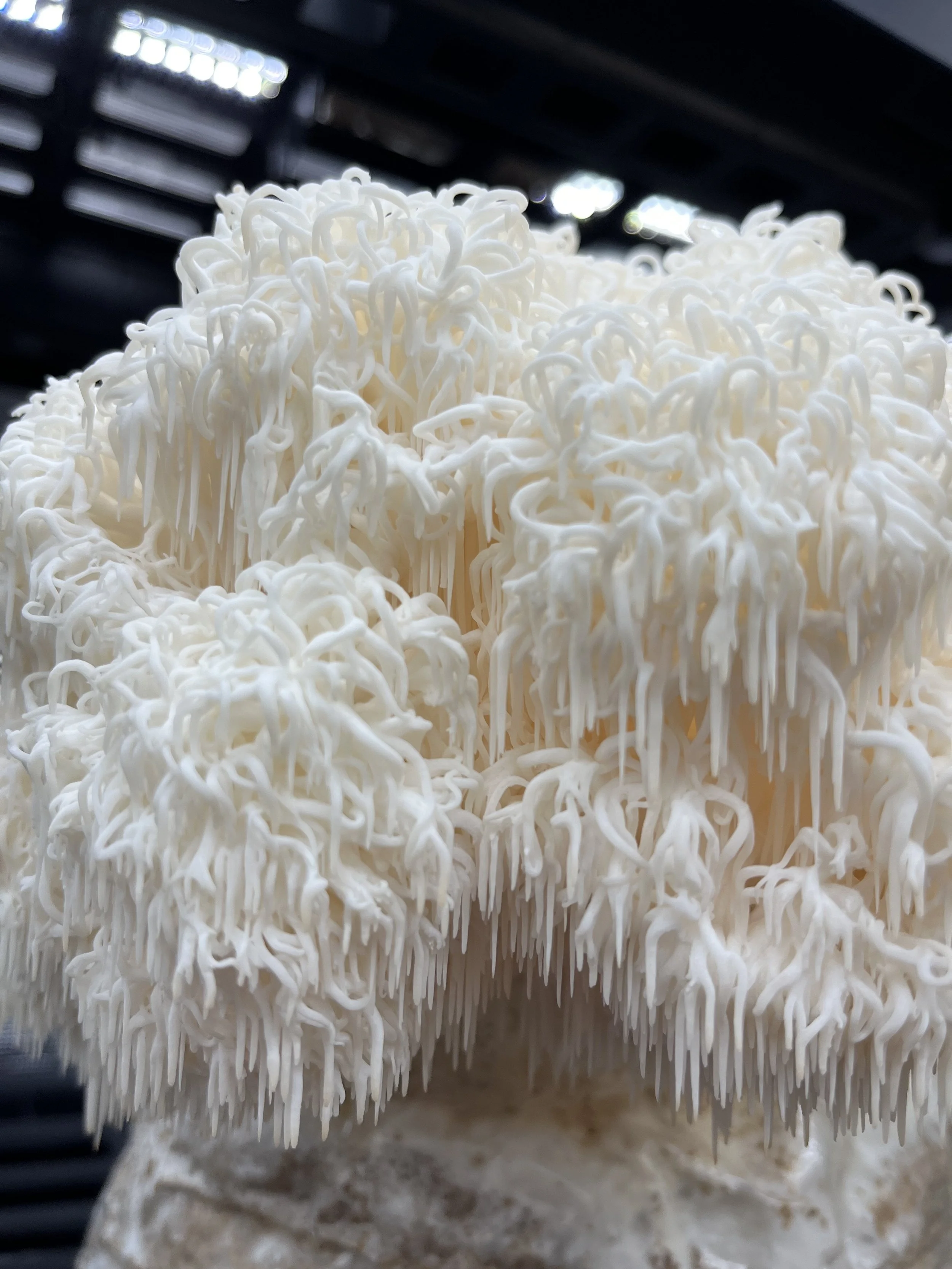
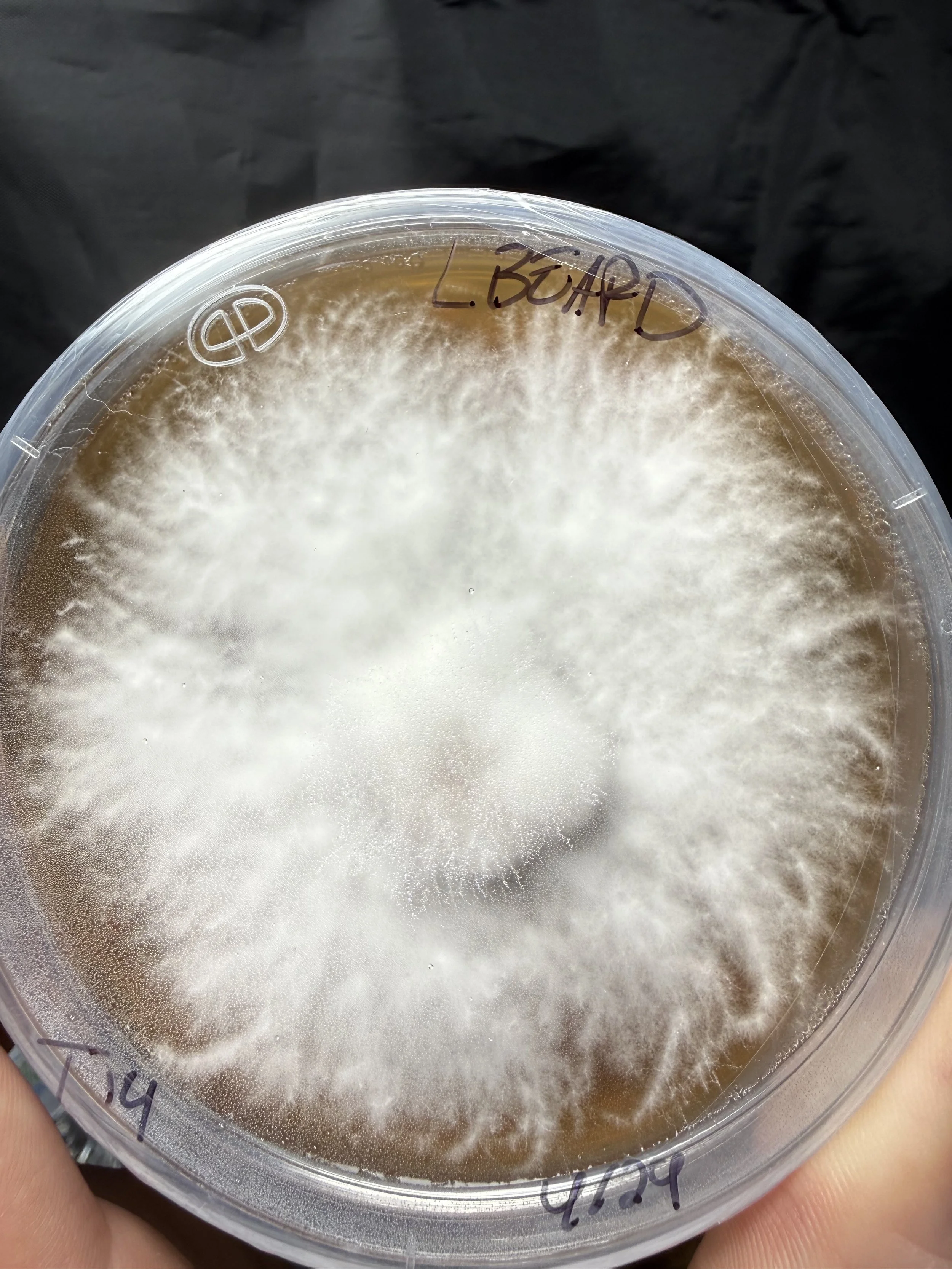
HE-LBEARD: Loooong Lush Teeth, but not as tolerant. A real looker
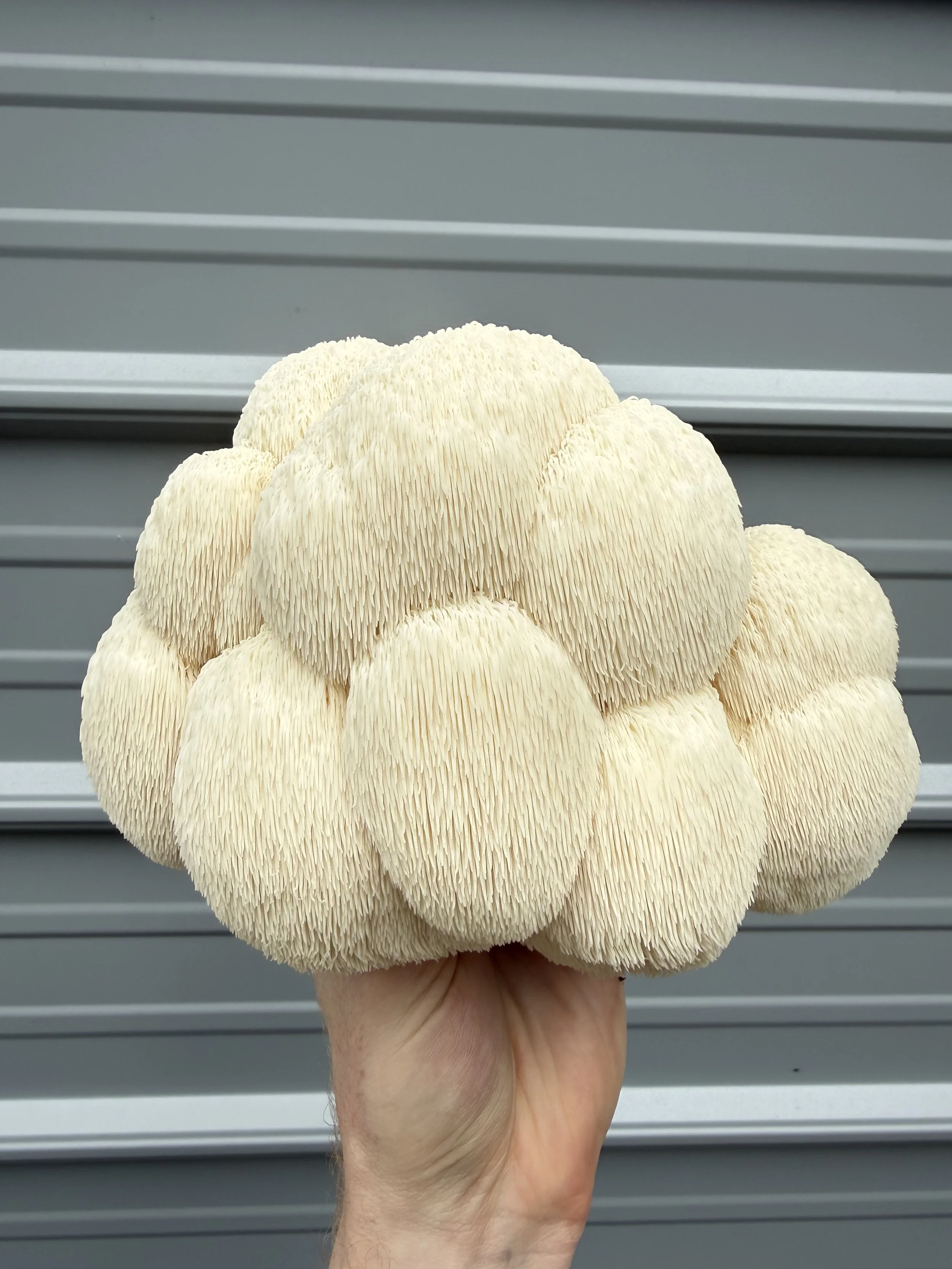
HE-UFJ: From Unkle Fungus, this" “June Cut” Lions mane is crazy. Fruit this thing in the Oven it does not care!! I have had great success and fruits with long teeth in temps pushing 96f and down to 30% humidity here in Florida.
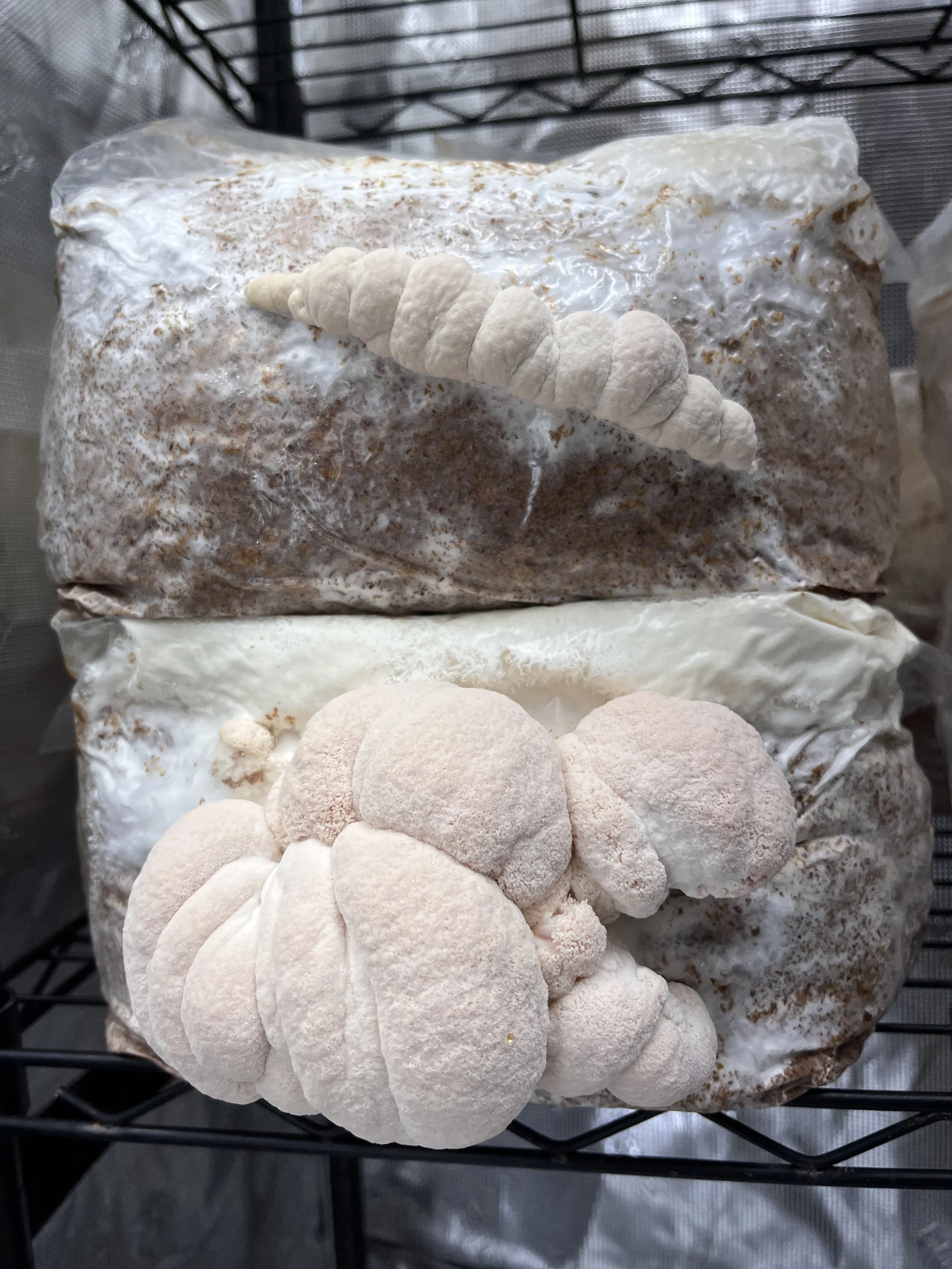
HE-BrickHouse: A D.C. Wild from Mycrodex! She’s picky and a bit slow to myceliate but the fruits come out DENSE.
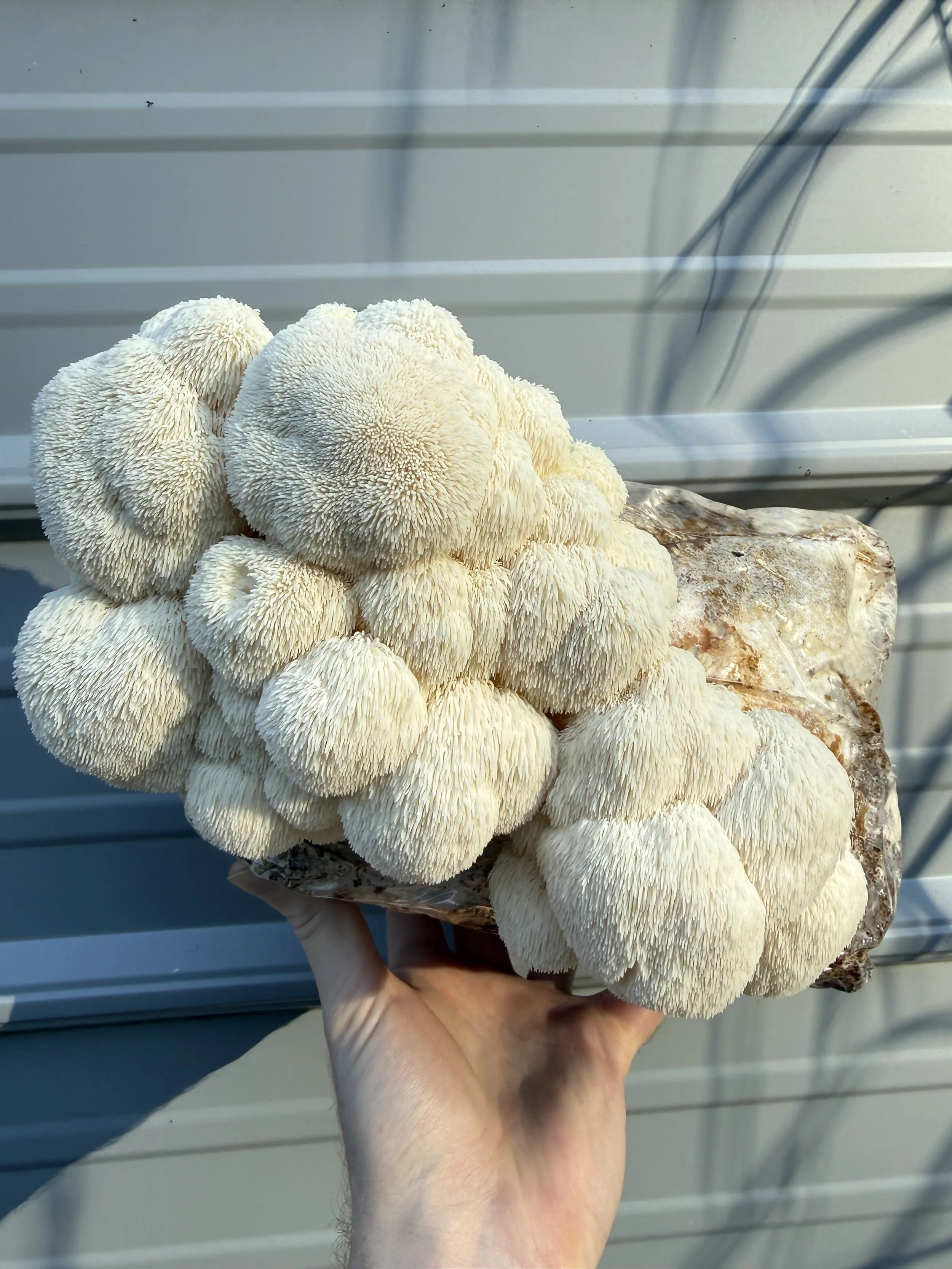
HE-BlackMarsh: A Maryland Wild from Mycosapiens, this species can handle heat and low humidity pretty well! Up to about 95 with humidity swinging hard from dry as a bone to raining every other day of fruiting.
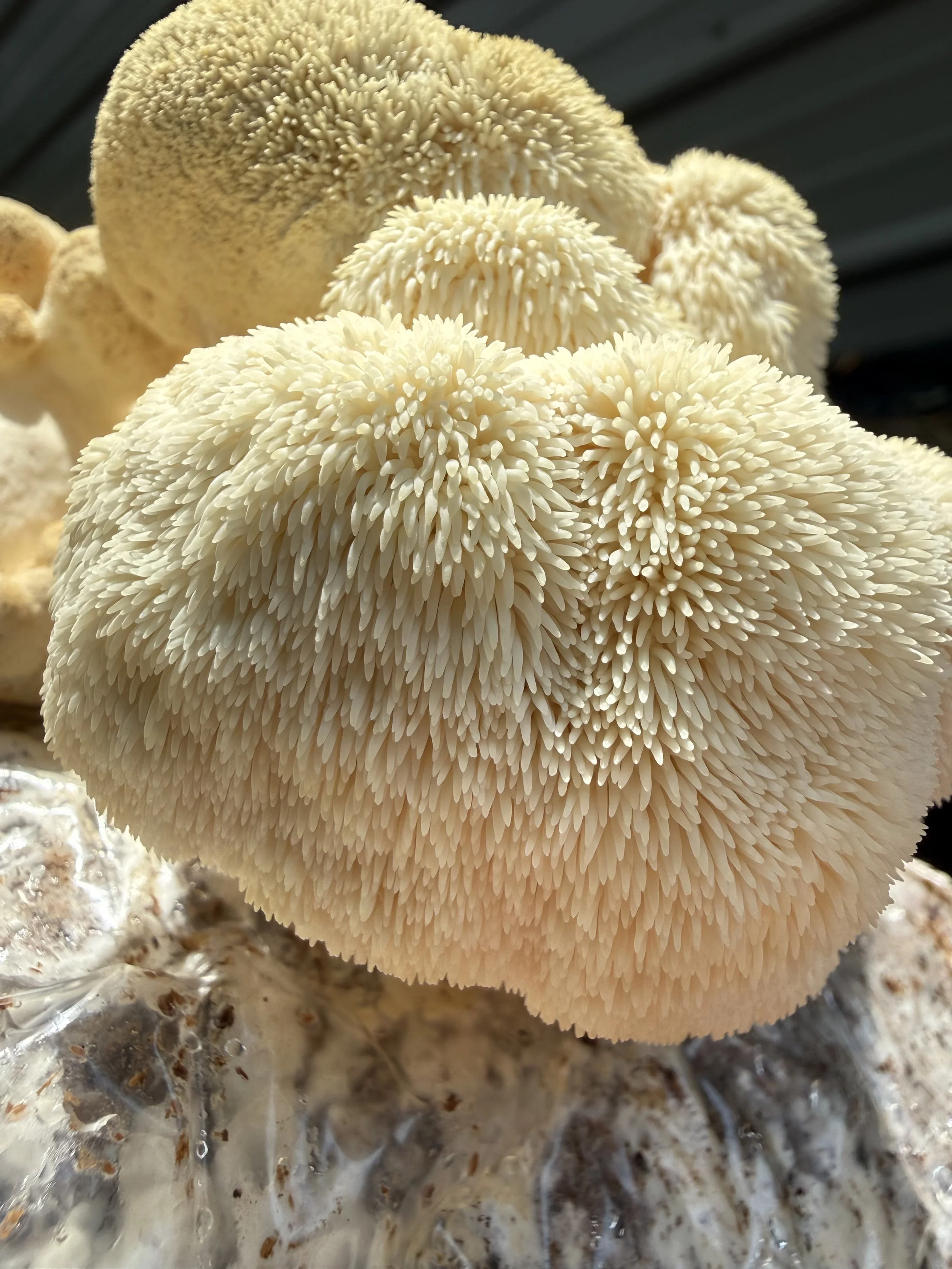
HE-Virginia: WIld From Virginia from LionsManeJames. Aggressive on Agar, unlike some other Hericiums. Able to handle some pretty warm conditions up to about 90f but need humidity a little higher than HE-UFJ to keep up. Nice delicate fresh scent.
Cultivation Tips and Tricks:
Lions Mane is very easy to grow, but if not grown properly you can see some different expressions.
They don’t need as much fresh air as Oysters which is great for home growers, but adeqaute FAE is still needed. Humidty is greatly beneficial to allow the teeth to elongate and develop and not dry back too easily. But, many can handle some drier conditions!
I like to run my Lions Mane on MYA + Wheat Bran or HWFP at a low rate into my agar dishes to help promote better growth.
Then, I have found great success with them on Corn, Oats, or a mix of both for grain spawn. These grains can be a bit forgiivng with hydration and cooking and once sterilized and inoculated Hericiums love them!
For substrates they do really well on hardwoods, not as well on straws. I like to use masters mix (50;50 HWFP; Soy Hull Pellets) or really like the 5cups HWFP + 1.25cups Wheat Bran + 1.4L Water, sterilized for 2.5 hours at 15PSI and ready for Lions Mane to breakdown in just a couple weeks!
This species WANTS TO FRUIT. Allow too much air or light and it will start fruiting. Clones on agar often take a few transfers before they realized they should focus on vegetative growth. Once your bags are colonized you may want to tuck the headspace underneath or they will start top fruiting in the grow bag.
Best way to initiate frutiing is with a diagonol ——- across the flat front face of the bag. This gives you a focused one large fruit ith easy pivot up to harvest off block
If your fruits are spongy and flat check your humidifer isnt blowing right onto the fruits and that CO2 isn’t too high.
Teeth or fruits browning? Could be too dry or to much direct air flow.
Fruits reaching out in weird shapes? Too high CO2
Lions Mane will tell you what they need sometimes you just gotta slow down and read it.
So Why Lion’s Mane?
For me, Lion’s Mane is the perfect example of why I fell in love with fungi in the first place.
You can start with a weird white mushroom growing from a tree.
Then you discover it has been eaten by humans for centuries.
Then you discover an entire cultural history surrounding it.
Then you learn how to grow it.
Then you look at the mycelium running across media, and those manes appear on a block.
Then you start learning about hericenones and erinacines.
Then you discover researchers are investigating how those compounds interact with the nervous system.
Then you realize that the strain you're growing in your lab might behave differently from the one someone else is growing halfway around the world, or the other one from another place in the world in your lab.
And suddenly that weird white mushroom you started with has turned into ecology, history, agriculture, genetics, chemistry, nutrition, and neuroscience all wrapped into one organism.
That is Lion’s Mane.
And that's why, three and a half years after somebody gave me that first little fruiting block for Christmas, I'm still falling down the rabbit hole.
Welcome to the first Species Spotlight.
Welcome to Lion’s Mane.
Welcome to Hericium erinaceus.
I Love Mushrooms and Fungi and look forward to sharing more on our next Species Spotlight.
This will probably be one of the longest species spotlights I do, but well desrved for Lions Mane, with still sooooooo much info I didn’t get to.
Enjoy the Gallery Below