
Spent Mushroom Substrate: Garden Gold?
Spent mushroom substrate sounds like something used up.
Finished. Tired. Done with its job.
But if you have grown mushrooms for any amount of time, you start to notice something magical about old blocks, and the places they inhabit. They do not really feel dead. Even after the main harvests are over, there is still structure there. Still smells. Still tastes (for the bugs mostly). Still moisture. Still life moving in around the edges. A block that is no longer worth keeping in a fruiting chamber can still become one of the best things you add back into a garden.
This is one of my favorite parts of growing mushrooms. The process does not end at harvest. You grow the mushrooms, eat the mushrooms, learn from the block and attempt, and then the block gets to keep working outside. It moves from the grow space into the garden, from food production into soil building.
The mushroom is the harvest.
The old block is the afterlife.
And if you use it well, that afterlife can become softer soil, better moisture, more decomposer activity, and a garden that feels a little more alive every season. So a spent block, can really be just the start. Growing Mushrooms can use waste streams, produce a product, then its “waste” is actually super beneficial to gardens and soils! Closing the Loops.
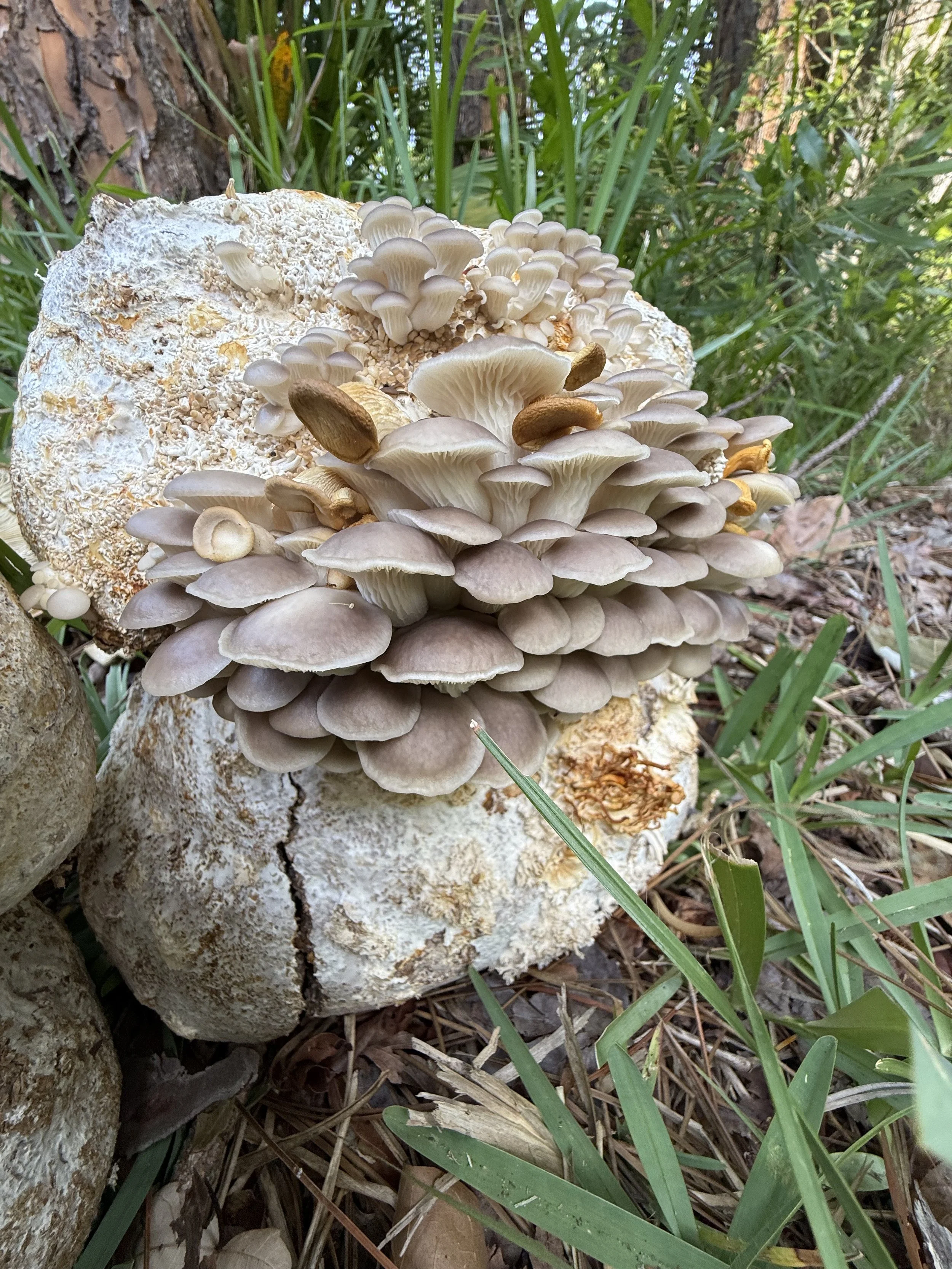
What Spent Mushroom Substrate Really Is
Spent mushroom substrate, often called SMS, is the material left after mushrooms have grown from it, whether a bag, tub, log, etc. For most small-scale gourmet growers, this is usually a block made from hardwood sawdust, hardwood fuel pellets, straw, soy hulls, wheat bran, or some version of those ingredients. Oyster mushrooms, Lion’s Mane, Reishi, Shiitake blocks, and many other cultivated mushrooms are grown from materials like this because they are rich in carbon and give the mycelium something to digest.
By the time the block is “spent,” it is no longer just sawdust or straw. The mycelium has already moved through it, softened it, digested part of it, and changed the way the material behaves. Fresh sawdust is one thing, a colonized mushroom block is wood that has already been biologically worked.
That is why I like comparing it to sourdough starter but for soil.
You are not just adding a dry ingredient to the garden. You are adding a biologically transformed material. It has been touched by fungi first, and that makes it more interesting than plain mulch or raw wood chips. The mushroom block has already started the decomposition process before it ever reaches the garden bed.
Once it is outside, the next crew moves in. Worms, springtails, beetles, mites, bacteria, other fungi, and all kinds of small soil organisms begin breaking it down further. The block becomes less of a “thing” and more of a meeting place for the soil food web. A kickstart to the community in the soils.
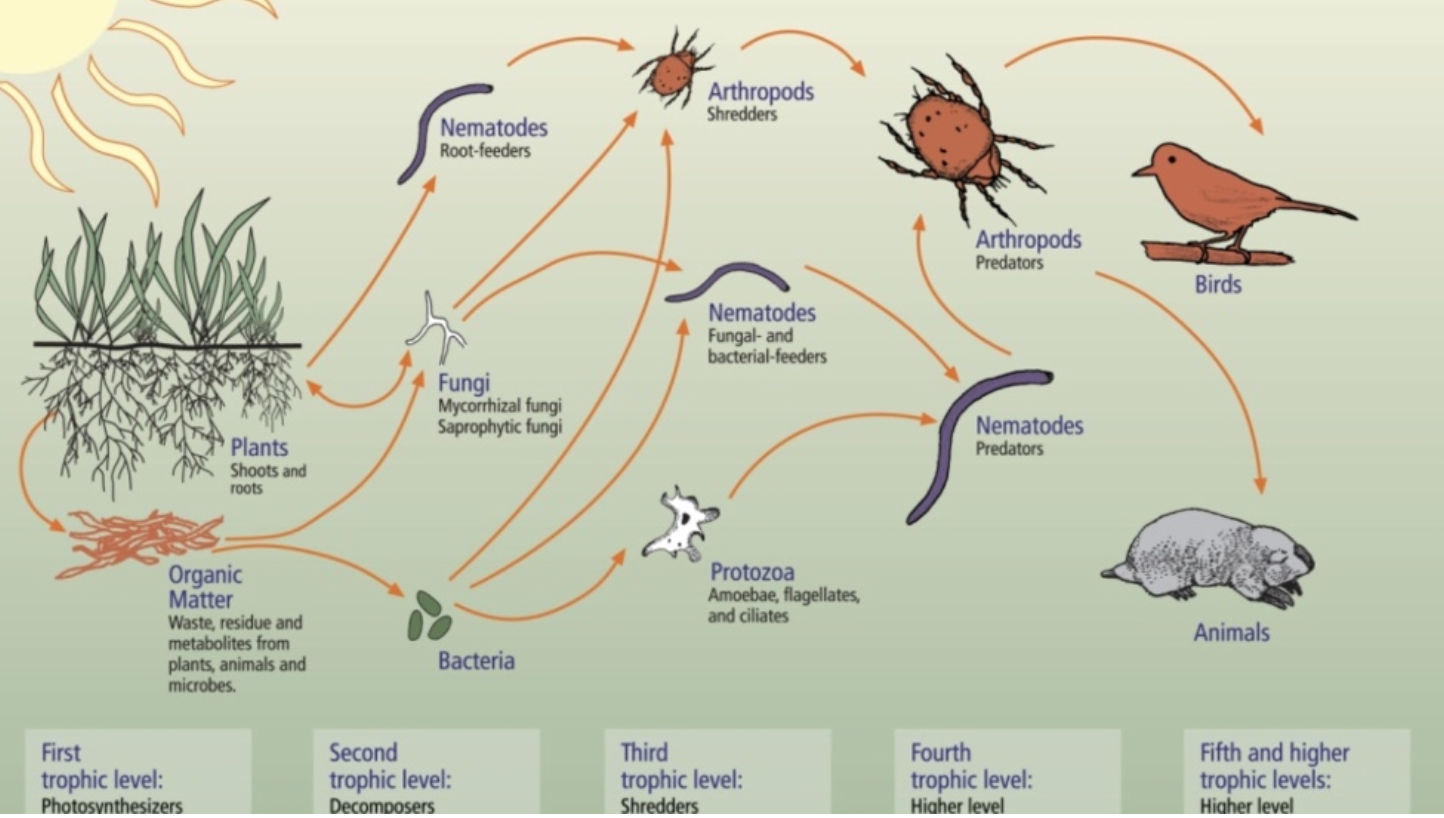
Mixed into soils, added to topdress, used as mulch, compost kickstarts etc. There are endless uses. It’s just the start of these next adventures.
Why Florida Gardens Can Use This
Florida soil can humble you fast.
A lot of our soil is sandy, fast-draining, low in organic matter, and not great at holding nutrients. You can water a bed in the morning and by the afternoon it feels dry again. You can add fertilizer and watch the rain push it right through the root zone. If you are dealing with a newer construction lot, it can be even worse. Scraped ground, compacted fill, poor structure, and very little living organic material.
A lot of people try to garden in that and think they are bad at growing.
Most of the time, the soil just needs help. Its not you!! Its the soils!! Its society!! okay okay ill calm down.
Spent mushroom substrate is not going to turn poor soil into rich garden loam overnight, but it is a strong piece of the repair process because it adds what Florida soil is usually missing: organic matter, structure, moisture-holding ability, and food for decomposers.
In sandy soil, organic matter acts like a sponge and a pantry at the same time. It helps water stay near the roots longer, and it gives nutrients more places to hold instead of washing away. The fungal material and partially digested wood in old mushroom blocks help create little pockets of habitat where soil life can start to gather.
That is the long game with soil. You are not just feeding plants. You are feeding the system that feeds the plants.
Why Hardwood-Based Blocks Are Best for This
For garden use, I like hardwood-based blocks the most.
A block made mostly from hardwood sawdust, hardwood fuel pellets, straw, or other fibrous plant material behaves more like a fungal mulch. It breaks down slowly enough to help build structure, but it has already been softened by the mycelium. That makes it easier for the next wave of decomposers to enter.
Grain-heavy material is different.
Grain is rich, fast, and attractive to everything. It can feed fungi, but it can also feed bacteria, rodents, flies, ants, molds, and sour-smelling messes if there is too much of it left over. Grain spawn is great for inoculating a block. I use it because it works in the lab and indoors but in the garden, I do not want the block to be mostly grain. I want the grain to be the starter, not the meal.
The cleaner garden loop is simple: use grain to inoculate hardwood, let the mycelium fully colonize the block, harvest the mushrooms, and then return the wood-heavy block to the soil.
That gives you food first, learning second, and a soil-building material at the end.
If you have a block with a lot of exposed grain or one that never fully colonized, compost it first. Do not crumble wet, grain-heavy material around delicate seedlings and expect perfection. Let the compost pile handle the rough stage, then use it once it smells earthy and mellow.
Let the Block Try Again Before You Break It Apart
Before I send a block fully into the soil-building phase, I usually like to give it one more chance.
A lot of old blocks still have another flush in them. Sometimes it is not worth the space indoors, but outside is different. A shaded, humid garden corner can be enough to let the block push another round. Florida rain can help. Mulch can help. A protected spot near bananas, shrubs, or a compost area can become a small outdoor fruiting zone.
This is where the “mushroom graveyard” idea comes in.
That phrase sounds odd, but it is one of the most useful systems a home grower can build. A mushroom graveyard is just a dedicated place where old blocks go after their main indoor life is over. Some fruit again. Some break down. Some get eaten by worms and insects. Some disappear into the mulch over a few months.
It does not need to be fancy. A shaded corner with leaf litter, wood chips, straw, or garden mulch is enough. You can lay blocks down whole, bury them halfway, or break them into large chunks. If they still look healthy, I like leaving them more intact. If they are dry and crumbly, I use them more like mulch.
Sometimes the block gives you a surprise flush. Sometimes it simply becomes soil. Either outcome is useful.
What Happens When the Mushrooms Decompose Too
If an old block fruits outside and you do not harvest the mushrooms, those fruits are not wasted.
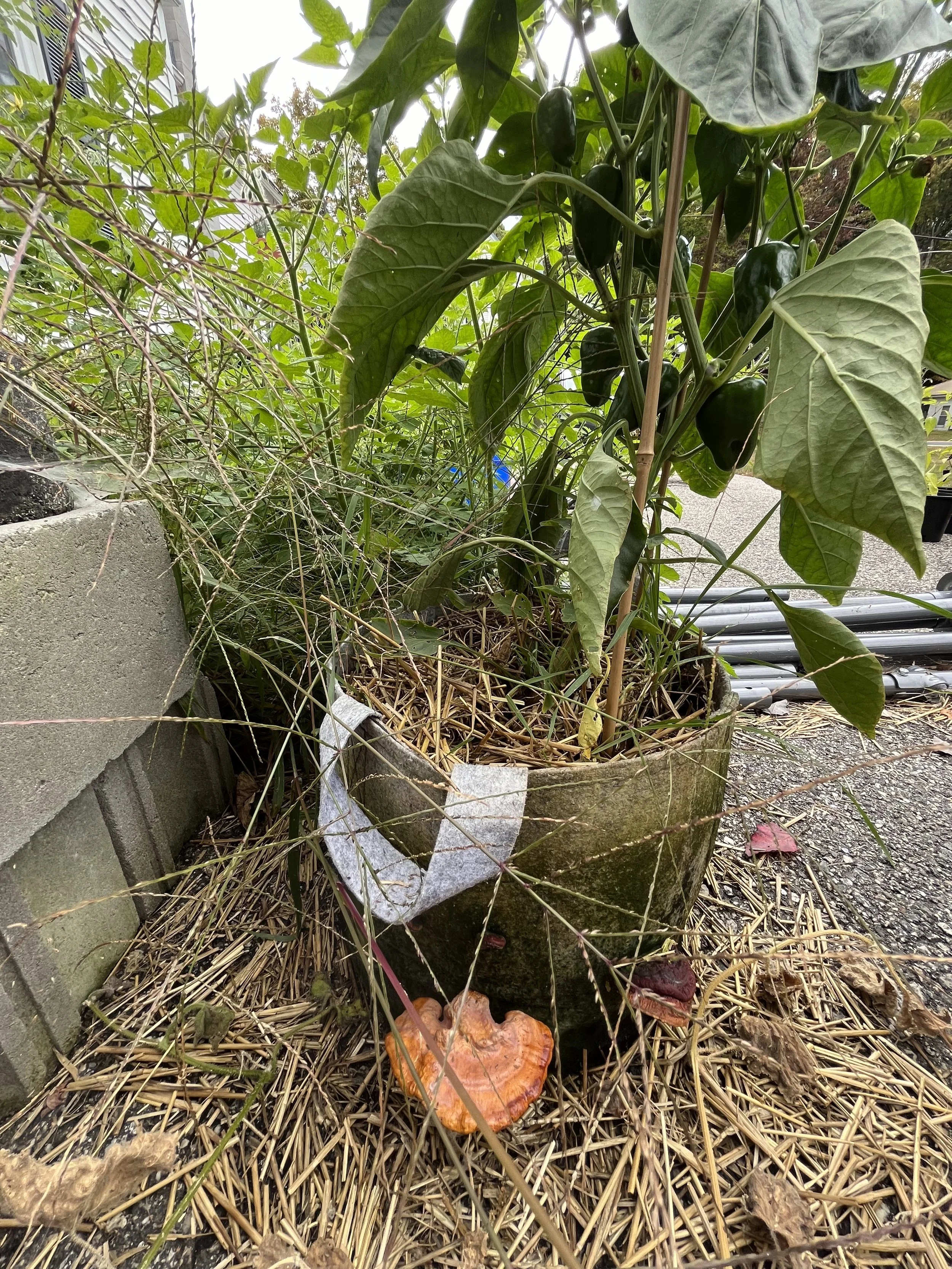
Reishi growing ou Fabric Pot!
Indoors, rotting mushrooms are a problem. They bring smell, bacteria, pests, and contamination pressure. Outdoors, in the right place, decomposing mushrooms become part of the soil cycle.
A mushroom fruiting body is mostly water, but it also contains fungal tissue, minerals, chitin, nitrogen, phosphorus, potassium, and other organic compounds. As it collapses, small insects and microbes begin breaking it apart. Flies, beetles, springtails, mites, slugs, worms, and bacteria all take part in that process. The mushroom becomes a soft nutrient pulse right where it grew.
That is part of the beauty of letting old blocks live out their last stage outdoors. The block feeds the mushrooms. The mushrooms feed the decomposers. The decomposers feed the soil. The soil feeds the next plants.
It is not neat and sterile. It is alive.
The trick is knowing where each world belongs. Keep your lab clean. Keep your fruiting space managed. But outside, give biology some room to do what biology does.
Drying Blocks and Using Them Like a Soil Blanket
One of my favorite ways to use old blocks is to let them dry.
A dried block is easier to handle. It is lighter, cleaner, less likely to smell, and much easier to crumble. Once dry, it breaks apart into a light, fluffy material that can be spread over soil almost like straw.
This works especially well as a light topdress. I like it over bare soil, around transplants, on garden edges, and sometimes as a thin cover over seeded areas. You do not want to bury tiny seeds under a thick mat of substrate, but a light dusting can help shade the soil, reduce splash from rain, and slow the surface from drying out too quickly.
In Florida, bare soil gets punished. Sun bakes it, Rain pounds it, Wind dries it. A thin layer of crumbled mushroom block helps soften all of that. It is not a replacement for mulch in every situation, but it can work beautifully as part of a layered system.
I especially like using it under wood chips or leaf mulch. The crumbled block becomes a softer, more biologically active layer beneath the rougher mulch. Think of it like adding a fungal middle layer between the soil and the heavier carbon on top.
You can also mix it into compost piles, add small amounts to worm bins, or use it around perennials where you want slow breakdown instead of fast fertilizer.
The smell test is still the best first check. If it smells earthy, mushroomy, woody, or like forest floor, it is usually ready for general garden use. If it smells sour, rotten, ammonia-like, or anaerobic, compost it longer.
What It Attracts Into the Garden
Old mushroom blocks are invitations.
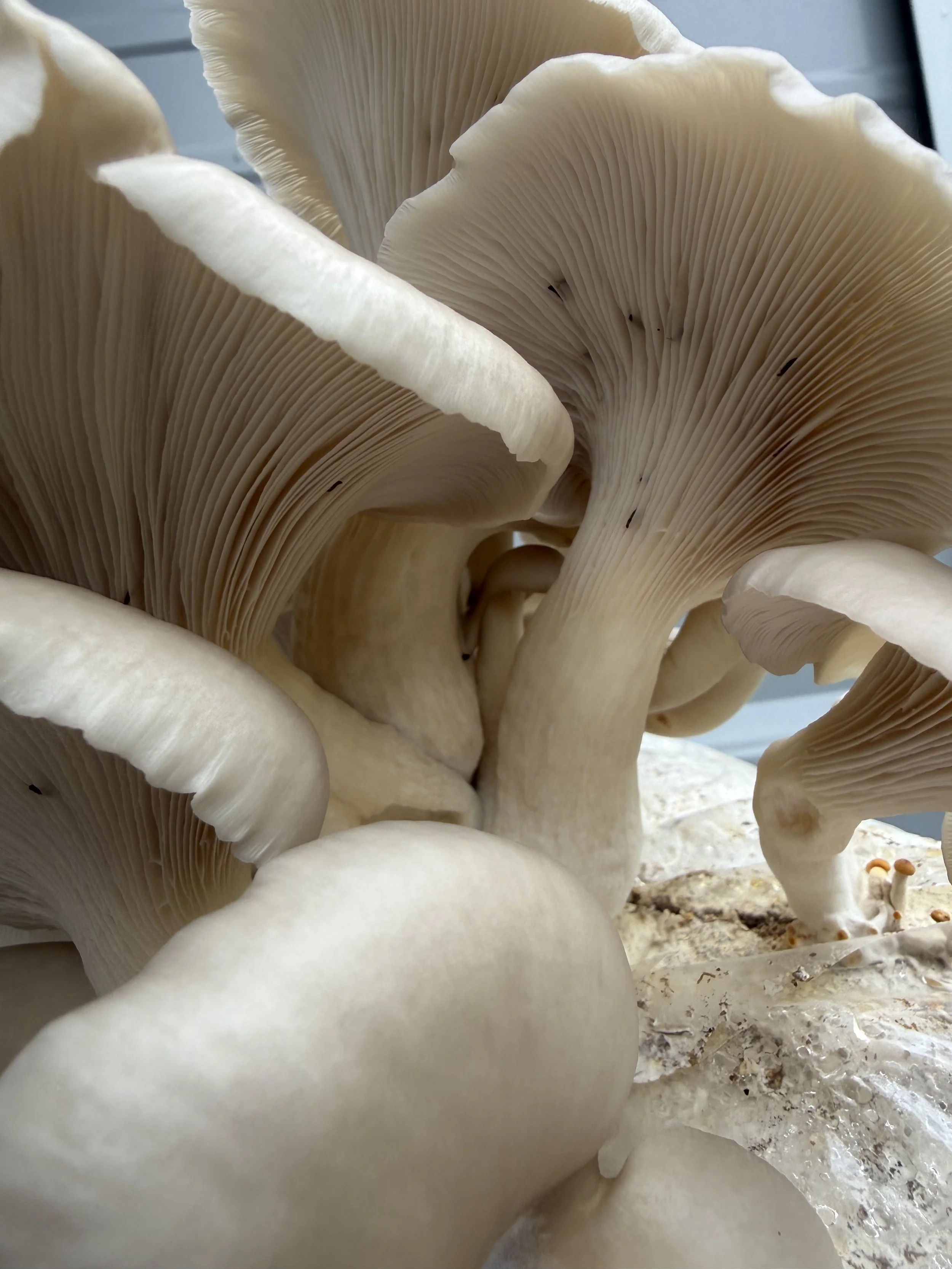
Worms find them. Springtails graze through them. Beetles and mites move in. Isopods, millipedes, larvae, and other decomposers start working the edges. In damp, shaded areas, frogs and lizards may show up too because the mulch holds moisture and attracts small prey.
This is one of the overlooked benefits of spent substrate. People often ask what it “adds” to the soil, meaning nutrients. But some of the value is habitat. A dry, sandy, exposed bed does not offer much protection for soil life. A shaded, moist, carbon-rich pocket gives organisms somewhere to be.
Over time, that activity changes the feel of the soil. It becomes less loose and lifeless. It holds together a little better. It stays cooler under mulch. It develops more structure. Roots have an easier time moving through it.
Not from one block. Not from one weekend project but from repetition.
Old blocks, leaves, compost, roots, mulch, rain, worms, fungi, and time.
That is how beautiful soil gets built.
How I Would Actually Use It in a Garden
If I had a fresh old block coming out of the grow room, I would first decide whether it still had life for another flush. If it smelled clean and looked strong, I would place it in a shaded outdoor spot and let it ride. Maybe I would tuck it under straw or leaves, water it in, and see what happens.
If the block was dry, tired, or already past fruiting, I would break it apart and use it differently. Around perennials or fruit trees, I would bury chunks shallowly under mulch. In a vegetable bed, I would use smaller amounts as a topdress or mix it into compost before applying heavily. For seed beds, I would dry and crumble it fine, then use a very thin layer as a surface cover. You can even mix to pretty high ratios with garden soils in pots. Peppers love it!
For worm bins, I would use it in moderation. Old sawdust blocks can help absorb moisture and add bedding, but I would not dump in a huge wet block all at once. Worm systems like balance. Too much of anything can throw them off.
For new construction soil, I would not rely on SMS alone. I would use it alongside compost, leaves, arborist chips, cover crops, and deep mulch. The spent block is one ingredient in the rebuilding process, not the whole recipe.
That is the honest way to use it.
And TRULY these are just some of the basic uses. Take it where ever the ideas bring you. This “spent” material is GOLD.
A Note on Contaminated Blocks
If a block contaminates indoors, get it away from your grow area. Do not open moldy blocks near your clean work. Do not shake them around your fruiting space. Do not treat your lab like a compost pile.
But once that block is outside, the rules change.
A contaminated block can still be useful in a compost pile, a far garden corner, or a mushroom graveyard. Outdoor soil is already full of competing fungi and bacteria. The main concern is not whether nature can handle it. The concern is whether you are spreading spores back into your grow space or putting nasty material around delicate plants too early.
If it smells bad, compost it.
If it looks rough, bury it away from the main garden and let time work on it.
If it is just green with Trichoderma but otherwise breaking down, it can still become soil. Just do not bring that biology back inside.
The Full Circle of Growing Mushrooms
This is the part I want more people to feel.
Growing mushrooms teaches you to see cycles instead of just products.
You start with a block of hardwood and mycelium. You give it the right conditions. It fruits. You harvest food from it. Then, when the obvious production is over, you carry it outside and watch a new process begin.
Maybe it fruits again after a summer rain.
Maybe the mushrooms melt back into the mulch.
Maybe worms take over.
Maybe a few months later, you dig into that spot and the soil feels darker, cooler, and more alive than it did before.
That is a different relationship with waste.
The block was not thrown away. It was returned.
The grow did not end. It changed form.
That is good for the garden, but it is also good for the grower. It slows you down. It makes you pay attention. It connects the lab, the kitchen, the compost pile, the yard, and the soil into one living loop.
Food for the body.
Observation for the mind.
A little humility for the soul.
And carbon back into the soil.
The Bottom Line
Spent mushroom substrate is not trash.
It is also not a miracle cure for poor soil.
It is a biologically worked, carbon-rich material that can help build structure, hold moisture, feed decomposers, protect bare soil, and connect mushroom cultivation back into the garden.
For Florida growers, especially those dealing with sandy soil, hard rain, low organic matter, and new construction lots: old mushroom blocks can be one of the most practical materials to keep in rotation.
Grow the mushrooms.
Eat the mushrooms.
Let the block try again outside.
Then dry it, crumble it, compost it, bury it, mulch with it, or feed it to the worms.
The block still has work left in it.
Myceliating Tomorrow, one mushroom block and one handful of soil at a time.
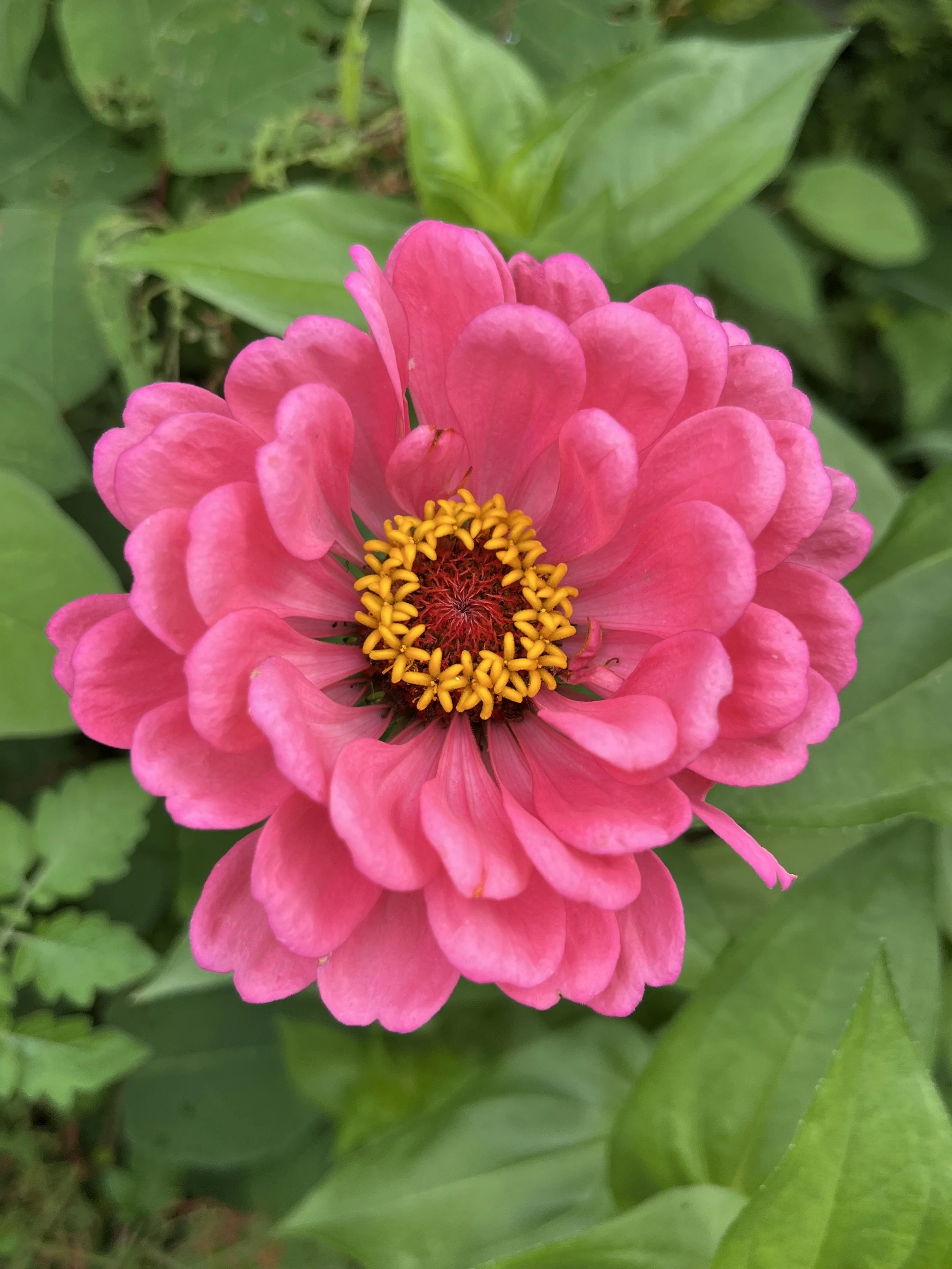
Zinnia’s loved the spread out mulch. Kept em damp and fed all season.
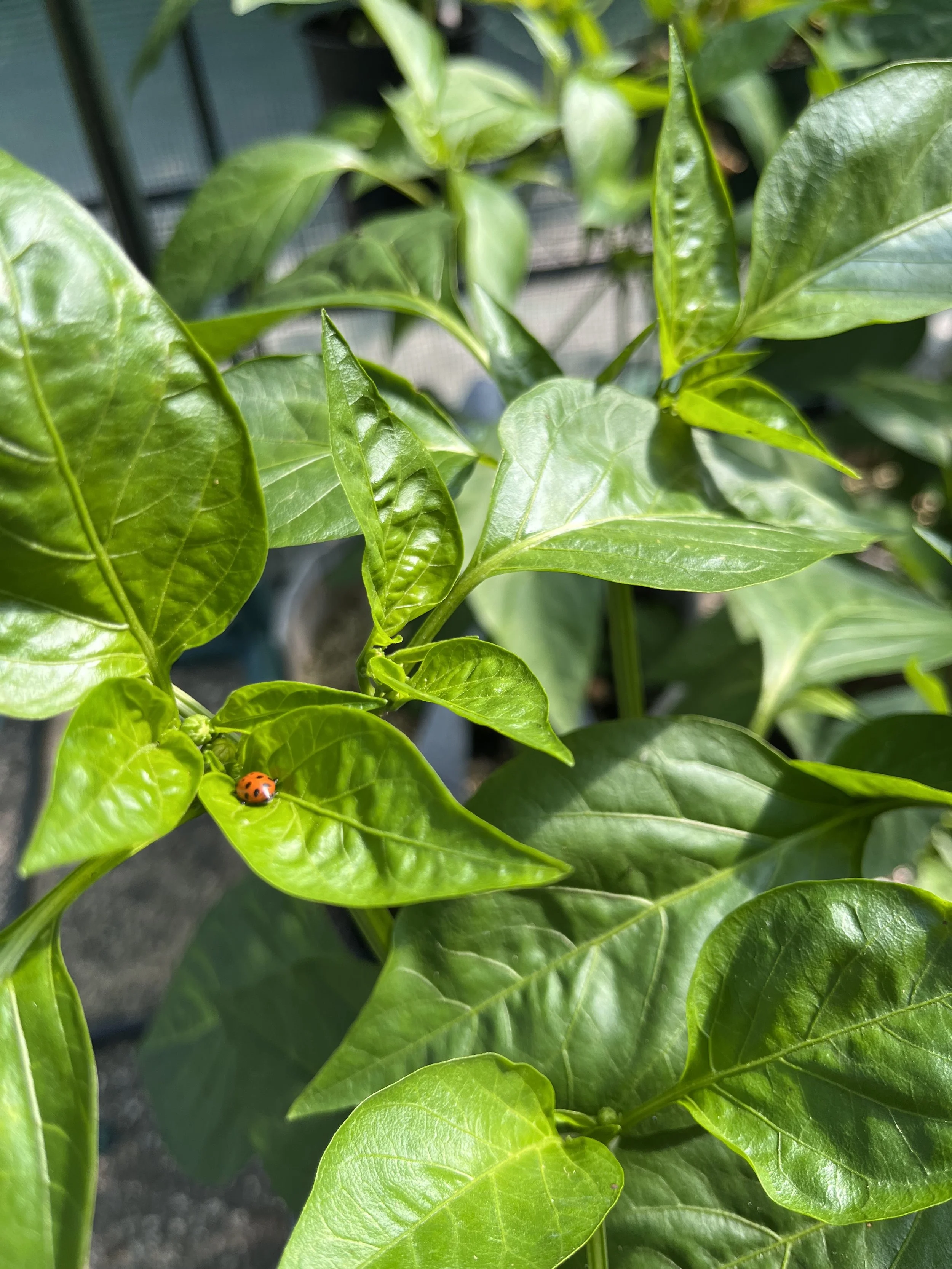
Luscious Green Growth from my Spent Mushroom Substrate fueled plants. Peep the Ladybug!
